
Live Coverage: Jobs Report at 8:30 a.m. ET Dents Fed Rate-Cut Odds; No Supreme Court Ruling on Tariffs
The Federal Reserve's next policy move now hinges on a fresh set of numbers. At 8:30 a.m. Eastern Time on Friday, the Bureau of Labor Statistics released the December jobs report, a critical data point that arrives after a period of unusual uncertainty. The report was delayed by the recent government shutdown, creating a notable data gap that central bankers have been eager to fill.
The headline figures confirm a clear slowdown. Nonfarm payrolls increased by 50,000 jobs last month, falling short of the 60,000 economists had forecast and marking a downward revision from November's already-soft pace. The unemployment rate, however, dipped to 4.4 percent, a slight improvement from the previous month. This combination-modest job growth paired with a falling jobless rate-paints a picture of a labor market that is cooling but not yet cracking.
For the Fed, this report is a mixed signal that ultimately challenges the case for an imminent rate cut. The data shows the economy is not overheating, which is a necessary condition for a pause. Yet the slowdown is not severe enough to trigger an urgent need for stimulus. As one economist noted, the report is "not too hot, not too cold", providing the central bank with the breathing room it has been seeking to "wait to see how the economy evolves." The bottom line is that this data gives the Fed ample reason to hold off on further easing in the near term, pushing the next potential move into the first quarter.
Immediate Market and Policy Impact: The Fed's Calculus Shifts
The December jobs report arrives at a pivotal moment for the Federal Reserve. Just last month, officials executed a quarter-point cut to the federal funds rate target range, bringing it to 3.5% to 3.75%. That move was explicitly driven by a shift in risks, with the Committee judging that downside risks to employment rose in recent months. In other words, the Fed had pivoted dovishly to provide a cushion against a weakening labor market, even as inflation remained elevated.
Now, the fresh data complicates that calculus. The report shows the labor market is indeed cooling, with payrolls increasing by just 50,000 jobs last month. Yet the slowdown is not severe enough to override the persistent inflation threat. The Fed's recent action was a preemptive strike based on anticipated weakness; today's numbers confirm some softening but do not signal a collapse. As a result, officials now need more notable signs of a labor market slowdown before committing to further easing. The central bank is well-positioned to wait, as Chair Powell noted, but the wait is lengthening.
This creates a period of policy uncertainty. The market's muted reaction underscores the stalemate. Treasury yields saw only a brief pop before paring gains, and the dollar index trimmed its gains. The takeaway is that the data is not a clear catalyst for either a cut or a hold. It simply confirms the Fed's existing stance: the path to the next move depends on seeing a more sustained and pronounced deterioration in employment, which would then be weighed against the still-elevated inflation picture. For now, the committee's hands are tied, awaiting clearer signals.
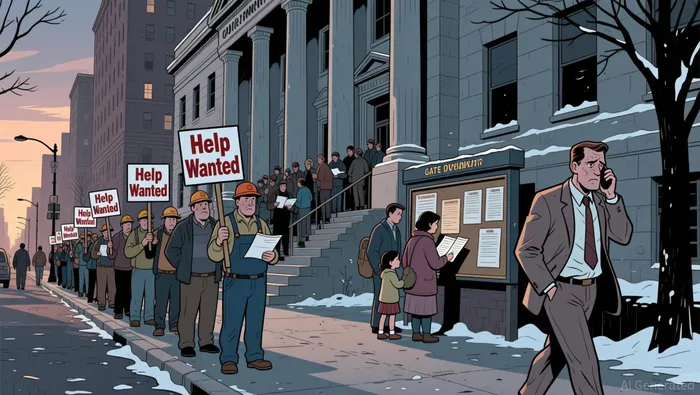
The Missing Catalyst: No Supreme Court Ruling on Tariffs
While the jobs report dominated the morning, a second major potential catalyst for market volatility failed to materialize. Investors had been watching for a Supreme Court ruling on the legality of President Trump's use of emergency powers to impose sweeping tariffs. The high court's first decision day of 2026 was Friday, and a ruling was widely expected shortly after 10 a.m. ET. In the end, no decision was issued.
The absence of a ruling neutralized the primary near-term catalyst for policy uncertainty. The administration had already signaled it could achieve its tariff goals through alternative legal authorities if needed. National Economic Council Director Kevin Hassett told CNBC earlier that the White House had a contingency plan, stating, "There are a lot of other legal authorities that can reproduce the deals that we've made with other countries, and can do so basically immediately." This messaging significantly reduced the immediate risk of a policy reversal, even if the court were to rule against the current approach.
With the tariff overhang lifted, the focus fully returns to the economic data. The jobs report, released just hours earlier, now stands as the dominant force shaping the market's forward view. The Supreme Court's silence meant there was no new policy shock to absorb, leaving the market to digest the mixed signals from the labor market and assess the Fed's next move in a vacuum of major institutional news.
Forward-Looking Scenarios: What to Watch Next
The core uncertainty now is whether the softening labor market is a prelude to a recession or a necessary adjustment as the economy transitions to a lower inflation regime. The December report confirms a slowdown, but the data is not yet severe enough to override the persistent inflation threat. The Federal Reserve is well-positioned to wait, as Chair Powell noted, but the wait is lengthening. The central bank will likely need to see more notable signs of a labor market slowdown before committing to further easing. The key variable is the durability of the slowdown. If job growth remains weak, the unemployment rate could rise further, providing a clearer signal that the economy is cooling into a recession. If hiring rebounds, it would suggest the recent softening was a temporary blip, reinforcing the Fed's caution.
A major external risk remains the unresolved tariff policy. The Supreme Court's silence on Friday means the primary near-term catalyst for policy uncertainty has been neutralized. However, the administration has signaled it can achieve its goals through alternative legal authorities if needed. National Economic Council Director Kevin Hassett stated, "There are a lot of other legal authorities that can reproduce the deals that we've made with other countries, and can do so basically immediately." This messaging significantly reduces the immediate risk of a policy reversal, but it leaves open the possibility of a prolonged trade dispute that could disrupt supply chains and feed inflation. The next major data point will be the January jobs report, which will provide a clearer signal on the durability of the December slowdown. Economists expect the US added just 55,000 jobs last month, which would make 2025 the weakest job market in decades outside of a recession. The upcoming report is critical for determining whether the economy is in a controlled cooling or a more dangerous slide.







Comentarios
Aún no hay comentarios