
Lithium Supply Constraints and Their Impact on Junior Producers Like Standard Lithium (SLI)
China's recent regulatory moves in the lithium sector have ignited a wave of speculation in global markets, with junior producers like Standard LithiumSLI-- (SLI) experiencing sharp stock price gains. However, the question remains: does this represent a sustainable bull market for lithium equities, or is the current enthusiasm driven by short-term speculation? To answer this, we must dissect the interplay between China's regulatory actions, their impact on supply chains, and the strategic positioning of junior producers in a rapidly evolving market.
Regulatory Tightening: A Catalyst for Market Volatility
China's cancellation of 27 expired lithium-related mining permits in Jiangxi province, announced in late 2025, initially appeared to have minimal direct impact on supply. As Reuters reported, these permits had expired for over a decade, and none were linked to active operations. Yet, the move triggered a 15.3% surge in lithium carbonate prices on the Guangzhou Futures Exchange, marking a high not seen since June 2024. This reaction underscores how regulatory signals-regardless of their immediate supply implications-can amplify market sentiment.
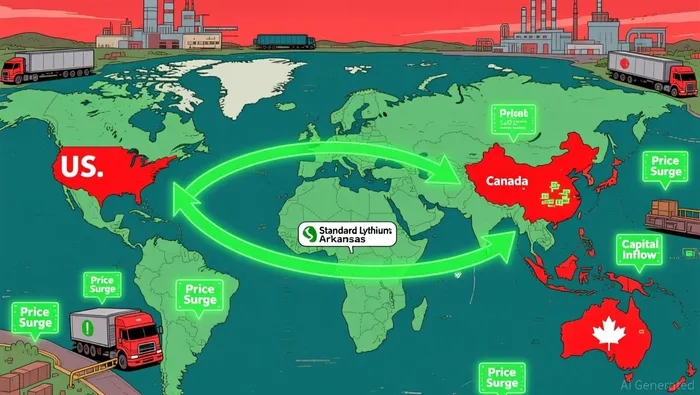 Simultaneously, China's export controls on lithium battery technologies, effective November 8, 2025, have introduced structural shifts. According to evlithium.com, the Ministry of Commerce's new rules require licenses for high-energy-density batteries (≥300Wh/kg), advanced cathode materials, and production equipment, framing these as dual use items with potential military applications. While the stated goal is to align with international non-proliferation frameworks and safeguard national security, the practical effect is a recalibration of global supply chains. Analysts at evlithium.com argue that these controls aim to protect China's industrial know-how and maintain its dominance in the lithium battery sector.
Junior Producers: Opportunities and Risks
For junior producers like Standard Lithium, these regulatory changes present both challenges and opportunities. On one hand, tighter export controls could limit access to Chinese materials and technologies, forcing companies to localize production. On the other hand, the geopolitical push for energy independence-particularly in the U.S.-positions junior producers with domestic assets as strategic beneficiaries.
Standard Lithium's lithium-brine properties in the Smackover Formation in Arkansas, for instance, align with U.S. efforts to reduce reliance on Chinese supply chains. This has drawn attention from investors and institutions like JPMorgan Chase, which has pledged significant investment in lithium and battery material initiatives. The company's stock has surged in response to these dynamics, with BMO raising its price target to $6.50 from $5.25. However, SLI remains unprofitable, with a net loss of $59.02 million over the past year according to Nasdaq, raising questions about its ability to scale operations before 2028.
Assessing the Bull Market Signal
The current market optimism appears to hinge on two factors: regulatory-driven supply constraints and geopolitical tailwinds. While China's permit cancellations and export controls have created short-term volatility, their long-term impact on global lithium supply remains uncertain. The market is already oversupplied, with lithium carbonate prices pressured by weak demand from electric vehicle manufacturers. This suggests that the recent price surge may be more speculative than fundamental.
For junior producers, the key differentiator will be their ability to secure capital and navigate regulatory hurdles. SLI's projected commercial operations by 2028 are ambitious, but the company's lack of revenue and reliance on external financing expose it to market risks. Analysts at Roth Capital Partners and Raymond James have maintained "Buy" or "Outperform" ratings, citing SLI's strategic alignment with U.S. energy policies. However, the 58% probability of outperforming the S&P 500 over three months-a 5% premium to the average U.S. stock-reflects heightened expectations that may not materialize without tangible progress.
Conclusion: A Mixed Outlook for Lithium Equities
China's regulatory moves have undeniably reshaped the lithium landscape, but their implications for junior producers are nuanced. While export controls and permit cancellations have created near-term tailwinds for companies like SLI, the sector's long-term viability depends on resolving supply-demand imbalances and achieving cost-competitive production. For investors, the current rally in lithium stocks appears to blend genuine strategic value with speculative fervor.
Junior producers with robust domestic assets and clear pathways to commercialization may warrant long-term consideration. However, those lacking financial discipline or operational milestones risk becoming casualties of a market correction. As the lithium sector navigates regulatory and geopolitical crosscurrents, discerning between enduring value and fleeting hype will be critical for investors seeking to capitalize on the energy transition.





Comentarios
Aún no hay comentarios