
Lithium Market Rebound: A Strategic Opportunity in 2026 Demand Growth
Supply-Demand Dynamics: From Surplus to Deficit
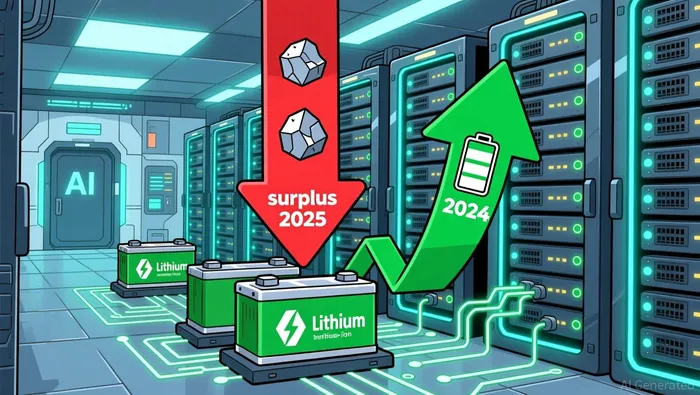
The lithium market entered 2025 with a modest surplus of 10,000 tonnes, but this is expected to evaporate by 2026, with a projected 1,500-tonne deficit emerging according to market analysis. This shift stems from production cuts in 2024, particularly in Australia and China, as well as a slowdown in new project development according to industry reports. On the demand side, electric vehicles (EVs) remain the dominant driver, accounting for 90% of lithium consumption in 2024, with sales projected to exceed 20 million units in 2025. However, a less-discussed but equally critical factor is the rise of battery energy storage systems (BESS), which are becoming essential for stabilizing renewable energy grids and powering AI-driven infrastructure according to market forecasts.
Energy Storage and AI Infrastructure: The New Demand Engine
While EVs dominate headlines, energy storage for AI infrastructure is emerging as a game-changer. Data centers, the backbone of AI operations, require robust energy solutions to manage their high power consumption and ensure uninterrupted operations. Lithium-ion batteries are increasingly favored for their efficiency, longevity, and scalability according to market analysis. For instance, Contemporary Amperex Technology Co., Limited (CATL) recently unveiled the TENER Stack, a 9 MWh ultra-large capacity energy storage system tailored for AI data centers according to company announcements.
The broader AI industry is also fueling demand indirectly. Mining companies are investing $13.1 billion in AI by 2029 to enhance productivity and mineral discovery according to industry reports, a trend that indirectly accelerates lithium demand by improving the efficiency of resource extraction. This creates a feedback loop: better AI tools lead to more efficient mining, which in turn supports the energy storage systems needed to power AI itself.
Supply Constraints and Geopolitical Risks
Despite growing demand, lithium supply faces structural challenges. China's designation of lithium as a strategic resource and its aggressive pursuit of mining rights in Africa could disrupt global supply chains according to market analysis. Meanwhile, the U.S. Inflation Reduction Act and the EU's Critical Raw Materials Act are reshaping domestic production strategies, but their impact on 2026 supply remains uncertain according to industry forecasts. Analysts at Arcane Capital warn that underestimated demand from BESS and electric trucks could exacerbate the deficit by the late 2020s according to market commentary.
Price forecasts for lithium carbonate vary widely, ranging from $8,900 to $17,000 per tonne in 2026 according to market analysis. Fastmarkets predicts a price rebound as the market tightens, while Goldman Sachs remains cautious, citing potential overcapacity in the medium term according to financial reports. This divergence underscores the volatility inherent in a market still adjusting to rapid technological and regulatory shifts.
Strategic Implications for Investors
For investors, the lithium market's 2026 trajectory offers both risks and rewards. Producers with access to high-grade reserves and efficient extraction technologies-particularly those aligned with AI-driven mining innovations-could outperform peers. Similarly, companies specializing in advanced battery systems for AI infrastructure, such as CATL, may benefit from the sector's tailwinds. However, geopolitical tensions and regulatory uncertainties necessitate a hedged approach.
The market's transition to a deficit by 2026 also signals a potential inflection point for lithium prices. If demand outpaces supply, as many analysts anticipate, prices could surge beyond current forecasts, rewarding early movers. Conversely, a delay in demand growth or a surge in recycling technologies could temper gains.
Conclusion
The lithium market's 2026 rebound is not merely a function of cyclical supply-demand imbalances but a reflection of deeper structural shifts. As AI infrastructure and renewable energy storage redefine global energy needs, lithium's role as a critical enabler of the digital and green economies becomes increasingly irreplaceable. For investors, navigating this transition requires a nuanced understanding of both the technological drivers and the geopolitical forces shaping the market.







Comentarios
Aún no hay comentarios