
The Lithium Bubble or the Next Big Thing? A Critical Analysis of Lithium Market Dynamics in 2025
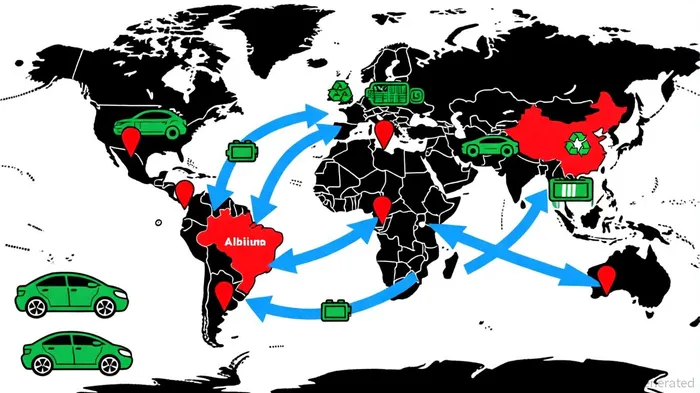
The Lithium Bubble or the Next Big Thing?
The lithium market in 2025 stands at a crossroads. On one hand, it is a linchpin of the global energy transition, driven by electric vehicle (EV) adoption and renewable storage demand. On the other, it faces a perfect storm of supply constraints, geopolitical risks, and technological disruptions. For investors, the question is not merely whether lithium is a bubble or a breakthrough but how to navigate the volatile interplay of these forces.
Demand Drivers: EVs and Beyond
The EV market's explosive growth remains the primary catalyst for lithium demand. According to the World Economic Forum's Future of Jobs Report 2025, green transition roles—particularly in EV and autonomous vehicle engineering—are among the fastest-growing job categories[1]. This labor market shift mirrors broader consumer and corporate trends: automakers are pivoting to electrification, with EV sales projected to surpass 30% of global vehicle sales by 2025[4].
However, demand is not confined to EVs. Lithium-ion batteries are also critical for grid-scale energy storage systems (ESS), which are expanding as solar and wind energy adoption accelerates[5]. Fastmarkets estimates that ESS demand alone could account for 20% of total lithium consumption by 2030[4].
Yet, innovation could temper demand. Structural battery composites (SBCs), highlighted in the WEF's Top 10 Emerging Technologies of 2025, promise to integrate energy storage into vehicle structures, reducing battery size and lithium use[4]. While SBCs are still in early adoption, their scalability could reshape long-term demand trajectories.
Supply Constraints: A Fragile Bottleneck
The lithium supply chain is under immense strain. Fastmarkets forecasts a narrowing of the 2025 surplus to just 10,000 tonnes, with a potential deficit of 1,500 tonnes in 2026 as production cuts take effect[2]. This follows years of overinvestment in mining projects, which have left the market with excess capacity. However, the industry's ability to adjust is hampered by long lead times for new mines (5–25 years) and environmental constraints, particularly water scarcity in lithium-rich regions like the "Lithium Triangle" (Chile, Argentina, Bolivia)[5].
China's dominance in refining—controlling over 50% of global processing capacity—adds another layer of risk[3]. The Trump administration's trade policies and China's retaliatory export restrictions on critical minerals have heightened geopolitical tensions, forcing countries like the U.S. to prioritize domestic and Western Hemisphere supply chains[3]. Meanwhile, circular economy strategies—such as battery recycling and alternative chemistries (e.g., LFP, sodium-ion)—are gaining traction to reduce reliance on raw lithium[6].
Capital Inflows: A Double-Edged Sword
To bridge the looming supply gap, $514 billion in capital investment is required by 2030, with $220 billion earmarked for upstream projects[1]. Major automakers are hedging their bets by investing directly in lithium production: General Motors has committed $650 million to Lithium Americas' Nevada mine, while TeslaTSLA-- is building a $1 billion refinery in Texas[1]. These moves reflect a broader trend of vertical integration, as companies seek to secure supply amid geopolitical uncertainty.
However, capital inflows are not without risks. The Inflation Reduction Act (IRA) in the U.S. incentivizes domestic production but also creates regulatory hurdles. Similarly, China's rapid resumption of idled production capacity—plants in Australia and China can restart within weeks—threatens to destabilize price recovery efforts[2].
Investment Timing: Navigating the Tipping Point
For investors, timing is critical. The lithium market is transitioning from oversupply to potential deficit by 2026, but this rebalancing is contingent on several factors:
1. Geopolitical Stability: U.S.-China trade tensions could disrupt supply chains, while increased U.S. investment in the Western Hemisphere may mitigate some risks[3].
2. Technological Adoption: If SBCs or alternative chemistries gain traction, demand growth could slow, reducing the urgency for new mining projects[4].
3. Recycling Scalability: Circular strategies could delay the need for raw material extraction, but current recycling rates remain below 10%[6].
The market's volatility suggests a cautious approach. Short-term investors may benefit from near-term price stabilization in 2025, while long-term players should focus on companies with diversified supply chains, recycling capabilities, or geopolitical resilience.
Conclusion: A High-Risk, High-Reward Proposition
Lithium is neither a bubble nor a guaranteed windfall—it is a sector defined by duality. The energy transition's demand is undeniable, but supply chain fragility and technological shifts introduce significant uncertainty. For investors, the key lies in balancing exposure to growth with hedging against disruption. As the market tightens in 2025, strategic investments in resilient infrastructure, recycling, and geographically diversified projects may offer the best path forward.





Comentarios
Aún no hay comentarios