
Lithium Americas' Sudden Share Price Surge: Strategic Positioning and Regulatory Tailwinds in the EV Battery Supply Chain
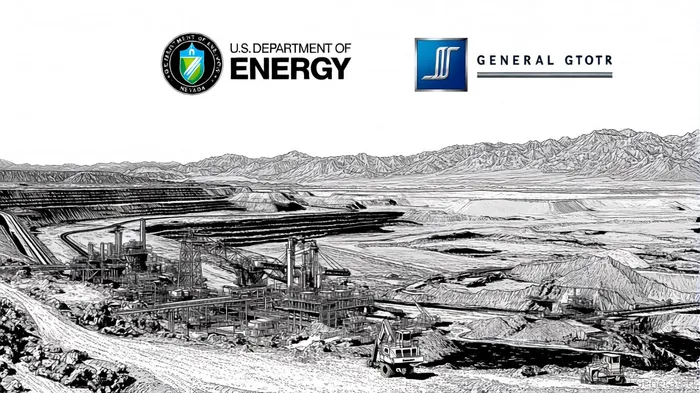
In late 2025, Lithium Americas (LAC) experienced a meteoric 90% surge in its share price, driven by a confluence of strategic developments and regulatory tailwinds reshaping the U.S. electric vehicle (EV) battery supply chain. This dramatic market reaction underscores the company's pivotal role in addressing the nation's critical mineral needs and its alignment with federal policies aimed at reducing reliance on foreign sources, particularly China[1].
Strategic Positioning: Thacker Pass as a Cornerstone of U.S. Lithium Independence
Lithium Americas' Thacker Pass project in Nevada has emerged as a linchpin in the Biden administration's broader strategy to establish a self-sufficient lithium supply chain. The project, backed by a $2.26 billion loan from the U.S. Department of Energy (DOE), is poised to produce 40,000 metric tons of battery-grade lithium carbonate annually by 2027[3]. This output could power up to 800,000 EVs annually, directly supporting the administration's goal of achieving 50% battery electric vehicle (BEV) sales by 2030[2].
The project's strategic significance is further amplified by its partnerships. General MotorsGM-- (GM) has committed $625 million for a 38% stake and a 20-year offtake agreement, ensuring a stable demand pipeline[3]. Additionally, Orion Resource Partners' $250 million investment in April 2025[1] and the Trump administration's rumored 10% equity stake in the company[4] signal robust institutional confidence. These partnerships not only de-risk the project but also align with the U.S. government's broader strategy of securing equity stakes in critical industries, as seen in recent investments in Intel and MP Materials[5].
Regulatory Tailwinds: Policy-Driven Momentum
The U.S. has implemented a suite of policies to bolster domestic lithium production, creating a favorable environment for companies like Lithium Americas. The Biden administration's 100% tariff on Chinese EVs and 25% tariff on lithium-ion batteries[6], coupled with the Inflation Reduction Act (IRA), has incentivized domestic production through clean vehicle credits and grants. The IRA alone has spurred $173 billion in private-sector investment in the clean vehicle supply chain since 2021[6].
Simultaneously, the Trump administration's conditional equity stake negotiations[4] reflect a bipartisan consensus on securing critical mineral supply chains. This move, while politically charged, aligns with the Department of Energy's $3 billion funding for 25 battery-related projects in 2024[6], underscoring federal commitment to reducing bottlenecks in lithium processing.
However, regulatory challenges persist. States like Texas and Utah face delays in finalizing lithium extraction rules, while environmental concerns at the Great Salt Lake have stalled projects[7]. These hurdles highlight the need for continued policy clarity, yet the Thacker Pass project's advanced permitting status positions Lithium Americas to outpace competitors.
Market Reactions and Long-Term Outlook
The market's enthusiasm for Lithium Americas is justified by its unique positioning. With $509.1 million in cash reserves as of June 2025[8] and a well-capitalized balance sheet, the company is navigating a volatile lithium market—where prices have dipped due to oversupply and Chinese production surges[8]—with relative resilience. Analysts remain cautiously optimistic, with a consensus “Hold” rating and a 12-month price target of $4.15[8], despite recent bearish revisions.
The Trump administration's potential equity stake[4] has further de-risked the Thacker Pass project, which is now viewed as a strategic asset rather than a cyclical commodity play. This shift in perception is critical: investors are increasingly valuing companies that align with national security and energy independence goals, a trend amplified by the IRA's emphasis on secure supply chains[6].
Conclusion: A Strategic Bet on the Future of Mobility
Lithium Americas' share price surge is not merely a reaction to short-term news but a reflection of its strategic alignment with U.S. policy priorities and the EV industry's long-term trajectory. The Thacker Pass project, supported by federal loans, corporate partnerships, and potential government equity, is uniquely positioned to dominate the North American lithium supply chain. While market volatility and regulatory uncertainties remain, the company's robust financials and policy tailwinds make it a compelling case study in how geopolitical and industrial forces are reshaping the EV battery landscape.





Comentarios
Aún no hay comentarios