
Lithium Americas' Strategic Position in the EV Supply Chain: Growth Potential and Investor Sentiment Amid Rising Global Demand for Battery-Grade Lithium
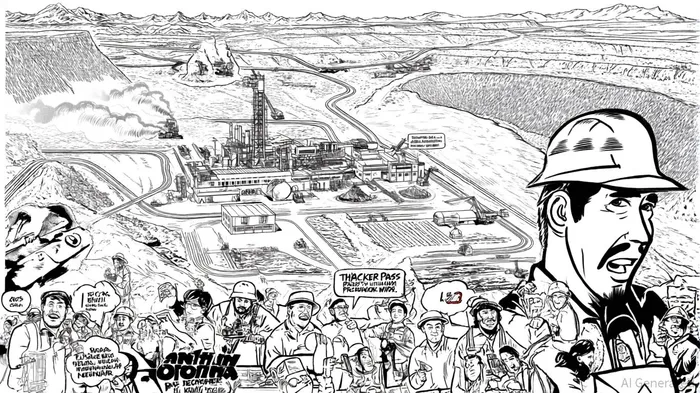
The global transition to electric vehicles (EVs) has ignited a surge in demand for battery-grade lithium, positioning companies like Lithium Americas at the forefront of a critical supply chain. With its flagship Thacker Pass project in Nevada, the firm is not only capitalizing on this demand but also securing strategic partnerships and government support to mitigate risks and accelerate growth. This analysis examines Lithium Americas' positioning, its project timelines, and the implications for investor confidence in a market poised for long-term expansion.
A Cornerstone of the U.S. Battery Supply Chain
Lithium Americas' Thacker Pass project is a linchpin in the U.S. effort to localize battery material production. The project, spanning 85 years across five phases, aims to produce 160,000 tonnes per year (t/y) of lithium carbonate—a key input for EV batteries—by full capacity[1]. Phase 1, targeting 40,000 t/y, is set for mechanical completion in 2027, with full production expected by 2028[2]. This timeline aligns with the U.S. Department of Energy's (DOE) $2.26 billion loan, which has already funded major construction milestones, including the first permanent concrete placement in the processing plant in May 2025[3].
The project's scale is further bolstered by 14.3 million tonnes of lithium carbonate equivalent (LCE) reserves, ensuring a robust foundation for multi-decade operations[2]. This longevity is critical in a market where supply chain stability is a top priority for automakers and policymakers alike.
Strategic Partnerships and Offtake Agreements
General Motors (GM) has emerged as a pivotal partner, securing 100% of Phase 1 production for 20 years and 38% of Phase 2 output[1]. This offtake agreement, coupled with GM's 38% equity stake in the project (via a $625 million investment), underscores the automaker's commitment to securing a domestic lithium supply[2]. For Lithium Americas, such partnerships reduce market exposure and provide a predictable revenue stream, enhancing the project's financial viability.
Government Support and Risk Mitigation
The Trump administration's proposed 10% equity stake in Lithium Americas, as part of renegotiating the DOE loan terms, signals a broader strategy to fortify U.S. mineral security[4]. This move, similar to interventions supporting MP Materials and Intel, aims to address concerns over repayment capacity amid volatile lithium prices[5]. By converting debt into equity, the government could lower the company's financial burden while gaining a stake in a critical infrastructure asset.
This support is not merely symbolic. A government equity stake would likely improve financing terms, reduce project risk, and accelerate construction timelines[5]. For investors, it represents a de facto endorsement of Lithium Americas' role in national energy security, potentially attracting additional private capital.
Investor Sentiment and Market Dynamics
Investor confidence in Lithium Americas is further reinforced by its execution track record. As of September 2025, the project remains on schedule, with first steel installation slated for the same month[3]. This adherence to timelines contrasts with delays seen at other lithium projects, positioning Thacker Pass as a reliable supplier in a market plagued by uncertainty.
However, challenges persist. Global lithium prices have fluctuated due to oversupply concerns and slowing EV adoption in some markets. Yet, the U.S. government's involvement and long-term offtake agreements with GM provide a buffer against short-term volatility[4]. Analysts note that the project's low cash costs and domestic sourcing advantages (under the Inflation Reduction Act) could drive margins higher as demand stabilizes.
Conclusion: A Strategic Bet on the EV Future
Lithium Americas' Thacker Pass project exemplifies the intersection of corporate ambition, strategic partnerships, and government intervention. With a 85-year mine life, a diversified funding structure, and a critical role in the U.S. EV supply chain, the company is well-positioned to capitalize on the long-term growth of battery-grade lithium. While market risks remain, the project's scale, government backing, and off-take security make it a compelling investment for those aligned with the decarbonization megatrend.
For investors, the key takeaway is clear: Lithium Americas is not just a supplier but a strategic enabler of the EV revolution—a position that could yield substantial returns as the world pivots toward electrification.







Comentarios
Aún no hay comentarios