
Lithium Americas' Strategic Financing Talks with the U.S. DOE and General Motors: A Critical Mineral Supply Chain Investment Analysis
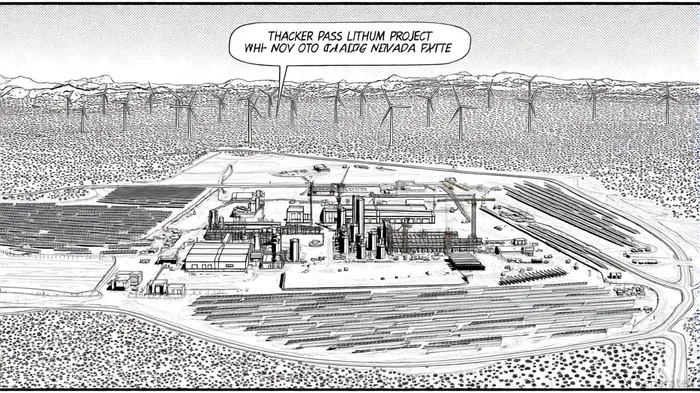
The recent developments in Lithium Americas' financing negotiations with the U.S. Department of Energy (DOE) and General MotorsGM-- (GM) underscore a pivotal moment for critical mineral supply chain security and the electric vehicle (EV) industry. With a $2.26 billion loan secured under the Advanced Technology Vehicles Manufacturing (ATVM) Loan Program, the Thacker Pass lithium project in Nevada is positioned to become a cornerstone of U.S. energy independence[1]. This analysis evaluates the investment implications of this strategic financing, focusing on its alignment with national security goals, EV industry growth, and the geopolitical dynamics of lithium supply chains.
Strategic Financing and Project Viability
Lithium Americas' $2.26 billion loan from the DOE, coupled with GM's $625 million investment and 38% stake in the project, reflects a calculated approach to de-risking capital-intensive infrastructure development[2]. The loan's 24-year repayment period and fixed interest rate tied to U.S. Treasury rates provide long-term financial stability, critical for a project requiring significant upfront capital[5]. GM's binding offtake agreement—ensuring 100% of Phase 1 production and 38% of Phase 2—further solidifies demand certainty, mitigating market volatility risks[2].
However, the Trump administration's proposed 10% equity stake in Lithium Americas introduces a layer of political uncertainty[3]. While such a move could align U.S. taxpayer interests with project outcomes, it may also complicate governance and dilute shareholder value. Investors must weigh these risks against the broader strategic imperative: reducing reliance on China, which currently controls over 70% of global lithium processing capacity[3].
Critical Mineral Supply Chain Security
The Thacker Pass project's strategic importance lies in its potential to disrupt the U.S.'s near-total dependence on foreign lithium processing. By establishing a domestic facility to refine raw lithium into battery-grade materials, the project could reduce the U.S. from producing less than 1% of global lithium supply to a major player[1]. First production, targeted for 2028, is expected to yield 40,000 metric tons of lithium carbonate annually—enough for 800,000 EVs[5]. This output would directly support the Biden administration's clean energy goals and GM's aggressive EV production targets.
Data from Reuters highlights that the Trump administration's interest in an equity stake mirrors similar strategies in critical mineral and technology sectors, aiming to ensure U.S. taxpayers benefit from strategic investments[3]. While this approach may enhance project viability through reduced capital costs, it also raises questions about regulatory consistency and long-term policy direction.
EV Industry Alignment and Market Dynamics
The EV industry's rapid growth—projected to see fivefold demand increases by 2030—positions Thacker Pass as a linchpin for U.S. industrial competitiveness[3]. GM's 20-year offtake agreement ensures a stable supply of battery materials, aligning with its commitment to electrify 70% of its U.S. vehicle lineup by 2035[2]. This partnership exemplifies the symbiotic relationship between automakers and mineral developers, where supply chain resilience directly impacts EV production scalability.
Yet, challenges persist. The project's ability to compete with cheaper lithium imports from China remains a concern[2]. While the DOE's loan includes incremental repayment conditions tied to construction milestones[1], investors must monitor whether these terms adequately address market volatility and geopolitical shifts in lithium pricing.
Political and Environmental Considerations
Bipartisan support from Nevada lawmakers highlights the project's economic and environmental benefits, including nearly 2,000 direct jobs and a $11.8 million grant from the U.S. Department of Defense for local infrastructure[4]. However, environmental concerns—such as habitat disruption and water usage—could trigger regulatory delays or community opposition[2]. Investors should assess how Lithium Americas plans to address these challenges, particularly as ESG (Environmental, Social, and Governance) criteria gain prominence in capital allocation decisions.
Conclusion: Balancing Risk and Reward
Lithium Americas' financing talks with the DOE and GMGM-- represent a high-stakes bet on the future of U.S. energy security and EV manufacturing. The project's success hinges on navigating political uncertainties, ensuring environmental compliance, and maintaining cost competitiveness. For investors, the key question is whether the strategic value of securing a domestic lithium supply chain justifies the risks associated with regulatory shifts and market volatility.
As the U.S. races to decarbonize its economy, Thacker Pass exemplifies the intersection of industrial policy and private investment. Those who align with this vision may find long-term value in a project that not only fuels the EV revolution but also redefines America's role in the global critical mineral landscape.





Comentarios
Aún no hay comentarios