
Lithium Americas' Strategic Financing Moves and Their Implications for the EV Supply Chain
Lithium Americas' recent strategic financing agreement with General MotorsGM-- (GM) and the U.S. Department of Energy (DOE) has positioned the company as a pivotal player in the evolving EV supply chain landscape. This $2.26 billion loan package, with a first draw of $435 million expected in Q4 2025, represents more than a financial lifeline-it signals a calculated move to align corporate strategy with national energy security priorities while mitigating investor risk.
Financial Restructuring: A Catalyst for Stability and Growth
The agreement defers $182 million in debt service over the first five years, easing immediate cash flow pressures for Lithium Americas. This deferral, coupled with a 5.0% projected interest rate (lower than initially anticipated), results in $256 million in capitalized interest, effectively reducing the loan's effective cost, according to a Lithium Americas press release. Additionally, the DOE's 5% equity stake in the company and a 5% economic stake in the Thacker Pass joint venture-secured through warrants-aligns long-term incentives between the government and the company.
The requirement to post an additional $120 million to reserve accounts within 12 months of the first draw further underscores the DOE's commitment to risk mitigation, ensuring project milestones are met. For Lithium Americas, this structure transforms a high-risk capital-intensive project into a more predictable, scalable endeavor.
Investor Confidence and Market Reactions
The market responded swiftly to the news. On October 1, 2025, Lithium Americas' stock surged 23–24%, hitting a 52-week high of $7.04, according to an Electrive report. Analysts, including Wedbush's Dan Ives, upgraded price targets to as high as $8, citing the DOE's involvement as a "game-changer" that de-risks the Thacker Pass project and validates the company's strategic positioning. The equity stake and deferral terms, according to Ives, "send a clear signal to investors that the U.S. government is betting on domestic lithium production to counter China's dominance in the sector."
This optimism is further bolstered by GM's updated offtake agreement, which now allows third-party supply contracts for unallocated Thacker Pass production. This flexibility not only diversifies revenue streams but also positions Lithium Americas as a critical supplier for multiple EV manufacturers.
Strategic Implications for the EV Supply Chain
The Thacker Pass project, one of North America's largest lithium deposits, is projected to produce 40,000 tons of battery-grade lithium carbonate annually-enough to power several thousand EVs. By securing domestic production, the DOE's investment aligns with the Inflation Reduction Act's (IRA) goals to reduce reliance on foreign adversaries for critical minerals. Secretary of Energy Chris Wright emphasized that the deal "protects taxpayer interests while accelerating the clean energy transition".
This move also addresses a key bottleneck in the EV supply chain. With global lithium demand expected to grow exponentially, securing a stable, low-cost domestic source is critical for automakers like GMGM--. The DOE's equity stake ensures that U.S. policy and corporate strategy are mutually reinforcing, creating a model for future mineral projects.
Long-Term Growth and Risk Mitigation
While the upfront costs of Thacker Pass remain significant, the financial restructuring reduces leverage risks and extends the company's runway. The deferral of debt service and capitalized interest provide breathing room to navigate market volatility, particularly as lithium prices fluctuate in response to global demand cycles.
For investors, the deal's success hinges on timely project execution and adherence to cost estimates. However, the DOE's oversight and equity participation add a layer of accountability, potentially deterring operational missteps. As one industry analyst noted, "This isn't just a loan-it's a partnership that balances ambition with prudence."
Conclusion
Lithium Americas' strategic financing moves exemplify how corporate and governmental collaboration can address both financial and geopolitical challenges in the EV supply chain. By securing a low-cost, high-capacity domestic lithium source, the company not only strengthens its own growth trajectory but also contributes to a more resilient U.S. energy infrastructure. For investors, the combination of policy support, reduced financial risk, and market optimism makes Lithium Americas a compelling case study in aligning capital with national priorities.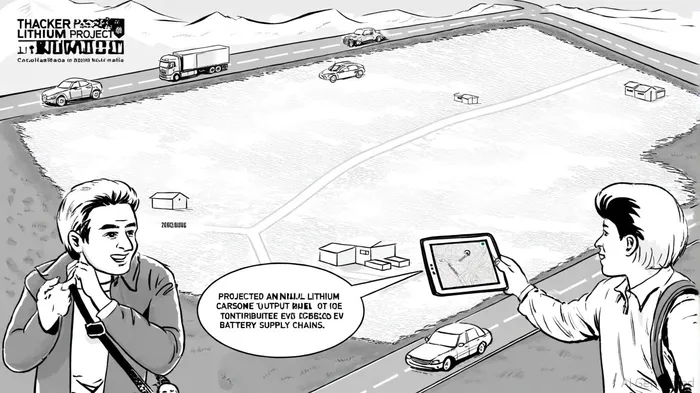







Comentarios
Aún no hay comentarios