
Lithium Africa Navigates Cycle Turn: Euroswiss Mandate Adds Strategic Edge to High-Conviction African Lithium Play
The lithium market is firmly exiting a prolonged supply glut. After a steady decline from its 2022 highs, prices hit a low of below $7,500/t cif China in mid-June of this year. That period, spanning roughly two and a half years, was defined by fears of oversupply, uneven electric vehicle uptake, and trade barriers. But the trajectory has reversed. Prices have since recovered to $11,500-11,600/t cif China and are now poised for a sustained new cycle of increases.
This emerging phase is driven by a fundamental shift in demand. While EV adoption powered the last cycle, the next is expected to be anchored by battery energy storage systems (BESS). Industry analysts project that BESS demand will surpass demand from EVs by the late 2020s. This transition is being fueled by record solar installations and the critical need for grid stability as renewable energy penetration grows. Furthermore, new industrial applications like AI data centers and humanoid robotics are adding layers of sustained, non-transport demand.
Yet this structural shift comes with a credibility challenge. The industry's history of extreme volatility has prompted a push for greater trust and transparency. Initiatives like the International Lithium Association's PCF stamp aim to create a recognized "mark of trust" for lithium products. At the same time, market participants are moving toward hybrid contracts with price floors to ensure project financeability. These developments signal a maturing market where policy, finance, and geopolitics are increasingly shaping price stability alongside raw demand growth.
Strategic Positioning: The Euroswiss Mandate as a Cycle Navigation Tool
For a junior explorer navigating the volatile transition from a supply glut to a new demand cycle, securing capital and managing financial risk are paramount. Lithium Africa's recent appointment of Euroswiss as its financial advisory partner is a tactical move designed to strengthen its position during this critical phase. The flexible advisory mandate provides a professional relationship that offers tailored guidance, market intelligence, and continuous monitoring-resources that are especially valuable when making high-stakes exploration decisions under uncertainty.
This move complements the company's existing strategic partnership with Ganfeng Lithium, which already provides a crucial dual advantage. The 50/50 joint venture with one of the world's largest lithium producers ensures access to capital and aligns Lithium Africa with deep downstream chemical expertise. This partnership is a cornerstone of the company's model, effectively leveraging every dollar raised to fund exploration with a two-to-one capital multiplier. The Euroswiss mandate now adds a layer of sophisticated financial oversight and strategic insight, helping to manage the portfolio and navigate capital markets861049-- as the company advances its projects.
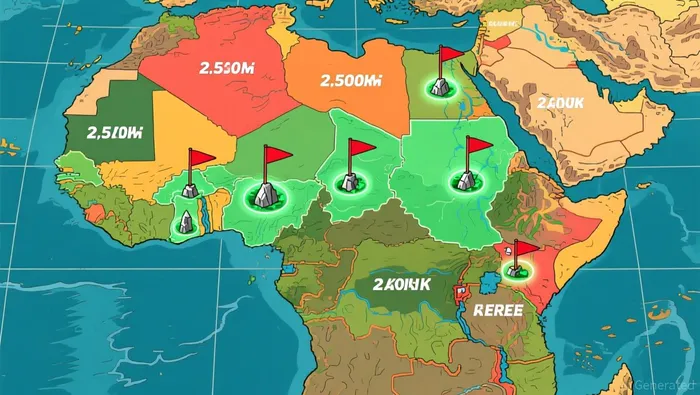
The foundation for this strategy is a district-scale portfolio of over 2,500 km² across five African countries. This multi-jurisdictional asset base is a key strength, offering a diversified exploration footprint well-suited for a phased, capital-efficient approach. By holding large, camp-scale positions in proven and emerging geographies from Morocco to Zimbabwe, Lithium Africa can prioritize drilling based on the latest data and market conditions. This flexibility is essential for managing cash burn during the cycle transition and for de-risking assets incrementally.
In essence, the Euroswiss mandate acts as a navigation tool. It provides the professional guidance needed to manage the company's financial course while its Ganfeng partnership and African portfolio deliver the strategic momentum. Together, these elements form a cohesive plan to de-risk exploration, secure funding, and position Lithium Africa to capture value as the next lithium cycle unfolds.
Financial Execution and Capital Efficiency
The company's recent financial execution demonstrates strong investor confidence and a clear path to fund its exploration ambitions. The private placement was increased to aggregate gross proceeds of C$8.5 million due to robust demand, with a lead order secured from a major fund. This capital, combined with the proceeds from the Springbok Project acquisition, provides the necessary runway for the next phase of drilling and data collection. The structure of the offering-units priced at C$2.00 with a three-year warrant-aligns investor incentives with long-term value creation, a prudent move in a capital-intensive sector.
The true engine of Lithium Africa's capital efficiency is its 50/50 joint venture partnership with Ganfeng Lithium. This alliance is not merely strategic; it is a financial multiplier. As the company's profile notes, the model ensures that every dollar LAF raises funds 2 dollars of exploration. Ganfeng's deep industry expertise and access to capital effectively double the value of each dollar raised, de-risking the exploration process and accelerating project advancement. This shared capital and shared risk model is critical for a junior explorer to navigate the high costs and long timelines inherent in hard rock lithium discovery.
Yet, the primary risk remains one of execution. The company has assembled a portfolio of over 2,500 km² across five African countries and a world-class geological team, but converting these assets into economic discoveries is the ultimate test. The competitive landscape for high-grade spodumene is intensifying, and the capital-intensive nature of exploration means that financial discipline is paramount. The recent capital raise provides a solid foundation, but the company must now translate its district-scale holdings and strategic partnership into tangible resource targets and, ultimately, a discovery within its stated 12-month horizon. The macro cycle is shifting in lithium's favor, but the financial and operational execution will determine whether Lithium Africa captures its share of the next phase.
Catalysts, Scenarios, and What to Watch
The investment thesis for Lithium Africa hinges on a successful navigation of the lithium market's macro cycle transition. For investors, the path forward is defined by a series of tangible catalysts and a clear-eyed assessment of the risks.
The primary catalysts are operational and tied directly to the company's stated 12-month horizon. The most immediate is the delivery of 2-3 resource targets within six months. These targets will test the company's data-driven exploration model and its ability to de-risk assets quickly. The ultimate milestone is the 12-month goal to exit a discovery. A positive discovery in one of its African districts would be a transformative event, validating its district-scale portfolio and joint venture strategy. Progress within the LAR-GFL JV-including drilling results and resource updates-is the key metric to watch for confirmation of this execution plan.
Beyond these internal milestones, the external macro environment is the ultimate arbiter of value. The company's success is inextricably linked to the strength and sustainability of the new lithium cycle, which is being driven by a shift from EV-dominated demand to a mix that includes battery energy storage systems (BESS) and new industrial applications. Investors should monitor lithium price trends, particularly the balance between BESS and EV demand, as a primary indicator of the cycle's strength. Analysts forecast a price range of 80,000-200,000 yuan per ton in 2026, a significant step up from recent lows, but the market remains sensitive to any sign that prices rise too quickly and undermine the economics of storage deployment.
The major scenario risk is a prolonged period of low lithium prices. The market's recent history of extreme volatility means that a reversal or stall in the current recovery would pressure the company's valuation and its exploration budget. While the company's joint venture model provides a financial buffer, a weak cycle could delay project advancement and increase the cost of capital. The bottom line is that Lithium Africa is a tactical play on a macro cycle transition. Its success depends on executing its exploration plan while the broader market shifts from a supply glut to a new demand regime anchored by energy storage.







Comentarios
Aún no hay comentarios