
Litecoin's Transition to a Programmable Blockchain and Its Implications for Institutional Adoption
Litecoin (LTC), long celebrated as the "digital silver" to Bitcoin's gold, is undergoing a transformative shift in 2025 and 2026. By embracing programmable blockchain capabilities, the cryptocurrency is repositioning itself as a versatile infrastructure layer for decentralized finance (DeFi) and real-world asset (RWA) integration. This evolution, driven by technical upgrades, institutional partnerships, and regulatory tailwinds, is poised to catalyze broader adoption and redefine Litecoin's role in the crypto ecosystem.
2025 Momentum: Technical Upgrades and Privacy Enhancements
Litecoin's 2025 roadmap has delivered critical advancements that address scalability, privacy, and security. The integration of LitVM, a zero-knowledge Layer-2 solution, in May 2025 marked a pivotal milestone. By enabling Ethereum-compatible smart contracts and cross-chain interoperability, LitVM has unlocked DeFi use cases while preserving Litecoin's hallmark speed and low fees according to CoinMarketCap. This innovation positions LitecoinLTC-- as a bridge between traditional payment networks and programmable money ecosystems.
Privacy improvements further bolstered confidence in the network. The MimbleWimble Extension Block (MWEB), launched in July 2025, reduced transaction sizes by 15% and enhanced confidentiality. By Q3 2025, MWEB had secured $14M+ in locked value, demonstrating growing user trust in Litecoin's privacy features. Meanwhile, the November 2025 release of Litecoin Core v0.21.3 addressed critical vulnerabilities, reinforcing the protocol's security posture.
2026 Roadmap: Programmable Money and Institutional Onboarding
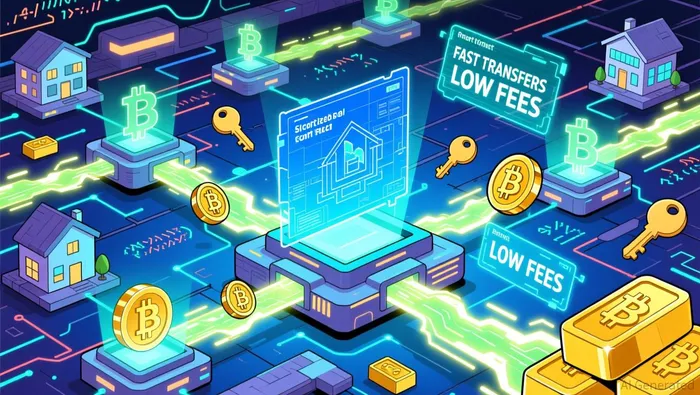 The 2026 roadmap builds on this momentum, with the mainnet launch of LitVM in Q2 2026 set to enable trustless cross-chain swaps. This upgrade will allow developers to deploy decentralized applications (dApps) on Litecoin, expanding its utility beyond payments. For instance, tokenized assets such as real estate, government bonds, and commodities-key components of the RWA movement-could leverage Litecoin's infrastructure for fast, low-cost settlements as reported on Reddit.
Institutional adoption is another focal point. Three U.S. spot ETFs are under SEC review and projected for approval by Q4 2025. These products would provide institutional investors with regulated exposure to Litecoin, potentially unlocking billions in capital. Corporate entities like MEI Pharma and Luxxfolio are also expanding Litecoin treasury holdings to $100M+ by 2026, signaling growing confidence in the asset's store-of-value proposition.
DeFi and RWA Integration: A Strategic Fit
Litecoin's technical attributes align closely with DeFi and RWA trends. Its fast settlement times (2.5 minutes) and low fees (<$0.01 per transaction) make it an ideal medium for tokenized assets and decentralized exchanges (DEXs). For example, platforms like Ondo Finance and RealT, which tokenize real estate and income streams, could integrate Litecoin to reduce friction in cross-chain transactions.
While specific RWA partnerships remain unannounced, broader industry trends suggest Litecoin's potential. Projects like Chainlink and Algorand are pioneering RWA tokenization, and Litecoin's Layer-2 solutions (e.g., the Lightning Network) could complement these efforts. Additionally, AI-driven analytics-showing 76.3% accuracy in predicting price movements-are attracting algorithmic trading strategies, further deepening liquidity for institutional players.
Institutional Adoption: Regulatory Clarity and Infrastructure
Regulatory developments are accelerating institutional onboarding. The U.S. CFTC's digital asset collateral pilot program, which allows BTC and ETH to be used as margin, signals a shift toward mainstream acceptance of tokenized assets. Litecoin's focus on fast, secure settlements and privacy-preserving features positions it to benefit from this trend, particularly as custody solutions and compliance tools mature.
Corporate adoption is also gaining traction. The Litecoin Foundation's Nexus Wallet and OmniLite platform-a decentralized token creation tool-highlight the ecosystem's innovation pipeline. These projects, combined with growing RWA interest, suggest Litecoin is evolving from a payment layer to a foundational infrastructure for digital assets.
Conclusion: A Catalyst for the Future of Finance
Litecoin's 2025-2026 roadmap represents a strategic pivot toward programmable blockchain capabilities, institutional adoption, and RWA integration. By combining technical upgrades with regulatory and market infrastructure, the project is addressing key barriers to mainstream adoption. For investors, this transition offers exposure to a cryptocurrency that is not only preserving its legacy as a fast, low-cost payment network but also expanding into DeFi and RWA ecosystems. As institutional capital flows into crypto and tokenization gains momentum, Litecoin's dual role as a value layer and programmable infrastructure could drive significant long-term value.






Comentarios
Aún no hay comentarios