
LIT Surges 13–37% as Lighter Launches Treasury Buyback Program
Lighter has launched a treasury buyback program, allocating 50% of protocol fees from its DEX to repurchase LITLIT-- tokens, with the goal of reducing supply by up to 3%. As of early January 2026, the program repurchased over 180,000 LIT tokens at a cost of around $550,000, reinforcing transparency and long-term alignment with token holders. Whale activity, such as a $4.86 million WBTCWBTC-- conversion and a $4 million USDCUSDC-- deposit to purchase LIT, highlights institutional confidence in the token's potential.
Lighter's buyback program aims to align token value with protocol growth, with the treasury account tracking both protocol revenue and buyback activity. Institutional and high-net-worth investors, holding over 13.2 million LIT tokens, signal long-term belief in the token. Despite these developments, LIT has seen a decline in volume, dropping from peaks of $7 billion–$12 billion to $1.73 billion in daily trading.
Lighter remains the third-largest perpetual DEX by open interest, which many consider a more reliable performance metric. Whale activity includes both bullish and bearish indicators, such as a 5x leveraged short position in LIT and increased on-chain accumulation near key support levels. The mixed signals suggest the token is experiencing a period of volatility with uncertain price direction.
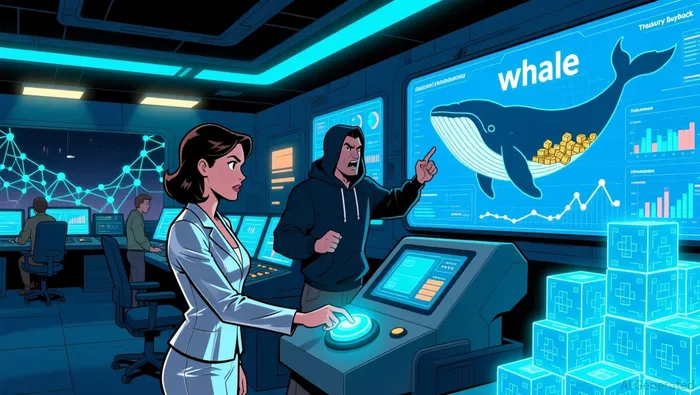
What is driving LIT's recent price movement?
LIT's price has seen significant short-term gains, with some reports showing surges between 13–37%. Whale activity, including large USDC deposits and conversions from WBTC, reflects growing institutional interest and bullish sentiment. Additionally, Lighter has secured $68 million in funding at a $1.5 billion valuation, providing financial backing for further buybacks. These factors contribute to a positive narrative for LIT in the short term.
What are the key risks and limitations to consider?
Despite the positive signals, LIT is facing conflicting market dynamics. Traders are shifting focus to alternative platforms with airdrop incentives, contributing to declining volume and platform activity. Leveraged short positions, such as a $2.2 million investment in a 5x leveraged short, indicate bearish sentiment and potential for price declines. The presence of both bullish and bearish whale activity adds to the uncertainty and highlights the token's susceptibility to concentrated market behavior.
What does the future hold for LIT's buyback program and market confidence?
The treasury buyback program aims to reduce circulating supply and increase token value, but its long-term effectiveness will depend on continued protocol revenue and market participation. Whale accumulation and institutional investments suggest confidence in LIT's long-term potential. However, the token's performance will also be influenced by broader market trends, including liquidity shifts and competition from other decentralized exchanges. Investors will need to closely monitor both on-chain activity and market conditions to assess the token's trajectory.






Comentarios
Aún no hay comentarios