
LIT Surges 13–37% as Lighter Launches Treasury Buyback Program
Lighter, the decentralized exchange (DEX), launched a treasury buyback program in January 2026, using 50% of DEX fees to repurchase LITLIT-- tokens with the aim of reducing the circulating supply by up to 3%. This move has led to a price surge of 13–37%, with the token reaching $3.11.
Whale activity, including a $4.86 million WBTC conversion to purchase 1.119 million LIT tokens, has reinforced investor sentiment and demonstrated institutional interest. A single wallet holds 13.2 million LIT tokens valued at nearly $40 million, indicating strong belief in the token's long-term potential.
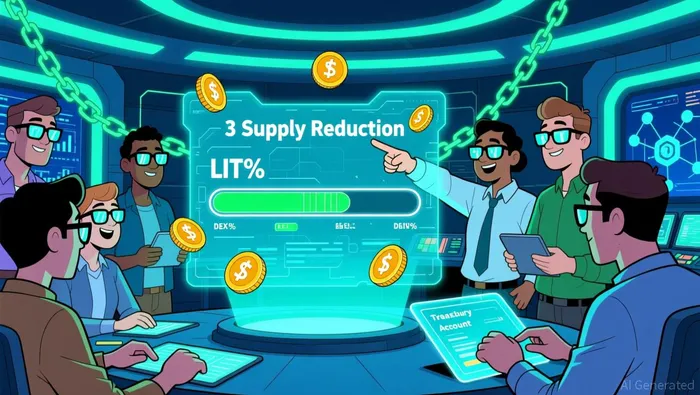
- The treasury account tracks protocol revenue and buyback activity on-chain, adding transparency and aligning long-term value with token holders. As of early January 2026, the treasury had repurchased over 180,000 LIT tokens at a cost of around $550,000.
What is Lighter's buyback program?
Lighter's buyback program channels 50% of DEX fees into on-chain repurchases of LIT tokens, aiming to reduce the token supply and align protocol growth with token value. As of early January 2026, the treasury had already repurchased over 180,000 LIT tokens, showing early progress toward the supply reduction goal.
The buyback strategy is designed to create sustained demand by reducing supply and aligning token value with protocol usage. The platform also plans to use future product revenue to support both growth and buybacks.
Why is whale activity important for LIT's price?
Whale activity, such as the $4.86 million WBTC conversion to buy 1.119 million LIT tokens, has significantly reinforced market confidence. These large transactions signal institutional interest and long-term belief in the token's value.
A wallet holding 13.2 million LIT tokens valued at nearly $40 million further demonstrates strong conviction. Such whale activity contributes to upward price pressure and can influence retail investor sentiment.
What is the impact of on-chain transparency on investor confidence?
On-chain transparency, through the tracking of protocol revenue and buyback activity in a public treasury account, has reinforced investor confidence. As of early January 2026, the treasury held 180,588 LIT tokens valued at approximately $548,987.
This transparency aligns long-term value with token holders and reduces uncertainty about the buyback program's execution. The confirmation of buybacks has also triggered speculation about future token price movements.
Lighter's commitment to on-chain transparency is further supported by its $68 million funding round in December 2025, which valued the protocol at $1.5 billion. These funds are expected to support additional buybacks and ecosystem expansion.
What are the risks or limitations of the buyback program?
The success of the buyback program depends on maintaining high DEX fees and protocol usage. Fee volatility could limit the effectiveness of the buybacks, and concentrated whale holdings may introduce price volatility if large holders decide to sell.
Additionally, broader crypto market conditions and declining trading volume could influence LIT's performance if fees and usage fall. Critics argue that the buyback strategy may face challenges if the market becomes more competitive or if alternative platforms attract traders.
Despite these risks, the buyback program has generally received positive feedback from analysts, who cite improved technical indicators and bullish sentiment among token holders.
Lighter's buyback program has created immediate investor confidence and signaled long-term value creation. The protocol's treasury now holds over $548,000 in LIT tokens, with market participants closely monitoring on-chain activity to track the program's progress.
Whale transactions and institutional activity have added upward pressure to LIT's price, with some analysts projecting further gains if the buyback pace continues.
The buyback program builds on Lighter's $68 million funding round in December 2025, which is expected to support ecosystem growth and continued buybacks.







Comentarios
Aún no hay comentarios