
Liquidity Risks and Default Contagion in Oil Exploration: A Sectoral Spillover Analysis
The oil exploration sector, long a cornerstone of global energy markets, has faced unprecedented liquidity pressures in the 2020–2025 period. From the April 2020 collapse of West Texas Intermediate (WTI) prices to the geopolitical shocks of the Russia-Ukraine war, firms in this space have grappled with cascading risks that transcend individual companies and ripple across sectors. Recent academic and industry research underscores a critical reality: liquidity risks in oil exploration are not isolated events but interconnected vulnerabilities that amplify default contagion and sectoral spillover effects, according to a 2023 study.
The Interplay of Liquidity Risks and Debt Structures
Liquidity risks in oil exploration firms manifest in two primary forms: market liquidity risk (the ability to sell assets quickly without price erosion) and rollover risk (the ability to refinance short-term debt). That 2023 study reveals that these risks are endogenously linked, with firms often adjusting debt maturity structures in response to liquidity shocks. For example, during periods of market stress, firms may shift toward long-term debt to mitigate short-term refinancing pressures. However, this strategy can backfire if prolonged low commodity prices erode cash flows, leaving firms with "maturity mismatches" that exacerbate sectoral spillovers, the study notes.
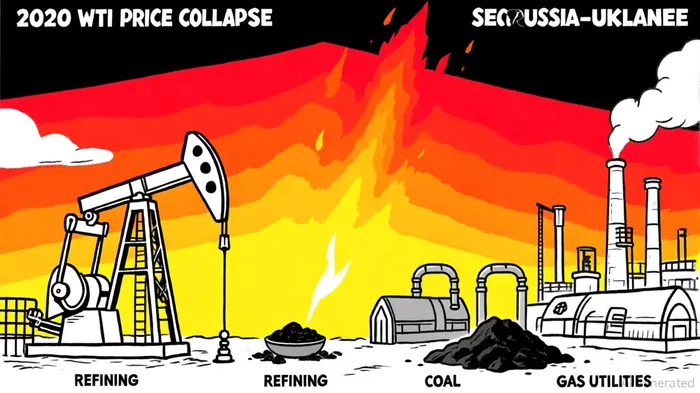
The 2020 WTI price collapse-a unique event where prices turned negative-exemplifies this dynamic. As demand cratered during the pandemic, oil exploration firms faced acute liquidity crunches. The crisis triggered a wave of debt restructuring and defaults, with spillover effects extending to coal and renewable energy markets, according to a 2020 study. A 2025 study on dynamic default-risk spillovers further highlights the asymmetry of these effects: integrated oil and gas firms saw contagion intensify during downturns, while gas utilities demonstrated relative resilience.
Geopolitical Shocks and Asymmetric Contagion
The Russia-Ukraine war has added a new layer of complexity to liquidity risks. Unlike the pandemic-driven crisis, which primarily impacted demand, the war disrupted supply chains and created asymmetric dependencies. Research published in an Energy Strategy Reviews article notes that oil-exporting nations, particularly those reliant on Russian hydrocarbons, experienced heightened contagion effects as revenues contracted. Conversely, oil-importing countries faced liquidity strains due to reduced purchasing power and volatile price swings, the article observes.
This asymmetry is further amplified by "tail dependencies"-extreme price movements that disproportionately affect market stability. For instance, during the war, WTI prices exhibited sharp volatility, transforming from a volatility "receiver" to a "transmitter" of shocks across stock, currency, and futures markets, as shown in a 2021 study. Such dynamics underscore the non-linear nature of contagion in oil markets, where even minor geopolitical events can trigger systemic stress.
Investment Implications and Mitigation Strategies
For investors, the lessons are clear. First, liquidity risks in oil exploration firms are inherently systemic. That 2023 study on debt maturity structures warns that firms with high short-term debt exposure are more susceptible to rollover crises during downturns. Second, sectoral spillovers mean that contagion is not confined to oil and gas but extends to related industries, including refining and utilities, as a later study documents.
To mitigate these risks, investors should prioritize firms with diversified debt maturities and strong balance sheets. Additionally, hedging strategies-such as using derivatives to lock in commodity prices-can buffer against liquidity shocks. For broader portfolios, diversification across energy subsectors (e.g., pairing integrated oil firms with resilient gas utilities) may reduce exposure to sector-specific contagion, the 2025 research suggests.
Conclusion
The oil exploration sector's liquidity risks are no longer siloed challenges but interconnected vulnerabilities that amplify default contagion and sectoral spillovers. From the 2020 WTI crash to the Russia-Ukraine war, external shocks have exposed the fragility of debt structures and the asymmetry of contagion channels. As global energy markets navigate an uncertain future, investors must adopt a nuanced approach-one that accounts for both the idiosyncratic risks of individual firms and the systemic interdependencies that define the sector.







Comentarios
Aún no hay comentarios