
Q-linea's Strategic Expansion into the U.S. Trauma Care Market: A Pathway to Commercial Validation and Growth
The U.S. trauma care market is undergoing a transformation driven by rising demand for rapid diagnostic solutions, a growing burden of complex injuries, and a healthcare system increasingly prioritizing efficiency and outcomes. For companies like Q-linea, this represents both a challenge and an opportunity. The Swedish biotech firm's ASTar® system-a rapid antimicrobial susceptibility testing platform-has emerged as a critical tool in trauma care, where time-sensitive decisions can mean the difference between life and death. As the market expands, Q-linea's strategic partnerships, commercial validation milestones, and alignment with industry trends position it as a compelling investment story.
Market Access: A Surge in Strategic Partnerships
The U.S. trauma care market is projected to grow at a compound annual rate of 7.6% through 2034, reaching $36.24 billion, driven by rising incidents of road accidents, natural disasters, and violence-related injuries, according to a trauma care market forecast. Against this backdrop, Q-linea has secured a series of high-impact partnerships that underscore its market access strategy. In January 2025, the company signed its first U.S. commercial contract to install the ASTarASTR-- system in a healthcare network spanning over 50 hospitals. This was followed by a national reference lab contract, with installations planned for Q2 2025 and a projected 4–8 placements in the same year.
Q-linea's focus on Level 1 trauma centers and integrated delivery networks (IDNs) has proven particularly effective. A prominent U.S. Level 1 University Hospital Trauma Center recently adopted the ASTar system, with installation and training scheduled for late Q1 2025, as noted in a trauma care centers report. These partnerships are not isolated wins but part of a broader strategy to penetrate key segments such as national reference labs, IDNs, and large independent hospitals-segments that collectively represent a significant portion of the trauma care market, as Q-linea predicts accelerated growth.
Commercial Validation: Evidence-Driven Growth
Commercial validation for Q-linea hinges on the ASTar system's ability to deliver measurable clinical and economic value. The system's rapid turnaround time-providing antimicrobial susceptibility results in under 24 hours-addresses a critical gap in trauma care, where delays in treatment can lead to sepsis, prolonged hospital stays, and higher mortality rates. According to internal projections from Q-linea, each ASTar instrument generates $1.2–1.8 million in annual consumables revenue, typically within 2–3 months of installation. This model, coupled with contractual requirements for a minimum of 1,000 tests annually per instrument, ensures recurring revenue streams.
The company's 2025 roadmap is ambitious. Q-linea anticipates securing 30–40 ASTar contracts by year-end, with 50% of these in the U.S. market. By 2026, it aims for 60–90 additional placements, with U.S. growth outpacing its European, Middle Eastern, and African (EMEA) operations. A national reference lab network rollout, initiated in March 2025, is expected to accelerate adoption through an S-curve deployment plan, scaling from six sites in 2025 to broader expansion in subsequent years.
Industry Alignment and Long-Term Potential
Q-linea's trajectory aligns with broader industry shifts. Trauma care systems are under pressure to reduce costs while improving outcomes, and the ASTar system's ability to streamline antibiotic use and reduce hospital stays directly addresses these priorities. As stated by a report from Grand View Research, the rise in emergency department visits for traumatic injuries is prompting healthcare systems to invest in specialized infrastructure and skilled staff. Q-linea's technology not only supports these investments but enhances their ROI through data-driven decision-making.
Conclusion: A High-Stakes Bet with Clear Payoffs
For investors, Q-linea's expansion into the U.S. trauma care market represents a high-stakes bet with clear payoffs. The company's ability to secure contracts with leading trauma centers and national labs, combined with the ASTar system's clinical and economic advantages, positions it to capture a growing share of a $36.24 billion market by 2034, according to the same trauma care market forecast. While challenges remain-such as scaling production and navigating regulatory hurdles-the evidence of commercial validation and strategic alignment with industry needs is compelling. As the U.S. trauma care landscape evolves, Q-linea's ASTar system may well become a standard of care, turning its early momentum into sustained growth.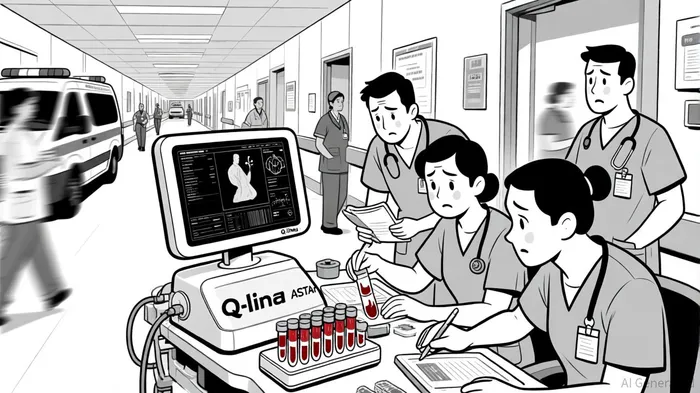







Comentarios
Aún no hay comentarios