
Linde's Strategic Expansion into the U.S. Space Sector: A Catalyst for Long-Term Growth
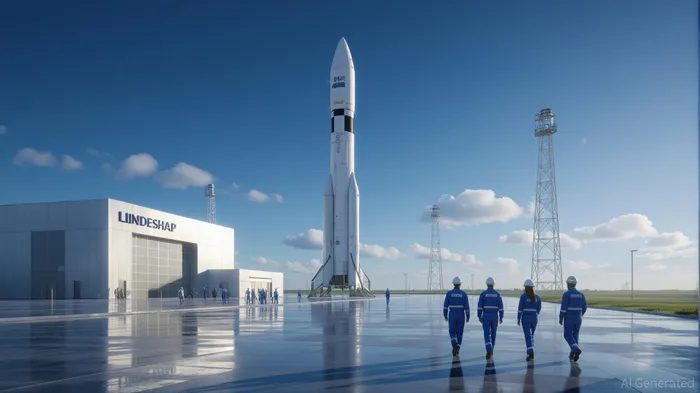
The U.S. space industry is undergoing a transformative era, driven by the rapid commercialization of spaceflight, the resurgence of lunar exploration, and the development of low Earth orbit (LEO) infrastructure. At the heart of this revolution lies a critical but often overlooked enabler: industrial gases. LindeLIN-- (LIN), a global leader in industrial gases and engineering, has positioned itself as a cornerstone of this new frontier through a combination of strategic investments, 60 years of space sector expertise, and robust financial fundamentals. For investors seeking exposure to the next wave of industrial innovation, Linde's alignment with the U.S. space economy presents a compelling opportunity.
A Legacy of Space Sector Expertise
Linde's involvement in space exploration dates back to the Apollo missions, where its industrial gases were instrumental in pressurizing fuel tanks and ensuring the safe operation of rockets. Today, the company remains a critical partner to NASA and private aerospace firms like SpaceX. For instance, Linde supplied liquid oxygen and hydrogen for NASA's Artemis I mission in 2022, a precursor to crewed lunar landings. Similarly, its gases are integral to SpaceX's Starship, the heavy-lift rocket designed to carry humans to Mars and serve as a cornerstone of NASA's Artemis program.
This deep heritage is not just historical—it's a competitive advantage. Linde's ability to deliver high-purity gases under extreme conditions (such as cryogenic temperatures and high pressures) ensures it remains indispensable in the development of advanced propulsion systems and in-space manufacturing.
Strategic Investments in Florida and Texas
Linde's recent $400M+ investments in Florida and Texas are directly tied to the surging demand for industrial gases in the U.S. space sector. In Florida, the company is expanding its Mims facility to increase production capacity by 50% for liquid oxygen and nitrogen. This expansion is critical to meeting the needs of aerospace clients, including SpaceX, which plans to launch 160 rockets in 2025 alone. The facility's proximity to Cape Canaveral also underscores its strategic importance in supporting the Kennedy Space Center's operations.
In Texas, Linde is constructing a $100M air separation plant in Brownsville, specifically tailored to supply liquid oxygen and hydrogen for SpaceX's Starship. This facility, supported by $1.3M in local job training incentives, is expected to create 90 high-skilled jobs and serve as a hub for the production of propellants used in Starship's Raptor engines. The plant's location at the North Brownsville Industrial Park—near SpaceX's Starbase facility—positions Linde at the epicenter of the company's ambitious Mars colonization goals.
These investments are not isolated. Linde is also advancing blue hydrogen and carbon capture projects in Texas, such as its partnership with BPBP-- to store 15 million metric tons of CO₂ annually by 2026. While these initiatives are primarily energy transition-focused, they indirectly support the space industry by developing infrastructure for sustainable rocket fuel production and reducing the environmental footprint of launches.
Financial Strength as a Growth Catalyst
Linde's financial performance underscores its ability to fund and sustain these high-impact projects. From 2023 to 2025, the company's EBITDA grew from $11.84 billion to $12.465 billion, reflecting a compound annual growth rate (CAGR) of 4.8%. Its market cap of $218.892 billion and revenue of $33.005 billion in 2024 further highlight its financial resilience.
The company's focus on hydrogen and carbon capture aligns with broader industrial and environmental trends, ensuring its relevance beyond the space sector. For example, Linde's blue hydrogen technology could become a key component in the production of green hydrogen for rocket fuel, a sector projected to grow exponentially as governments and companies prioritize decarbonization.
Why This Matters for Investors
The U.S. space economy is expected to reach $1.1 trillion by 2040, with industrial gases playing a foundational role. Helium, for instance, is critical for cryogenic systems and is projected to grow at a 3.05% CAGR through 2030. Linde's dominance in this niche, combined with its strategic investments and long-term contracts (e.g., a $23 million, five-year agreement with NASA), positions it to capture a disproportionate share of this growth.
For investors, Linde offers a unique blend of industrial stability and high-growth potential. Its partnerships with NASA and SpaceX ensure recurring revenue streams, while its investments in Texas and Florida align with the geographic and technological hubs of the U.S. space industry. Moreover, its financial metrics—consistent EBITDA growth, strong balance sheet, and ESG-aligned initiatives—make it a resilient long-term play.
Conclusion: A Prime Investment in the Next Frontier
Linde's strategic expansion into the U.S. space sector is not a speculative bet—it's a calculated move to capitalize on the industrial backbone of space exploration. With a 60-year legacy, $400M+ in targeted investments, and a track record of financial excellence, the company is uniquely positioned to benefit from the exponential growth of the space economy. For investors seeking exposure to this transformative industry, Linde represents a rare combination of proven expertise, strategic foresight, and financial strength. As the final frontier becomes a commercial reality, Linde is not just a participant—it's a leader.





Comentarios
Aún no hay comentarios