
Lincoln Tech's Strategic Campus Expansion and Its Implications for ROI and Market Demand
The ROI Equation: Employment Rates, Earnings, and Tuition Costs
Lincoln Tech's value proposition hinges on its ability to deliver measurable returns for students and employers alike. According to a Niche report, 91% of Lincoln Tech graduates are employed within one year of graduation, a figure that underscores the institution's effectiveness in aligning curricula with labor market demands. However, the financial calculus for students remains complex. Tuition and fees for the 2023-2024 academic year at Lincoln Tech-Lincoln reached $30,446, a 92% increase over nine years, according to Collegiate Tuition Compare, while the total cost of attendance (including living expenses) climbed to $72,386, as Collegiate Tuition Compare reports.
Despite these costs, median earnings for graduates five years post-graduation stand at $45,519, according to the Niche report, suggesting a moderate return on investment. For context, the Bureau of Labor Statistics (BLS) projects that skilled trades like solar photovoltaic installers and wind turbine technicians will grow by 48% and 60%, respectively, through 2033, as Forbes notes, with median wages often exceeding $50,000 annually. This dynamic creates a compelling case for students seeking careers in trades with strong growth trajectories and job security.
Industry Partnerships and Labor Market Alignment
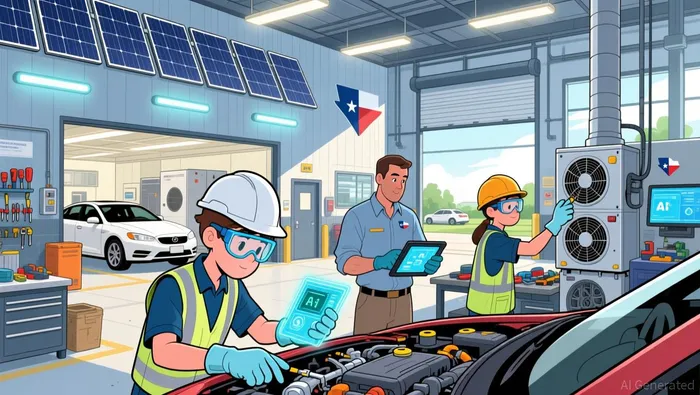
Lincoln Tech's expansion strategy is underpinned by partnerships with employers facing acute labor shortages. The Rowlett campus, for instance, is designed to meet the needs of Texas-based industries, where 240,000 skilled trade jobs are expected to open by 2032, as the Stock Titan report notes. This aligns with national trends: the CSIS analysis estimates that 140,000 electricians, HVAC technicians, and welders will be needed by 2030 to support infrastructure projects like AI data centers and renewable energy systems.
The institution's focus on high-demand fields also addresses a structural issue in U.S. labor markets-the "retirement wave" in skilled trades. For every five tradespeople retiring, only two replacements are entering the workforce, as Forbes notes, exacerbating shortages. Lincoln Tech's programs, which emphasize hands-on training and industry certifications, are positioned to fill this void.
National Labor Market Trends and Long-Term Viability
The U.S. skills gap is not a regional anomaly but a national crisis. Forbes reports that over a million trade jobs remain unfilled, with manufacturers filling only six out of ten openings, as Forbes notes. Lincoln Tech's nationwide growth plan-targeting up to 20 new campuses-capitalizes on this demand while leveraging technological advancements. For example, AI-powered tools like Zuper Glass are already transforming field work, enhancing efficiency and safety for tradespeople, as Morningstar reports.
Critically, the institution's ROI is bolstered by the resilience of skilled trades against automation. Unlike many service-sector jobs, trades such as welding and electrical work remain largely immune to displacement, with 90% of tradespeople reporting high job satisfaction, as Forbes notes. This stability, combined with competitive wages and relatively short training periods, makes Lincoln Tech's programs an attractive alternative to traditional four-year degrees.
Conclusion: A Strategic Bet on the Future of Work
Lincoln Tech's campus expansion in Texas and its broader growth strategy reflect a deep understanding of the U.S. labor market's evolving needs. By targeting high-demand fields, maintaining strong industry partnerships, and adapting to technological shifts, the institution is not only addressing the skills gap but also offering students a viable pathway to stable, well-paying careers. For investors, the key question is whether the rising tuition costs can be justified by the long-term earnings potential and job security these programs provide. Given the projected growth in skilled trades and the persistent shortage of qualified workers, the answer appears increasingly affirmative.







Comentarios
Aún no hay comentarios