
Lincoln National Corporation: Wells Fargo's Price Target Upgrade and the Case for Long-Term Investors
In late August 2025, Wells Fargo & CompanyWFC-- raised its price target for Lincoln National CorporationLNC-- (NYSE: LNC) from $35.00 to $37.00, maintaining an "equal weight" rating while signaling confidence in the insurer's near-term trajectory, according to a SWOT analysis. This adjustment followed Lincoln National's Q2 2025 earnings report, which saw the company exceed expectations with an EPS of $2.36-24.87% above forecasts-despite a 13.3% revenue shortfall, per a Simply Wall St valuation. The brokerage's optimism aligns with its broader Wells Fargo's 2025 outlook, which projects U.S. GDP growth of 2.5% and positions the S&P 500 to trade between 6,500 and 6,700 by year-end. For long-term investors, the upgrade raises critical questions: Is Lincoln NationalLNC-- undervalued? How do its strategic initiatives and risk profile shape its growth potential?
Valuation Metrics: A Discounted Opportunity
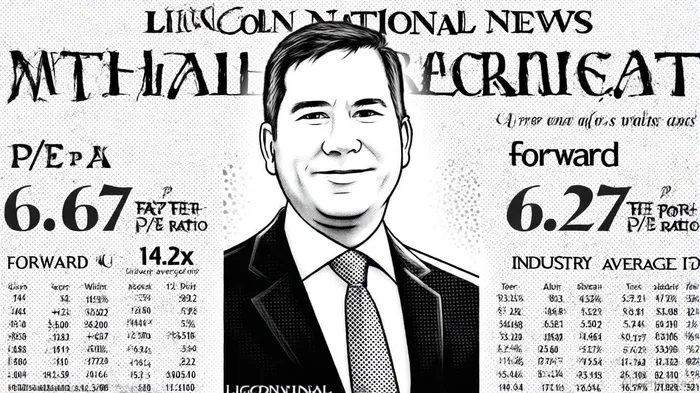
Lincoln National's valuation metrics suggest it is significantly undervalued relative to peers and industry benchmarks. The stock trades at a trailing P/E of 6.67 and a forward P/E of 5.27, far below the peer average of 12.2x and the U.S. insurance industry average of 14.3x, according to StockAnalysis statistics. Analysts have set a fair value of $42.92, implying a 6.7% upside from its current price, while the average price target of $40.55 reflects a "Hold" consensus, per StockAnalysis. These figures underscore a compelling discount, particularly for a company with a 10.75% market share in the life insurance industry and a 0.88% presence in the broader financial sector, as shown in CSIMarket data.
The company's low valuation is further reinforced by its enterprise value to sales ratio of 0.38 and a strong return on equity (ROE) of 12.99% . With a manageable debt-to-equity ratio of 0.96 and a current ratio of 2.28, Lincoln National's balance sheet appears resilient despite its high leverage-though conflicting data from one source cites a debt-to-equity ratio of 95.5% (reported in the SWOT analysis), a figure that, if accurate, would demand closer scrutiny .
Strategic Momentum and Growth Catalysts
Lincoln National's recent performance and strategic initiatives provide a foundation for optimism. The company's Q2 2025 results, which drove a 9.24% pre-market stock surge, demonstrated its ability to outperform on earnings despite revenue challenges, as noted by Simply Wall St. Analysts project continued growth, with EPS expanding at an 18.8% annual rate and revenue rising 5% per year through 2026, according to Simply Wall St. Key drivers include:
- Capital Efficiency: Lincoln aims for 45–60% free cash flow conversion by 2026, supported by cost-saving measures and operational improvements, per Simply Wall St.
- Reinsurance Transactions: The sale of its wealth management business to Osaic and a $28 billion liability transfer to Fortitude Reinsurance have de-risked its balance sheet, as outlined in the SWOT analysis.
- Digital Transformation: Modernization efforts are expected to reduce operational costs and enhance customer experience, addressing long-standing challenges tied to legacy technology, noted in the SWOT analysis.
Wells Fargo's upgrade also reflects confidence in the broader U.S. economy, where Lincoln National's focus on insurance and annuities aligns with stable demand for risk management products. The brokerage's emphasis on U.S.-centric investments and AI-driven innovation further bodes well for sectors like insurance, where data analytics can optimize underwriting and claims processing, as described in Wells Fargo's 2025 outlook.
Risks and Mitigation Strategies
No investment is without risk. Lincoln National faces several headwinds, including:
- Interest Rate Sensitivity: A rapid decline in rates could compress investment spreads, a vulnerability highlighted in the SWOT analysis.
- Operational Costs: Total expenses surged 117.9% year-over-year in Q1 2025, squeezing margins, according to the SWOT analysis.
- Regulatory and Macroeconomic Pressures: Changes in insurance regulations or a U.S. recession could dampen sales and increase credit losses, as discussed in the SWOT analysis.
However, the company has taken proactive steps to mitigate these risks. AM Best's recent upgrade of its outlook to "stable" recognizes Lincoln National's improved capitalization and risk-adjusted returns, a development noted in the SWOT analysis. Additionally, its Q4 2025 strategic priorities-such as a 10% year-over-year increase in Group Protection premiums and a reinsurance transaction to transfer $10 billion in reserves-signal disciplined capital management, as reported by CSIMarket.
The Long-Term Outlook
For long-term investors, Lincoln National's combination of undervaluation, strategic momentum, and risk mitigation efforts presents an intriguing case. While its valuation metrics suggest a margin of safety, the company's ability to execute on its capital efficiency goals and navigate macroeconomic volatility will determine its success. Wells Fargo's upgraded price target, coupled with a favorable U.S. economic outlook, reinforces the potential for appreciation, particularly if the company continues to outperform on earnings and delever its balance sheet.







Comentarios
Aún no hay comentarios