
Lilly's PsA Combo Catalyst: A Tactical Play on Dual Therapy or a Mispriced Headline?
The catalyst is clear and specific. On Thursday, Eli LillyLLY-- announced that its Phase 3b TOGETHER-PsA trial met its primary endpoint, showing a combination of its arthritis drug Taltz and weight-loss drug Zepbound significantly outperformed Taltz alone in a defined patient group. The key metric is stark: 31.7% of combo patients achieved both a 50% improvement in psoriatic arthritis symptoms and at least a 10% weight loss, compared to just 0.8% on Taltz monotherapy. This is a positive clinical validation of a new treatment paradigm.
The market's immediate reaction was muted, with LillyLLY-- stock rising only 0.7% on Thursday as it traded near its 52-week high. This tepid move frames the core tactical question. While the headline data is compelling, the near-term financial impact is constrained by two factors. First, the trial targeted a specific subset: patients with active psoriatic arthritis who are also obese or overweight with weight-related conditions. The company notes that about 65% of U.S. adults with psoriatic arthritis fall into this category, which is a significant pool, but the drug's use is not universal. Second, there is execution risk in getting this dual therapy adopted and reimbursed, especially given the combination of a high-cost biologic and a weight-management drug.
The setup here is classic event-driven opportunity. The trial delivers a clear, positive catalyst that validates a novel approach. Yet the limited patient eligibility and the practical hurdles of combination therapy may mean the market is underestimating the long-term potential while overestimating the near-term revenue contribution. This gap between the clinical promise and the financial reality creates a potential mispricing.
The Mechanics: Patient Pool, Financial Impact, and Execution Risk
The trial's design reveals the specific patient profile that stands to benefit. The study population had an average BMI of 37.6 kg/m², which classifies them as having severe obesity. This isn't a broad PsA cohort; it's a targeted group with a high disease burden, as evidenced by the fact that more than 60% had prior experience with one or more advanced therapies. This difficult-to-treat nature makes the combo's success more clinically meaningful but also highlights the complexity of the patient pool.
Lilly estimates that about 65% of adults with PsA in the U.S. also have obesity or overweight with at least one additional weight-related comorbidity. That's a large potential pool, suggesting a significant market opportunity if the therapy gains traction. However, the financial impact is immediately constrained by the dual-therapy requirement. This isn't a simple add-on; it's a new treatment regimen that combines a high-cost biologic (Taltz) with a weight-management drug (Zepbound). Payers will face a complex coverage decision, and the cost of two premium-priced drugs together could create a significant hurdle for reimbursement.
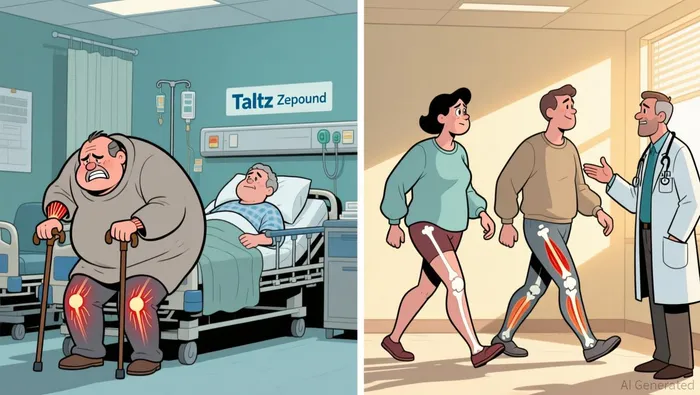
The execution risk here is twofold. First, there's the clinical adoption challenge. Convincing rheumatologists to prescribe a combination therapy for a subset of PsA patients requires strong real-world data and clear guidelines, which the company is now gathering. Second, and perhaps more pressing, is the payer landscape. The trial's success in a difficult-to-treat, obese population is compelling, but payers may scrutinize the incremental benefit over monotherapy against the doubled price tag. The early safety profile is favorable, with adverse events consistent with known profiles, but cost-effectiveness will be a major battleground. The bottom line is that the headline data validates a novel approach for a large segment of PsA patients. Yet the mechanics of delivering that benefit-through a costly, dual-drug regimen for a complex patient group-create a clear barrier to rapid, widespread adoption. This gap between clinical promise and financial reality is the core of the tactical setup.
The Strategic Play: Patent Cliff Mitigation and Near-Term Catalysts
The immediate tactical question is whether this event fundamentally changes Lilly's competitive trajectory. The answer hinges on its ability to mitigate the looming Taltz patent cliff. Taltz generated $3.2 billion in sales for Lilly in 2024, and while sales are forecast to peak at $4 billion by 2029, the path beyond that is uncertain. The TOGETHER-PsA trial offers a potential lifeline. By establishing a new, premium treatment standard for a large segment of PsA patients, it could extend the drug's commercial relevance and delay the erosion of its market position.
The strategic play here is clear. The combo therapy isn't just an incremental improvement; it's a novel approach that leverages the synergy between a high-cost biologic and a weight-management drug. This could reframe Taltz from a standard-of-care biologic into a cornerstone of a comprehensive treatment paradigm for obese PsA patients. In theory, this could support higher pricing and better payer positioning, directly addressing the financial vulnerability posed by patent expiration.
The real near-term catalyst that will confirm this thesis is the upcoming data from the separate Together-PsO trial. This study is evaluating the same combo in plaque psoriasis, a larger and earlier-stage market for Taltz. Results are expected in the first half of 2026. Positive data there would dramatically expand the potential patient pool and provide a stronger case for the combo's efficacy across different inflammatory conditions.
Beyond the trial readouts, two other events are key catalysts. First, the detailed results from the TOGETHER-PsA trial will be presented at an upcoming medical meeting. This will provide the granular data needed for peer review and clinical adoption. Second, Lilly will begin sharing the data with regulators, a step toward formal labeling and reimbursement discussions. These are the mechanics that will turn the positive headline into a tangible commercial pathway.
The bottom line is that the TOGETHER-PsA trial is a tactical win that sets the stage for a strategic play. It provides a compelling narrative for extending Taltz's patent life by creating a new, premium treatment standard. The immediate catalysts-the Together-PsO data, the detailed trial presentation, and regulatory submissions-are the milestones that will determine if the market eventually prices in this extended potential.
Catalysts and Risks: The Immediate Setup
The tactical setup now hinges on a few key near-term events. The most critical catalyst is the upcoming data from the separate Together-PsO trial, which is evaluating the same combo in plaque psoriasis. Results are expected in the first half of 2026. Positive data there would dramatically expand the potential patient pool and provide a stronger case for the combo's efficacy across different inflammatory conditions. This is the event that will confirm whether the PsA success is a niche win or the start of a broader therapeutic paradigm.
Beyond that, two other milestones are essential for execution. First, the detailed results from the TOGETHER-PsA trial will be presented at an upcoming medical meeting. This granular data is needed for peer review and clinical adoption. Second, Lilly will begin sharing the data with regulators, a step toward formal labeling and reimbursement discussions. These are the mechanics that will turn the positive headline into a tangible commercial pathway.
The key risk is execution. Achieving high prescription rates for a dual-biologic regimen in a complex patient population is a significant hurdle. Payers will face a difficult coverage decision, and the cost of two premium-priced drugs together could create a major reimbursement barrier. The company must navigate this landscape carefully. Monitor for any payer pushback or safety concerns, as both drugs carry gastrointestinal side effects (nausea, diarrhea, constipation). While the early safety profile is favorable, real-world use may reveal new challenges.
The stock's muted reaction suggests the news is already priced in. A follow-through rally requires strong execution and, critically, positive data from the Together-PsO trial. Until then, the market is waiting for the next catalyst to validate the strategic play.





Comentarios
Aún no hay comentarios