
Lilly's Kisunla (donanemab) and the Transformation of Alzheimer's Treatment
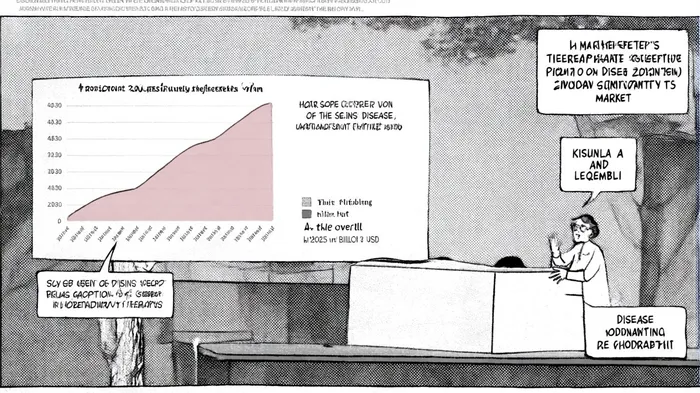
The Alzheimer's disease treatment landscape is undergoing a seismic shift, driven by breakthroughs in amyloid-targeting therapies and a growing emphasis on early intervention. At the forefront of this transformation is Eli Lilly's Kisunla (donanemab-azbt), a monoclonal antibody that has demonstrated sustained clinical benefits in slowing cognitive decline and reducing amyloid plaque accumulation. With regulatory approvals, evolving reimbursement strategies, and a rapidly expanding market, Kisunla represents a compelling case study in the intersection of medical innovation and investment potential.
Clinical Efficacy and Safety: A Balancing Act
Kisunla's long-term extension (LTE) trial data reveals its growing promise. Patients treated earlier in the study experienced a 27% reduced risk of disease progression on the Clinical Dementia Rating-Global Score (CDR-G) compared to those who started later [1]. Over three years, cognitive decline was reduced by -1.2 on the CDR-SB, outperforming an untreated external cohort [2]. Amyloid clearance, achieved in over 75% of patients within 76 weeks, further underscores its mechanism-driven efficacy [3].
However, safety concerns—particularly amyloid-related imaging abnormalities (ARIA)—remain a critical factor. The FDA's July 2025 label update introduced a titration dosing schedule, reducing ARIA-E incidence by 41% at 24 weeks and 35% at 52 weeks compared to the original regimen [4]. While this mitigates risks, Kisunla's ARIA rates (24% ARIA-E, 31.4% ARIA-H) still lag behind Biogen/Eisai's Leqembi (12.6% ARIA-E, 17.3% ARIA-H) [5]. This safety gap could influence insurer coverage decisions and physician prescribing patterns.
Market Dynamics: Pricing, Reimbursement, and Competition
The Alzheimer's market is projected to grow at a 19.99% CAGR, reaching $15.19 billion by 2030, fueled by disease-modifying therapies and aging demographics [6]. Kisunla's pricing model, though opaque, is estimated at $32,000 annually [7], with Medicare and Medicaid coverage expanding access in the U.S. since July 2024 [8]. However, its adoption faces headwinds from Leqembi's superior safety profile and a blood-based diagnostic test, which reduces reliance on costly PET scans [5].
Regional expansion is another key driver. The European Commission's September 2025 authorization targets ApoE4 heterozygotes and non-carriers, a niche but high-potential patient group [9]. Meanwhile, Lilly's trials in Asia-Pacific (TRAILBLAZER-ALZ 5) and preclinical Alzheimer's (TRAILBLAZER-ALZ 3) signal long-term ambitions. Yet, competition is intensifying: Novo Nordisk's semaglutide, Roche's trontinemab, and UCB's bepranemab are advancing in trials, while Biogen's subcutaneous Leqembi autoinjector could disrupt administration convenience [10].
Investment Implications: Navigating Risks and Opportunities
For investors, Kisunla's long-term potential hinges on three pillars:
1. Clinical Differentiation: While ARIA risks persist, Kisunla's ability to halt amyloid reaccumulation at 2.4 CL/year and its potential for shorter treatment durations (once plaques are cleared) could justify its use in combination regimens [11].
2. Market Access: Broader Medicare coverage and patient assistance programs (e.g., LillyLLY-- Cares Foundation) reduce financial barriers, but insurers may favor Leqembi's safety profile [12].
3. Pipeline Diversification: Lilly's development of remternetug—a follow-up with both infusion and injectable formats—positions the company to address unmet needs [13].
Analysts project Kisunla could reach $3.8 billion in revenue by 2033, but its market share (25% in the U.S.) trails Leqembi's 60% [14]. This underscores the importance of innovation in administration routes and combination therapies, as key opinion leaders advocate for multi-modal approaches targeting amyloid, tau, and metabolic pathways [15].
Conclusion: A High-Stakes Bet on a High-Growth Sector
Kisunla embodies the promise and perils of Alzheimer's drug development. Its clinical data and regulatory momentum position it as a cornerstone therapy, but its success will depend on navigating safety concerns, competitive pressures, and reimbursement complexities. For investors, the Alzheimer's market offers a rare confluence of unmet medical need and financial scalability. However, the path to dominance requires not just clinical excellence but strategic agility in an ecosystem where innovation is accelerating faster than ever.





Comentarios
Aún no hay comentarios