
Lighter TGE and Airdrop 2025: A Strategic Play for Liquidity and Community Growth
The blockchain industry has long recognized token generation events (TGEs) and airdrops as pivotal tools for driving liquidity and fostering community growth. In 2025, Lighter-a decentralized exchange (DEX) with a $3+ billion pre-market valuation-has positioned itself as a standout project through its meticulously timed TGE and airdrop strategy. By analyzing Lighter's approach alongside historical precedents like UniswapUNI--, EigenLayerEIGEN--, and Binance, this article evaluates how its incentive structures and timing could catalyze early liquidity and sustainable community engagement.
Strategic Timing: Aligning with Market Cycles and User Behavior
Lighter's TGE and airdrop are expected to occur in late 2025, with Polymarket data indicating an 88% probability of the airdrop occurring by December 31, and over 70% of bets concentrated on December 29 as the most likely date. This timing aligns with several strategic advantages:
- Holiday Season Momentum: The end-of-year period often sees heightened user activity on trading platforms, as retail investors capitalize on year-end financial planning and bonuses. Lighter's airdrop submission deadline (December 26) ensures users have ample time to prepare wallets while maintaining urgency according to market analysis.
- MEXC IEO Synergy: The MEXC IEO event (December 24–29) will distribute 17,500 LITLIT-- tokens before the asset's public listing, creating immediate liquidity and visibility. This timing leverages MEXC's user base to amplify Lighter's exposure.
- Avoiding Sell Pressure: By completing the TGE before year-end, Lighter minimizes the risk of token dumping, a common issue in projects with delayed unlocks. This mirrors EigenLayer's 2024 strategy, which staggered token unlocks to stabilize its market.
Incentive Structures: Points, Airdrops, and Anti-Sybil Measures
Lighter's incentive model is designed to reward sustained engagement and genuine participation, drawing lessons from successful airdrops like Uniswap's 2020 distribution. Key elements include:
- Points-Based Rewards: Over 12 million points were distributed across two seasons (January–December 2025), with Season 2 alone attracting 500,000 new users. Weekly point distributions and anti-sybil measures (e.g., validating user activity) ensure the airdrop rewards active participants rather than bot-driven accounts.
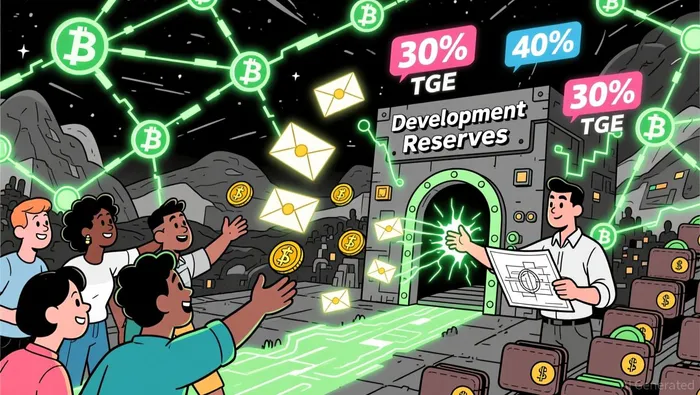
- Airdrop Allocation: The airdrop will constitute 25% of the total token supply, with an additional 25–30% allocated to the TGE. This structure mirrors Uniswap's 2020 airdrop, which distributed 400 UNI tokens to early users, fostering trust and liquidity.
- Zero-Fee Model: Lighter's zero trading fees for standard accounts have driven $233 billion in 30-day trading volume, creating a user base primed for token adoption.
Comparative Analysis: Lessons from Uniswap, EigenLayer, and Binance
Lighter's strategy aligns with best practices observed in high-impact blockchain launches:
- Uniswap's Airdrop (2020): By rewarding early adopters with 400 UNIUNI-- tokens, Uniswap generated $6.43 billion in airdrop value and solidified its position as the leading DEX. Lighter's 25% airdrop allocation follows a similar logic, prioritizing community ownership.
- EigenLayer's Restaking Incentives: EigenLayer's points-based system for restakers increased its TVL to $18 billion by 2025, demonstrating the power of aligning user incentives with protocol security. Lighter's points program similarly rewards trading and platform engagement.
- Binance's Referral-Driven Growth: Binance's airdrops leveraged network effects to expand its user base, a strategy Lighter could replicate through its points-based referral system according to industry reports.
Potential Impact on Liquidity and Community Growth
Lighter's approach is poised to drive liquidity and community growth through three mechanisms:
- Immediate Liquidity via IEO: The MEXC IEO will introduce LIT to institutional and retail investors, creating a liquid market ahead of the airdrop.
- Community-Driven Token Distribution: By allocating 25% of tokens to airdrop recipients, Lighter ensures broad ownership, reducing centralization risks and fostering long-term loyalty according to official announcements.
- Sustained Engagement: The points program's emphasis on anti-sybil measures and weekly rewards creates a flywheel effect, where active users are continuously incentivized to deepen their participation according to market analysis.
Conclusion: A Strategic Blueprint for Success
Lighter's TGE and airdrop strategy exemplifies the best practices of successful blockchain launches. By aligning its timing with market cycles, leveraging points-based incentives, and learning from Uniswap and EigenLayer, Lighter is well-positioned to drive liquidity and community growth. For investors, this represents a compelling opportunity to participate in a project that balances innovation with proven strategies.







Comentarios
Aún no hay comentarios