
Lighter's $675M Airdrop and Its Implications for Perp-DEX Tokenomics and Investor Sentiment
The crypto landscape in 2025 is defined by a new wave of decentralized perpetual exchange (Perp-DEX) projects, each vying for dominance in the high-volume trading ecosystem. Among these, Lighter's $675 million airdrop stands out as a bold experiment in token distribution, user retention, and market confidence. By distributing 25% of its total LITLIT-- token supply to early participants-based on points earned through trading, liquidity provision, and risk-adjusted performance-Lighter has ignited a debate about the future of tokenomics in decentralized finance (DeFi). This article analyzes the mechanics of Lighter's airdrop, its implications for token retention and investor sentiment, and how it stacksSTX-- up against historical airdrops like UniswapUNI-- and SolanaSOL--.
Token Distribution Mechanics: A 50/50 Split and Controversial Allocation
Lighter's airdrop is rooted in a 50/50 allocation of its token supply between the ecosystem and team/investors. Of the 25% allocated to the ecosystem, 12.5 million points earned by users in 2025 are being converted into LIT tokens. This approach rewards active participants who engaged in the Points Program, which emphasized sustained performance over raw trading volume. However, the 50/50 split has drawn criticism from DeFi purists, who argue that such a large insider allocation undermines decentralization principles.
The vesting schedule for team and investor tokens-12 months of lockup followed by three years of linear vesting-aims to mitigate short-term selling pressure according to reports. This structure contrasts with projects like dYdXDYDX--, where airdrop tokens are often fully unlocked immediately, leading to volatility. Lighter's approach, while transparent, raises questions about long-term sustainability, particularly if the team's tokens are sold aggressively post-vesting.
Retention Rates and Market Confidence: A Defiant Airdrop
Despite the size of the airdrop, on-chain data reveals a surprising trend: only $30 million of the $675 million distributed has been withdrawn, with 75% of recipients holding their tokens and 7% increasing their exposure according to data. This retention rate is significantly higher than the 88% devaluation rate observed in other airdrops, where tokens often lose value within three months according to statistics. 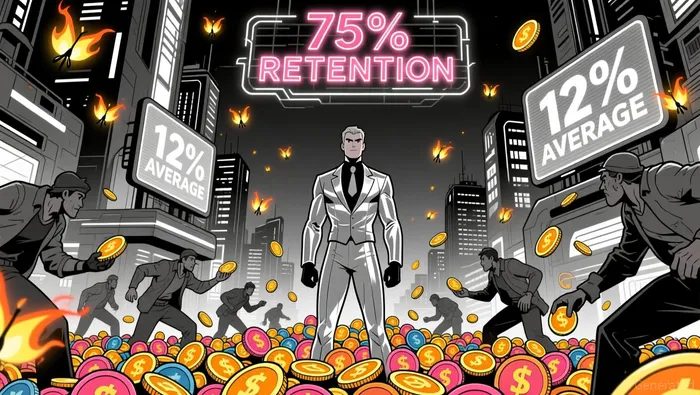 Lighter's success in retaining tokens can be attributed to its alignment of incentives-users who earned points through consistent, risk-adjusted performance are more likely to view LIT as a long-term asset rather than a speculative trade according to analysis.
Investor sentiment has also been bullish. Prediction markets on Polymarket priced an 88% probability that Lighter would execute its airdrop by December 31, 2025, with $9.5 million in trading volume backing the bet according to market data. Post-airdrop, the token's price hovered near $3 during initial price discovery, and a conditional spot-listing signal from a top-tier exchange further signaled institutional confidence according to reports. These metrics suggest that Lighter's airdrop has succeeded in building a loyal user base and attracting capital to its platform.
Historical Comparisons: Lighter vs. Uniswap and Solana
Lighter's airdrop dwarfs historical benchmarks. For context, the 2020 Uniswap airdrop distributed over $6.4 billion in value, while Solana's early airdrops were part of a diversified strategy that included DeFi assets like ChainlinkLINK-- and Wrapped BitcoinWBTC-- according to analysis. However, Lighter's airdrop has outperformed these in terms of retention and market confidence.
Uniswap's airdrop, for instance, faced significant sell pressure due to its lack of vesting schedules. Similarly, Solana's airdrops in 2020-2025 saw insider allocations of up to 40%, which limited community benefits and exacerbated strategic risks. Lighter's 50/50 allocation, while controversial, avoids the extremes of these models by balancing ecosystem rewards with team incentives.
Strategic Risks and Rewards in the Perp-DEX Ecosystem
Lighter's airdrop must be evaluated within the broader context of Perp-DEX competition. Rivals like dYdX, GMXGMX--, and Hyperliquid have adopted distinct tokenomics strategies:
- dYdX relies on season-based airdrops to reward high-volume traders according to analysis.
- GMX emphasizes buybacks and burns to reduce circulating supply according to governance proposals.
- Hyperliquid focuses on performance and speed, with no token yet but a $20 billion annualized revenue model according to reports.
Lighter's points-based airdrop and structured vesting schedule position it as a hybrid model. Its emphasis on risk-adjusted performance metrics-rather than raw volume-aligns with institutional-grade standards, potentially attracting professional traders. However, the platform faces risks from Sybil attacks (where fake wallets capture tokens) and regulatory uncertainty, both of which could erode trust.
Long-Term Value Accrual: A Flywheel or a Fad?
For Lighter to succeed, its tokenomics must create a flywheel effect where LIT holders benefit from protocol revenues and governance rights. The platform's roadmap includes staking-based access tiers, where LIT holders gain improved execution quality and yield-oriented financial products according to analysis. This aligns with GMX's strategy of tying token utility to platform growth according to governance proposals.
However, Lighter's 50/50 allocation and the speculative nature of its airdrop raise concerns about long-term value accrual. Historical data shows that 84.7% of token generation events (TGEs) in 2025 traded below their initial valuation according to analysis. To avoid this fate, Lighter must demonstrate that its tokenomics can sustain user growth and revenue capture without relying on perpetual airdrops.
Conclusion: A High-Stakes Bet on Perp-DEX Evolution
Lighter's $675M airdrop is a high-stakes bet on the future of decentralized trading. While its retention rates and market confidence metrics are impressive, the project's long-term success hinges on its ability to balance decentralization with profitability. By learning from historical airdrops and adapting to the competitive Perp-DEX landscape, Lighter has positioned itself as a formidable player. However, investors must remain cautious about the risks of insider allocations, regulatory shifts, and the inherent volatility of token-based ecosystems.
As the DeFi space evolves, Lighter's airdrop serves as a case study in the delicate art of token design-a blend of incentives, governance, and market psychology that will define the next era of crypto innovation.






Comentarios
Aún no hay comentarios