
Lifestyle Inflation and Its Hidden Risks to Financial Independence
In an era where high incomes are increasingly common, the paradox of financial instability persists. Behavioral finance reveals that even well-educated, high-earning individuals often fall victim to lifestyle inflation-a phenomenon where rising income fuels excessive spending, eroding wealth and derailing long-term goals. This article examines how behavioral biases, debt traps, and misaligned priorities undermine financial independence, using a cautionary tale of a high-income couple burdened with $1 million in debt and contrasting it with the disciplined choices of an Ohio man who discovered unexpected wealth.
The Behavioral Roots of Lifestyle Inflation
Lifestyle inflation is not merely a matter of poor budgeting; it is deeply rooted in psychological mechanisms. Hedonic adaptation, a concept in behavioral economics, explains how individuals quickly acclimate to new comforts, driving them to seek ever-greater material upgrades to maintain perceived happiness. Simultaneously, social comparison pressures compel high-income earners to align their spending with peers, often prioritizing status symbols like luxury housing or dining over long-term savings. These tendencies create a silent drain on wealth, as salary increases are funneled into discretionary expenses rather than investments or debt reduction.
For example, a 2024 study highlighted that high-income individuals who fail to automate savings or set strict financial boundaries are more likely to live paycheck-to-paycheck, despite earning six figures. This underscores a critical insight: income alone does not guarantee financial security. 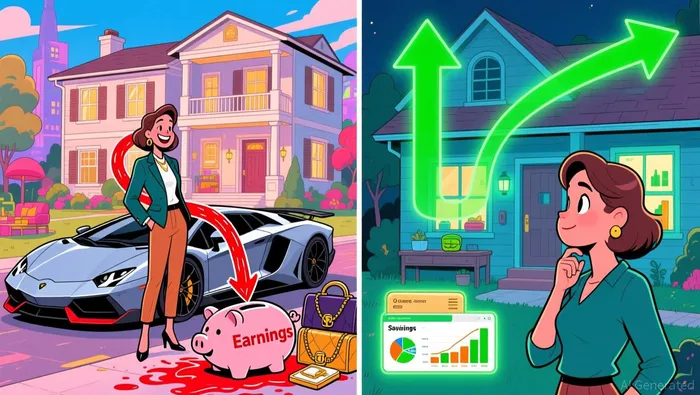 Without intentional habits, even substantial earnings can vanish into a cycle of consumption.
The $1M Debt Case: A Cautionary Tale
The risks of lifestyle inflation crystallize in the case of a high-income couple who accumulated over $1 million in debt. As detailed in a 2023 report, their financial downfall stemmed from unchecked spending on luxury travel, high-end real estate, and private education, despite earning combined six-figure incomes. Behavioral finance experts note that such cases often involve a lack of shared financial goals and poor communication, which exacerbate impulsive spending.
This couple's story is emblematic of a broader trend: high earners frequently underestimate the compounding costs of lifestyle creep. A 2025 analysis by Sherman Wealth emphasized that even modest annual increases in discretionary spending-say, 5% per year-can deplete savings over decades, particularly when paired with high-interest debt. The couple's failure to adhere to disciplined budgeting frameworks, such as the 80/10/10 rule (allocating 80% of income to expenses, 10% to savings, and 10% to tithing or charity), left them with insufficient resources for retirement or emergencies.
Contrast with Prudent Financial Behavior: The Ohio Man's Example
In stark contrast to the $1M debt case, the story of Walter Castanedo-a man from Ohio who discovered $10,000 in cash while renovating a house-exemplifies the value of ethical discipline and long-term thinking. When Castanedo found the money, he chose to split it with the previous homeowner rather than keeping it, demonstrating a commitment to fairness and community according to a 2024 article. This decision, while not directly related to financial planning, reflects a mindset that prioritizes integrity and shared value-traits that often correlate with sound financial habits.
Castanedo's approach mirrors the principles advocated by financial advisors like Dave Ramsey, who emphasize living below one's means and automating savings. For instance, Ramsey's advice to allocate 10% of income to savings and debt repayment, regardless of income level, has helped many high earners avoid lifestyle inflation. By treating income as a tool for building wealth rather than a license for excess, individuals can create a buffer against debt traps and market volatility.
Strategies to Combat Lifestyle Inflation
Avoiding lifestyle inflation requires a combination of behavioral strategies and structural safeguards. First, automating savings ensures that a portion of income is allocated to investments or emergency funds before it can be spent on discretionary items. Second, setting clear financial goals-such as retiring by a specific age or funding a child's education-creates a framework for prioritizing expenses. Third, adopting a "bucket strategy" for retirement withdrawals, which separates funds into short-, medium-, and long-term categories, helps mitigate the risk of outliving one's savings.
Moreover, high-income individuals must resist the allure of social comparison. A 2024 article in Forbes noted that many millionaires achieve financial independence not through high-risk investments but by consistently living modestly and reinvesting earnings. For example, engineers and teachers who avoid lifestyle inflation often outperform peers with higher incomes but poor financial discipline.
Conclusion: The Power of Discipline in a Consumer-Driven World
The stories of the $1M debt couple and the Ohio man highlight a fundamental truth: financial independence is less about how much one earns and more about how one manages that income. Behavioral finance provides a roadmap for avoiding lifestyle inflation by addressing the psychological biases that drive excessive spending. By adopting disciplined habits-such as automating savings, setting clear goals, and resisting social pressures-high-income individuals can transform their earnings into lasting wealth.
As the cost of living continues to rise, the stakes of poor financial decisions grow ever higher. The lessons from these contrasting cases serve as a reminder that wealth is not merely accumulated but cultivated through intentionality, foresight, and ethical choices.







Comentarios
Aún no hay comentarios