
Lifecore Biomedical's Strategic Reinvention: Building Supply Chain Resilience and Margin Expansion in the Biopharma Sector
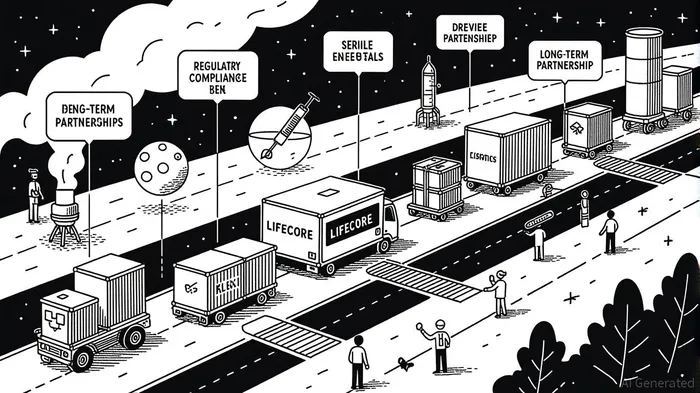
Lifecore Biomedical (LFCR) has emerged as a compelling case study in strategic reinvention within the contract development and manufacturing organization (CDMO) sector. Following its presentation at the Morgan StanleyMS-- Healthcare Conference 2025, the company has signaled a clear pivot toward strengthening supply chain resilience and driving margin expansion, positioning itself to capitalize on the growing demand for complex biopharmaceutical products.
Supply Chain Resilience: A Cornerstone of Operational Excellence
Lifecore's focus on supply chain resilience is not merely a response to industry-wide challenges but a deliberate strategy to differentiate itself in a competitive market. As a specialized CDMO in sterile injectables, the company has long grappled with the inherent complexities of manufacturing high-potency and sensitive therapies. During its conference presentation, CEO Paul Josephs emphasized Lifecore's commitment to addressing these challenges through advanced manufacturing capabilities and regulatory compliance expertise[1]. This includes investments in automation and quality control systems to mitigate risks associated with raw material shortages and production bottlenecks[2].
The company's recent 10-year commercial manufacturing agreement with a key customer for a novel ophthalmic therapeutic further underscores its ability to secure long-term partnerships that stabilize revenue streams while reducing operational volatility[2]. Such agreements not only provide a predictable workload but also allow LifecoreLFCR-- to optimize its supply chain by aligning production schedules with client demand.
Margin Expansion Through Diversification and Innovation
Margin expansion remains a critical lever for Lifecore's turnaround, driven by its strategic foray into high-growth segments like biologics and peptides. The company's decision to expand into GLP-1s and other peptide-based therapies aligns with broader industry trends, where demand for these molecules is surging due to their applications in diabetes, obesity, and rare diseases[1]. By leveraging its existing expertise in sterile injectables, Lifecore is well-positioned to offer end-to-end solutions for clients, thereby capturing higher-margin segments of the value chain.
Data from recent investor updates suggests that Lifecore's margin profile is expected to improve significantly in 2025 as these initiatives scale[3]. The company's emphasis on operational efficiency—such as reducing batch failure rates and optimizing facility utilization—further amplifies its potential to convert revenue growth into profit growth.
Strategic Partnerships as a Catalyst for Growth
Lifecore's ability to secure long-term contracts with established clients is a testament to its value proposition in an increasingly fragmented biopharma landscape. The 10-year agreement for the ophthalmic therapeutic, for instance, not only provides a substantial revenue tailwind but also validates the company's technical capabilities in handling complex, late-stage development programs[2]. Such partnerships are critical for CDMOs seeking to differentiate themselves, as they reduce client switching costs and foster loyalty in a sector where trust and compliance are paramount.
Conclusion: A Post-Conference Outlook
Lifecore Biomedical's presentation at the Morgan Stanley Healthcare Conference 2025 served as a pivotal moment in its strategic evolution. By articulating a clear roadmap for supply chain resilience and margin expansion, the company has reinforced its appeal to investors seeking exposure to the CDMO sector's growth drivers. While challenges such as regulatory scrutiny and input cost volatility persist, Lifecore's focus on innovation, diversification, and long-term partnerships positions it to outperform peers in the medium to long term.
As the biopharma industry continues to prioritize resilience and efficiency, Lifecore's ability to execute on its strategic priorities will be a key determinant of its success. For now, the market appears to be taking note: with earnings contributions expected in 2025[3], the company is poised to deliver on its promise of sustainable value creation.





Comentarios
Aún no hay comentarios