
Libtayo's FDA Approval for Adjuvant cSCC: Market Access Momentum and Implications for Exelixis' Oncology Portfolio
The U.S. Food and Drug Administration's (FDA) October 2025 approval of Libtayo (cemiplimab-rwlc) as the first adjuvant immunotherapy for high-risk cutaneous squamous cell carcinoma (cSCC) marks a transformative milestone in oncology. This approval, based on the C-POST trial's 68% reduction in recurrence or death risk compared to placebo, according to a Regeneron news release, positions Libtayo as a cornerstone therapy in early-stage cSCC management. For investors, the approval raises critical questions about market access dynamics and its ripple effects on competitors like ExelixisEXEL--, whose oncology pipeline remains distinct from Regeneron's PD-1 inhibitor.
Market Access: Reimbursement, Competition, and Patient Population
Libtayo's adjuvant cSCC indication expands its therapeutic footprint into a $2.1 billion market, according to a market report, with reimbursement pathways likely to follow swiftly given its robust clinical data. According to a PharmExec analysis, oncology therapies now require not only FDA approval but also strategic formulary and clinical pathway positioning to ensure broad adoption. Libtayo's inclusion in these pathways-already recommended as a first-line option for metastatic cSCC and non-small cell lung cancer (NSCLC)-suggests strong payer support, per a GuidelineCentral monograph.
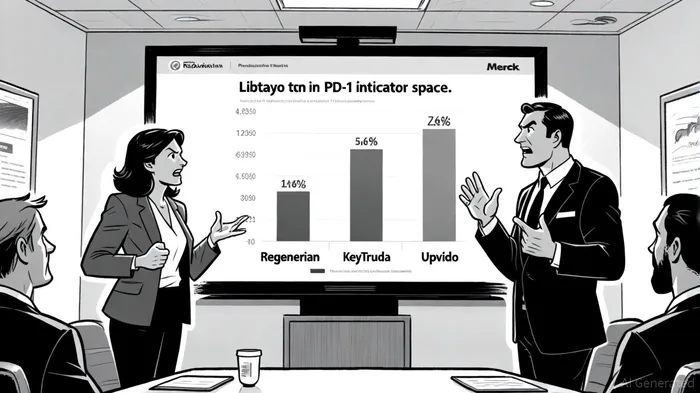
Competition in the PD-1 inhibitor space remains intense, with Merck's Keytruda and Bristol-Myers Squibb's Opdivo dominating market share. However, Libtayo's unique differentiation lies in its adjuvant cSCC approval, a niche with limited alternatives. Data from RegeneronREGN-- indicates that Libtayo's 2024 sales surged to $1.22 billion, according to a FiercePharma report, driven by its expanding label and favorable safety profile (e.g., manageable adverse events like rash and hypothyroidism).
The patient population for adjuvant cSCC is estimated at 15,000–20,000 high-risk individuals annually in the U.S., a segment previously underserved by systemic therapies, per a PubMed review. With Libtayo's 12-week neoadjuvant and 48-week adjuvant dosing flexibility (as described by Regeneron), its accessibility could further improve as payers recognize its cost-effectiveness in reducing recurrence-related healthcare costs.
Exelixis' Pipeline: Valuation Pressures and Strategic Resilience
While Exelixis is not a direct competitor to Libtayo-its pipeline focuses on tyrosine kinase inhibitors (TKIs) like zanzalintinib and antibody-drug conjugates (ADCs) such as XB010, per the Exelixis pipeline-the broader oncology landscape's shift toward immunotherapies may indirectly impact its valuation. Exelixis' 2025 financial results, including $1.1 billion in net product revenues driven by CABOMETYX, are outlined in an Exelixis financial release. However, the PD-1 market's consolidation around leaders like Libtayo and Keytruda could marginalize smaller players lacking differentiated assets.
Exelixis' focus on MET and VEGFR pathways offers potential in non-immune indications, but its absence in the cSCC space highlights a gap. As Libtayo's adjuvant approval redefines treatment paradigms, Exelixis must accelerate its pipeline advancements to maintain investor confidence. The company's USP1 inhibitor, XL309, and 5T4-MMAE ADC, XB010, represent high-risk, high-reward bets, but their commercial success hinges on clinical differentiation and payer alignment.
Investment Outlook: Balancing Momentum and Risks
Libtayo's approval underscores Regeneron's ability to capture value in niche oncology markets, a trend likely to continue as PD-1 inhibitors expand into earlier treatment lines. For Exelixis, the challenge lies in leveraging its financial stability to advance innovative assets while navigating a PD-1 landscape increasingly dominated by giants. Investors should monitor Exelixis' progress in late-stage trials for zanzalintinib and XB010, alongside its ability to secure partnerships that offset competitive pressures from Regeneron and others.





Comentarios
Aún no hay comentarios