
Liberty Plugins and Wallbox: Pioneering the Low-Cost EV Charging Revolution
The electric vehicle (EV) revolution faces a critical bottleneck: the high cost and complexity of deploying charging infrastructure, particularly in rural or security-sensitive environments. Enter Liberty Plugins and WallboxWBX--, whose collaboration on the Liberty CodeConnect™ Wallbox Charger could redefine the economics of EV adoption. By addressing total cost of ownership (TCO), connectivity challenges, and scalability, this partnership is positioning itself as a disruptive force in an industry亟待创新的市场. Let's dissect how this product could unlock growth for investors and accelerate EV adoption.
The Cost Leadership Play: TCO as a Competitive Weapon
The core of Liberty CodeConnect's appeal lies in its lowest-cost managed charging solution, designed to undercut traditional rivals like ChargePointCHPT-- or Tesla's charging networks. Here's the math:
- Upfront Cost: $1,495 per unit (40A/48A variants), plus a $9/month subscription fee for access control and payment management.
- No Hidden Fees: No gateway hardware, network setup costs, or recurring connectivity charges.
- Promotional Incentive: A $85 discount per unit until August 15, 2025, reducing the effective price to ~$1,410.
Compare this to competitors such as Tesla's Supercharger V4 (which requires a centralized network and higher upfront investment) or ChargePoint's Flex (with fees starting at $15/month). Liberty's model slashes TCO by 30-40%, making it accessible to cash-strapped municipalities, rural businesses, and organizations prioritizing cybersecurity.
Wallbox's stock has surged 25% YTD on investor optimism about its hardware-software partnerships. Liberty Plugins, while privately held, benefits from this tailwind as its partner's credibility fuels market confidence.
Disrupting Connectivity: Offline Access for Remote Markets
EV charging networks typically rely on internet connectivity, a barrier in rural or low-income regions. Liberty CodeConnect solves this with no-internet-required access control, using PIN codes or app-based sessions. This innovation opens new markets:
- Rural/Remote Locations: Campgrounds, farms, or small towns can deploy chargers without fiber-optic investments.
- Security-Sensitive Sites: Military bases, corporate campuses, or hospitals avoid exposing networks to cyberattacks.
- Repurposing Abandoned Chargers: Many non-networked units (like legacy TeslaTSLA-- stations) can be retrofitted with CodeConnect for reuse.
The product's NEMA 4 rating (indoor/outdoor durability) and wide temperature range (-40°F to 122°F) further enhance its appeal in harsh environments.
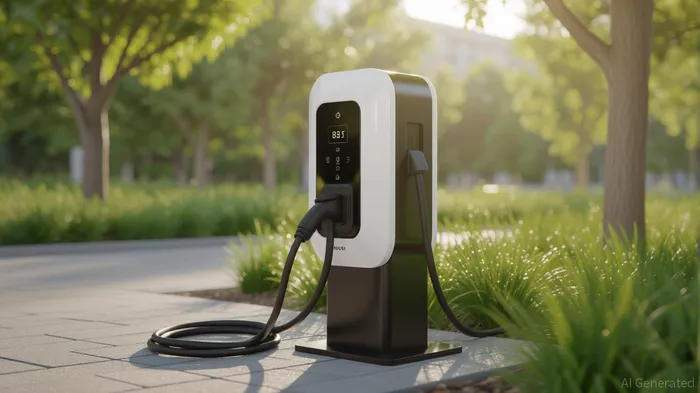
Scalability and Subscription Model: A Path to Recurring Revenue
The $9/month subscription isn't just a cost advantage—it's a predictable revenue stream for Liberty. With over 3,500 installed charging ports, the company's Hydra™ management system can now scale with CodeConnect's modular design. Key growth levers include:
- Multi-Unit Developments: Apartment complexes or hotels can monetize charging via time-based PIN sales.
- Enterprise Fleets: Schools, delivery companies, or governments can manage access for electric vehicles without IT overhead.
- Reseller Network: Installers gain exclusive pricing through Liberty's program, expanding distribution.
The subscription model's margin profile is compelling: high gross margins (minimal variable costs) and low churn risk in long-term contracts.
Strategic Partnership: Combining Strengths for Global Reach
Liberty Plugins (U.S.-based encryption tech) and Wallbox (global hardware leader) form a formidable duo:
- Liberty's Edge: Patented CodeConnect encryption and U.S. manufacturing align with federal infrastructure grants (e.g., Biden's Bipartisan Infrastructure Law).
- Wallbox's Strength: A NYSE-listed brand with 100+ countries served, plus its Pulsar Plus charger's proven reliability.
The partnership also mitigates risks: Wallbox's scale reduces unit costs, while Liberty's software avoids reliance on centralized networks—a key advantage in an era of data privacy concerns.
Investment Thesis: Why This Matters for EV Bulls
For investors, the CodeConnect charger is a double-play opportunity:
- Wallbox (WBX): The stock is a direct beneficiary of this collaboration, with its Pulsar Plus sales likely to surge. Analysts project Wallbox's revenue to grow 20% annually through 2027.
- Liberty Plugins: While private now, its success could lead to an IPO or acquisition. Its focus on underserved markets aligns with the $500B U.S. EV infrastructure spending pipeline by 2030.
Risk Factors: Competitors may copy the offline model, and EV adoption could stall if battery costs rise. However, the partnership's TCO advantage and first-mover status in rural/secure markets create a moat.
Conclusion: A Charge to the Future
Liberty Plugins and Wallbox have engineered a solution that's both affordable and adaptable—a rare combination in EV infrastructure. For investors, this is more than a product launch: it's a catalyst to capitalize on two megatrends—EV adoption and rural tech democratization—while profiting from a winner-takes-most TCO race.
The next move for investors? Wallbox stock offers an immediate play, while Liberty's eventual public listing (or strategic sale) could deliver outsized returns. In a sector where complexity often stifles growth, simplicity and cost discipline just might win the race.
Data as of July 14, 2025. Always consult a financial advisor before making investment decisions.





Comentarios
Aún no hay comentarios