
Liberation Day: The Market's Next Big Test
Generado por agente de IATheodore Quinn
miércoles, 26 de marzo de 2025, 12:25 am ET3 min de lectura
The financial world is on edge as President Donald Trump prepares to unveil his latest tariff plans on what he's dubbed "Liberation Day" on April 2. The market is bracing for impact, with investors and analysts alike trying to gauge the potential severity of the fallout. The stakes are high, and the uncertainty is palpable. So, what can investors expect, and how should they prepare?
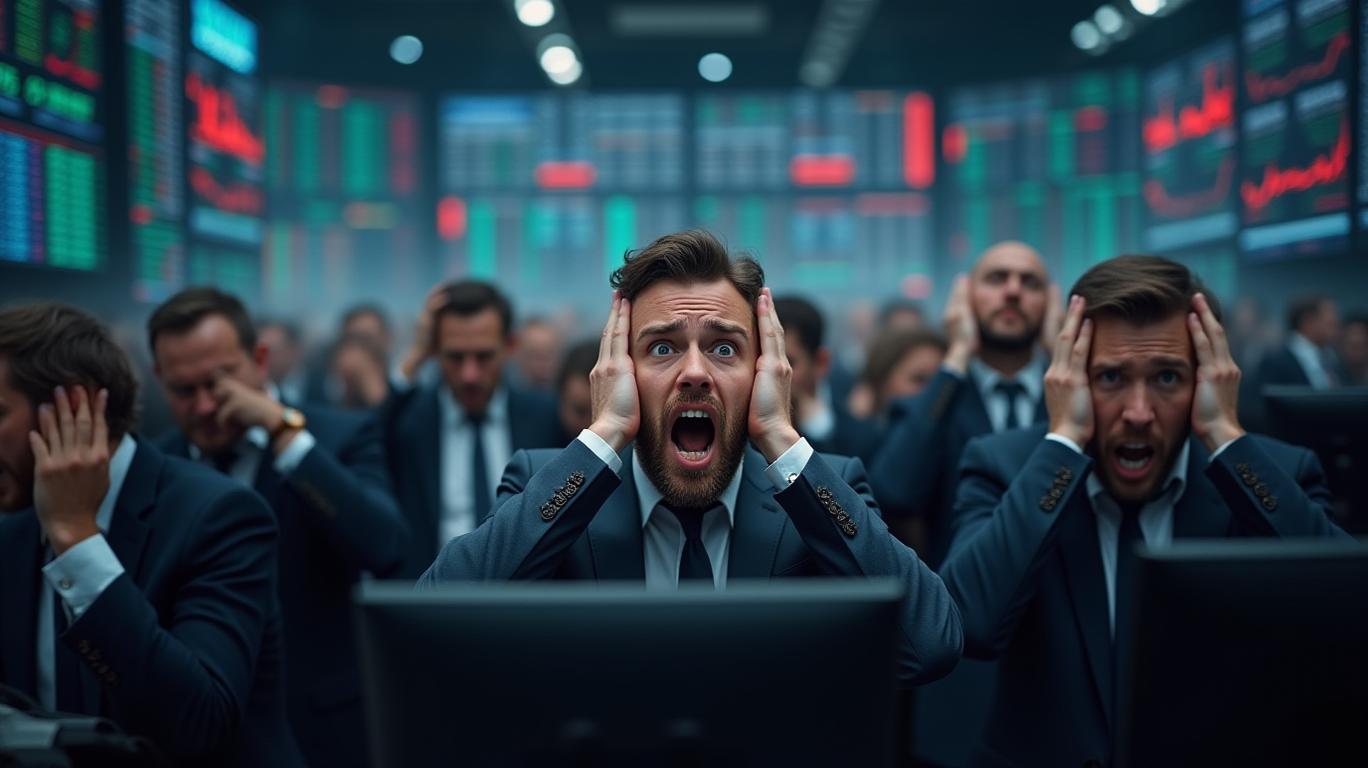
First, let's consider the economic indicators and market trends that investors should monitor in the lead-up to Liberation Day. The trade war developments are crucial, as China, Mexico, and Canada have already responded to Trump’s tariff push by imposing levies on American goods. This has led to heavy losses in U.S. markets and has many investors fearing a recession. The University of Michigan’s consumer sentiment index has fallen to its lowest level since November 2022, reflecting growing economic uncertainty.
Market sentiment and volatility are also key indicators. The S&P 500 is up 18.8% year to date through July 16, 2024, but there are concerns about high valuations and rising geopolitical tensions. Market expert Gianmaria Feleppa notes that the stock market is always forward-looking and will sell off if it thinks the economy is moving in a bad direction. The employment picture, with the unemployment rate ticking up to 4.1% in June 2024, is also a key factor. Stable employment means people have money to pay their bills and buy nonessential items, which moves the economy.
Economic data releases, such as the Personal Consumption Expenditures Index (PCE) and the flash US composite PMI, provide insights into economic health. For example, the S&P Global's flash US composite PMI for March 2025 indicated that US economic output moved higher but reflected an overall growth trajectory that was slower than initially hoped in the first quarter.
The Federal Reserve's decisions on interest rates and monetary policy are critical. The Fed will weigh whether to resume interest rate cuts in response to the economic conditions, which could significantly impact market stability. Treasury Secretary Scott Bessent called the market selloff a “normal” and “healthy correction” to years of overreliance on government spending, predicting that we’ll end up with a stronger economy. However, economist Jeffrey Frankel argues that this explanation is not based on any valid economic argument.
Geopolitical risks, including endless wars in Ukraine and the Middle East, and high government spending, are also factors to consider. These risks can influence market volatility and investor confidence. For example, the ongoing trade war and the potential for a fiscal crisis due to a government shutdown or failure to raise the debt ceiling are significant concerns.
Sector-specific impacts are also important to monitor. For instance, Tesla's stock rallied nearly 12% on March 25, 2025, as markets assessed signs that Trump might not unveil tariffs on the auto sector on April 2, as anticipated. This highlights the sensitivity of certain sectors to trade policy changes.
Now, let's consider the potential impact of reciprocal tariffs on global supply chains and the profitability of multinational corporations, particularly in sectors like technology and automotive. The implementation of reciprocal tariffs by President Trump could lead to major disruptions in global supply chains. For instance, the technology sector, which relies heavily on global supply chains for components like semiconductors, could face significant challenges. As noted by UBSUBS-- analysts, a true reciprocal tariff system could involve more than 2.5 million unique rates, making it complex and time-consuming to implement. This complexity could lead to delays and increased costs for companies that rely on global supply chains.
The imposition of tariffs on goods like cars, semiconductors, and pharmaceuticals could increase the cost of raw materials and components for multinational corporations. This, in turn, could reduce their profitability. For example, the automotive sector, which is heavily reliant on global supply chains for parts and components, could face increased costs due to tariffs on imported parts. This could lead to reduced profitability for automakers and their suppliers.
Retaliatory measures from other countries could also exacerbate the situation. For instance, China, Mexico, and Canada have already responded to President Trump’s tariff push by imposing levies on American goods. This could further disrupt global supply chains and increase costs for multinational corporations. As noted by economist Jeffrey Frankel, "The Trump approach to tariffs is hurting investment, not helping it. Usually what they say is that boosts confidence, but the current policy chaos is having the opposite effect. It’s reducing confidence."
The impact of reciprocal tariffs could vary depending on the company and the sector. For example, Tesla's stock rallied nearly 12% on March 25, 2025, as markets assessed signs that Trump wouldn't unveil tariffs on the auto sector on April 2, as anticipated. This shows that the market is sensitive to the potential impact of tariffs on specific companies and sectors.
The long-term effects of reciprocal tariffs could be even more significant. As noted by economist Jeffrey Frankel, "The uncertainty itself has a negative effect. The instability has alarmed not just investors, but also sectors like real estate and health care, with many businesses shifting into 'wait and see' mode." This uncertainty could lead to reduced investment and innovation in the long term, further impacting the profitability of multinational corporations.
In conclusion, the implementation of reciprocal tariffs by President Trump could have significant impacts on global supply chains and the profitability of multinational corporations, particularly in sectors like technology and automotive. The increased costs, disruptions in supply chains, and retaliatory measures from other countries could all contribute to reduced profitability and long-term uncertainty for these companies. Investors should closely monitor the economic indicators and market trends in the lead-up to Liberation Day to gauge the potential severity of a market crash and prepare accordingly.



Divulgación editorial y transparencia de la IA: Ainvest News utiliza tecnología avanzada de Modelos de Lenguaje Largo (LLM) para sintetizar y analizar datos de mercado en tiempo real. Para garantizar los más altos estándares de integridad, cada artículo se somete a un riguroso proceso de verificación con participación humana.
Mientras la IA asiste en el procesamiento de datos y la redacción inicial, un miembro editorial profesional de Ainvest revisa, verifica y aprueba de forma independiente todo el contenido para garantizar su precisión y cumplimiento con los estándares editoriales de Ainvest Fintech Inc. Esta supervisión humana está diseñada para mitigar las alucinaciones de la IA y garantizar el contexto financiero.
Advertencia sobre inversiones: Este contenido se proporciona únicamente con fines informativos y no constituye asesoramiento profesional de inversión, legal o financiero. Los mercados conllevan riesgos inherentes. Se recomienda a los usuarios que realicen una investigación independiente o consulten a un asesor financiero certificado antes de tomar cualquier decisión. Ainvest Fintech Inc. se exime de toda responsabilidad por las acciones tomadas con base en esta información. ¿Encontró un error? Reportar un problema




Comentarios
Aún no hay comentarios