
LGL Group's Share Repurchase Strategy and Its Implications for Value Creation
In the ever-evolving landscape of capital allocation, companies must balance the competing demands of reinvestment, debt reduction, and shareholder returns. The LGL GroupLGL--, Inc. (LGL) has recently taken a step toward the latter with its September 2025 announcement of a share repurchase program, . This move, while modest in scale, raises critical questions about its strategic rationale and potential to enhance shareholder value.
Strategic Capital Allocation: A Conservative Approach
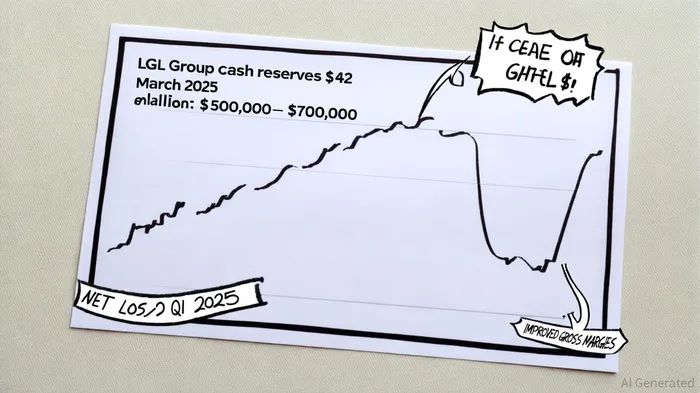
, with implementation expected in the same quarter [1]. The company's liquidity position is robust, , 2025 [2]. This financial flexibility allows LGLLGL-- to pursue buybacks without compromising operational needs or growth initiatives. However, , 2025—suggests a historically cautious approach to capital returns [3].
The decision to initiate buybacks now appears tied to recent operational improvements. , driven by the Electronic Instruments segment, , reflecting a pivot toward higher-margin products [2]. Yet, , , due to reduced yields from U.S. Treasury money market funds [2]. This volatility underscores the need for disciplined capital allocation, and the repurchase program may signal management's confidence in the intrinsic value of shares amid short-term earnings pressures.
Shareholder Returns vs. Alternative Uses of Capital
While LGL's buyback allocation is relatively small, it must be evaluated against alternative capital allocation strategies. The company has no debt, , eliminating the need for debt reduction. Dividend payments are absent, with the last recorded payout dating to 1999 [5], suggesting a preference for reinvestment or buybacks.
Industry peers in 2025 have shown a growing emphasis on private credit, infrastructure, and sustainable investing [6], but LGL's strategy remains focused on core operations. For instance, , . These initiatives highlight a dual focus on innovation and liquidity management. However, the lack of disclosed R&D spending or major acquisition plans leaves room to question whether the repurchase program could be scaled to better align with industry benchmarks, such as Apple's $100 billion fiscal 2024 buyback [7].
Implications for Value Creation
Share repurchases can enhance (EPS) by reducing the share count, but their effectiveness depends on the price paid relative to . LGL's program is subject to “availability and ,” implying a selective approach rather than aggressive market timing [1]. This prudence is prudent given the company's recent net loss and revenue volatility, but it also limits the potential EPS boost.
The warrants exercisable through November 17, 2025, add another layer of complexity. , further dilution could offset the benefits of buybacks if warrants are exercised en masse. Management's ability to balance these dynamics will be critical to ensuring that the repurchase program meaningfully enhances shareholder value.
Conclusion: A Step Forward, But Room for Boldness
LGL's share repurchase strategy reflects a measured approach to capital allocation, leveraging its strong liquidity position to reward shareholders while preserving flexibility for growth. However, the modest scale of the program and historical inactivity suggest a conservative stance compared to industry peers prioritizing aggressive buybacks or high-growth investments. For long-term value creation, LGL must balance its current focus on operational efficiency with more proactive capital deployment—whether through expanded repurchases, dividends, or strategic reinvestment.





Comentarios
Aún no hay comentarios