
LG Display's Strategic Position in Next-Gen Display Technology and Market Share Expansion
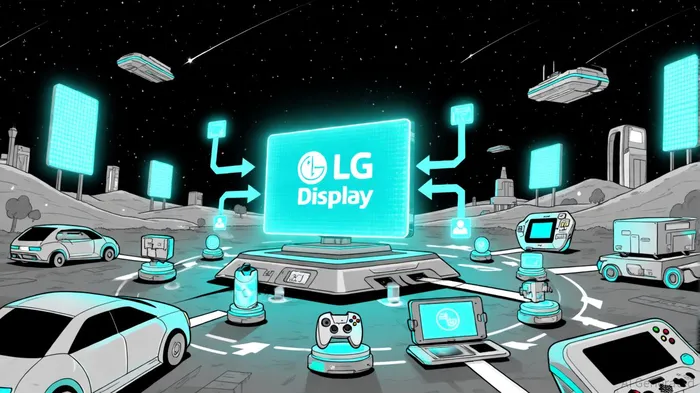
In the rapidly evolving landscape of display technology, LG DisplayLPL-- has emerged as a pivotal player, leveraging strategic supplier alignment and cutting-edge innovation to secure its dominance in next-generation markets. As the demand for high-performance OLED panels, AI-integrated interfaces, and sustainable solutions surges, LG Display's ability to synchronize its supplier ecosystem with client innovation cycles is proving critical to both market share expansion and margin uplift.
Supplier Alignment and Technological Leadership
LG Display's strategic partnerships with suppliers and industry stakeholders have been instrumental in accelerating its innovation cycles. A prime example is its decade-long collaboration with LG Chem to localize core OLED materials, such as p-type dopants. This joint effort has raised the localization rate of OLED materials from 58% to 64%, reducing dependency on imports and enhancing supply chain resilience, according to KED Global. By securing domestic production of critical components, LG Display not only mitigates geopolitical risks but also lowers costs, a factor that directly supports margin expansion.
Moreover, LG Display's AI-driven production system exemplifies how supplier collaboration extends beyond material sourcing. The company has integrated AI into its manufacturing processes, reducing quality analysis time from three weeks to two days and cutting annual production costs by over KRW 200 billion ($139 million) through real-time defect detection and process optimization, as reported by Digitimes. This initiative, developed in tandem with suppliers and internal R&D teams, underscores LG Display's commitment to operational efficiency, a key driver of profitability in a capital-intensive industry.
Market Share Expansion Through Next-Gen Innovation
LG Display's focus on next-generation technologies is reshaping its competitive positioning. At SID Display Week 2025, the company unveiled its fourth-generation OLED panels, featuring a Primary RGB Tandem structure that delivers 4,000 nits of brightness and a 20% improvement in energy efficiency, per its SID Display Week announcement. These advancements position LG Display to capture premium segments such as AI-optimized TVs and gaming displays, where clients demand superior performance and differentiation.
The automotive sector further highlights LG Display's innovation edge. Its 57-inch Pillar-to-Pillar (P2P) display and 18-inch Slidable OLED, designed for Software-Defined Vehicles (SDVs), operate in extreme temperatures (-40°C to +85°C) and redefine in-car infotainment experiences, according to an LG Corp media release. These solutions, developed through close collaboration with automotive suppliers, align with the industry's shift toward software-driven mobility, ensuring LG Display remains a key supplier for next-gen vehicle manufacturers.
Financial Resilience and Margin Uplift Potential
Despite a Q2 2025 operating loss of KRW 116 billion, LG Display's financial trajectory reflects strategic gains. LG Display reported in its Q2 2025 results that OLED products accounted for 56% of total revenue, a 4 percentage point increase year-on-year, while the average selling price (ASP) per square meter surged 31% quarter-on-quarter to USD 1,056. This pricing power, driven by premium product adoption and cost innovations, is expected to bolster margins in the second half of 2025.
The company's debt profile also signals financial discipline. A reduced debt ratio of 268% and a net debt-to-equity ratio of 155% in Q2 2025 reflect improved liquidity, supported by non-operating gains from the sale of its Guangzhou LCD plant, as noted in Gurufocus highlights. These measures, combined with a KRW 1,260 trillion investment in new OLED technologies over two years, position LG Display to capitalize on long-term growth while maintaining operational flexibility.
Strategic Partnerships as a Catalyst for Growth
Beyond supplier collaboration, LG Display's alliances with tech giants like Microsoft underscore its forward-looking strategy. The partnership aims to integrate Microsoft's AI capabilities with LG's customer insights to develop empathetic AI agents for homes, vehicles, and commercial spaces, according to Asiae. Such collaborations not only enhance product differentiation but also open new revenue streams in AI-driven services, further diversifying LG Display's market exposure.
Conclusion
LG Display's strategic alignment with suppliers and clients is a cornerstone of its success in the next-gen display market. By prioritizing localized material production, AI-driven efficiency, and collaborative R&D, the company is not only accelerating innovation cycles but also fortifying its margins against industry headwinds. As demand for premium OLEDs and AI-integrated solutions intensifies, LG Display's ability to harmonize its ecosystem positions it as a compelling long-term investment.





Comentarios
Aún no hay comentarios