
Lexicon Pharmaceuticals' Zynquista: Navigating FDA Hurdles and Market Potential in Type 1 Diabetes
Lexicon Pharmaceuticals' Zynquista (sotagliflozin), a dual SGLT1/SGLT2 inhibitor for type 1 diabetes (T1D), remains at a critical juncture in its regulatory journey. After receiving a complete response letter (CRL) from the U.S. Food and Drug Administration (FDA) in December 2024 over concerns about diabetic ketoacidosis (DKA) risk [1], the company has submitted additional clinical data from three investigator-initiated studies—STENO1, SUGARNSALT, and SOPHIST—to bolster its New Drug Application (NDA) resubmission [2]. This move reflects Lexicon's strategic pivot to leverage third-party evidence rather than fund new trials, a capital-light approach aimed at addressing the FDA's safety concerns [3].
Regulatory Path Forward: A Delicate Balancing Act
The FDA's December 2024 CRL highlighted Zynquista's potential to exacerbate DKA, a life-threatening complication in T1D patients [4]. Lexicon's resubmission includes real-world data from over 20,000 patients across its clinical portfolio, emphasizing glycemic and cardio-renal benefits while proposing risk mitigation strategies such as structured ketone monitoring and patient education [5]. However, experts caution that the FDA may demand stricter labeling requirements, including narrow patient inclusion criteria, to offset the DKA risk [6].
A Type D meeting with the FDA, initially expected by late September 2025, has been delayed to the fourth quarter [7]. This extension suggests the agency is scrutinizing the adequacy of Lexicon's data. Notably, the FDA's Endocrinologic and Metabolic Drugs Advisory Committee previously voted 11–3 against Zynquista's approval for T1D, underscoring skepticism about its benefit-risk profile [8]. While Lexicon's CEO, Dr. Mike Exton, has emphasized patient advocacy as a key driver for approval [9], the agency's final decision will hinge on whether the submitted data sufficiently addresses DKA concerns without compromising therapeutic value.
Market Potential: A Niche Opportunity in a Competitive Landscape
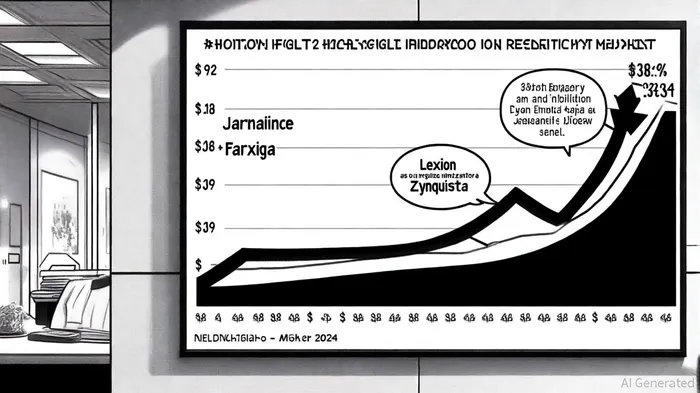
If approved, Zynquista could carve out a niche in the $38.6 billion SGLT2 inhibitors market, which is projected to grow at a 7.4% CAGR through 2034 [10]. However, the drug faces stiff competition from established players like Jardiance (empagliflozin) and Farxiga (dapagliflozin), which dominate the market with $10.2 billion in combined revenue in 2024 [11]. Zynquista's dual SGLT1/SGLT2 mechanism offers unique advantages in glycemic control for T1D patients, but its commercial success will depend on regulatory approval and post-marketing risk management strategies.
Analysts estimate that Zynquista could capture a modest share of the T1D market, particularly if labeled for specific subpopulations with lower DKA risk [12]. However, Lexicon's financial constraints—reflected in a $202 million net loss over 12 months—pose challenges for marketing and distribution [13]. The company has shifted focus to other therapeutic areas, such as diabetic neuropathic pain with its phase 2b candidate LX9211, further complicating its ability to capitalize on Zynquista's potential [14].
Investment Implications: High Risk, High Reward
For investors, Zynquista represents a high-stakes bet. A favorable FDA decision in Q4 2025 could catalyze a short-term rally in Lexicon's stock, driven by the drug's unmet medical need in T1D. However, the likelihood of approval remains uncertain, with the FDA's risk-averse stance and the lack of robust, prospectively powered trials casting doubt on the data's sufficiency [15].
Long-term, Zynquista's market impact will depend on its ability to differentiate itself in a crowded field. If approved, LexiconLXRX-- may need to partner with larger pharmaceutical firms to scale commercialization, a scenario that could dilute shareholder value. Conversely, a rejection would likely force the company to pivot entirely to its other pipeline candidates, which are in earlier stages of development.
Conclusion
Lexicon's Zynquista stands at a regulatory crossroads, with its fate hinging on the FDA's assessment of its DKA risk mitigation strategies. While the drug's mechanism offers promise for T1D patients, the path to approval is fraught with challenges. Investors must weigh the potential for a breakthrough against the company's financial fragility and the competitive dynamics of the SGLT2 inhibitors market. As the fourth quarter of 2025 approaches, all eyes will be on the FDA's decision—a pivotal moment that could redefine Lexicon's future.





Comentarios
Aún no hay comentarios