
Levi Strauss & Co.: Strategic Resilience in the Post-Pandemic Retail Landscape
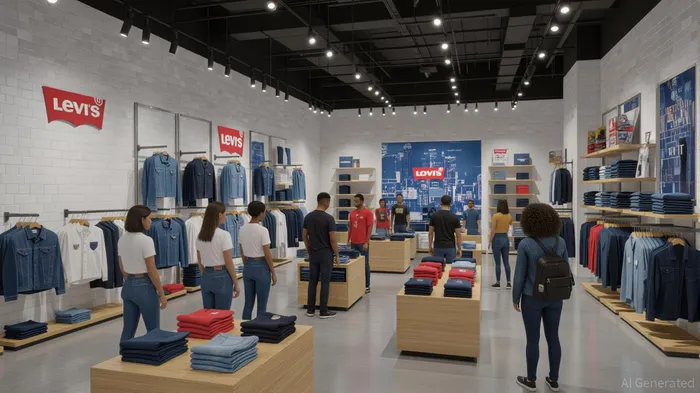
The post-pandemic retail environment has tested the mettle of even the most established brands. Consumer behavior has shifted toward experiential value, sustainability, and technological integration, demanding agility from legacy players. Levi StraussLEVI-- & Co., a century-old denim icon, has navigated these challenges by doubling down on innovation, inclusivity, and strategic partnerships. While financial data remains opaque, the company's product launches, collaborations, and design philosophies offer compelling insights into its resilience and capacity to retain consumer confidence.
Innovation as a Pillar of Resilience
Levi's has consistently leveraged product innovation to stay relevant. The re-launch of its DRY GOODS TOPS line in 2023, featuring '90s-style knit tees with lace and lettuce edges, exemplifies a deliberate nod to nostalgia while catering to evolving fashion trends [1]. This approach taps into a broader consumer desire for comfort and versatility, particularly in a post-pandemic world where casual wear remains dominant. By blending retro aesthetics with modern functionality, Levi's reinforces its position as a trendsetter rather than a relic.
Technology-Driven Brand Evolution
The brand's partnership with GoogleGOOGL-- to integrate tech-savvy features into classic denim jackets—such as digital service control from the cuff—highlights its commitment to merging tradition with innovation [2]. This move aligns with the growing demand for smart apparel, a niche market projected to expand as consumers seek seamless connectivity in everyday wear. By embedding technology into its heritage products, Levi's not only future-proofs its offerings but also appeals to younger, tech-savvy demographics.
Inclusivity and Fit: A Strategic Differentiator
Levi's emphasis on diverse fit options—ranging from the timeless 501 Original to the modern 511 Slim and 541 Athletic—demonstrates a deep understanding of consumer needs in an era prioritizing body positivity and personalization [2]. This strategy addresses a critical pain point in the apparel industry: the mismatch between standardized sizing and individual body types. By offering tailored solutions, Levi's fosters loyalty among a broad customer base, a key driver of long-term resilience.
Brand Identity and Consumer Confidence
The brand's recent aesthetic refresh—featuring vibrant logos and contemporary designs—underscores its ability to evolve without diluting its heritage [2]. This balance between tradition and modernity is crucial for maintaining consumer trust. In a market saturated with fast fashion, Levi's has positioned itself as a purveyor of quality and authenticity, a reputation that transcends economic cycles.
Conclusion: A Blueprint for Long-Term Resilience
While financial metrics remain elusive, Levi Strauss & Co.'s strategic initiatives paint a picture of a brand in motion. By prioritizing innovation, embracing technology, and championing inclusivity, the company has fortified its relevance in a rapidly changing retail landscape. For investors, these actions signal a commitment to adaptability—a trait that will define success in the decades ahead.







Comentarios
Aún no hay comentarios