
Levi Strauss & Co.: Accelerating Growth Momentum Driven by Durable Brand Strength and Resilient Demand in Premium Casual Wear
Levi Strauss & Co. is experiencing a renaissance in 2025, driven by a strategic pivot toward direct-to-consumer (DTC) engagement, product diversification, and sustainability. The company's Q3 2025 financial results underscore this momentum, with net revenues reaching $1.5 billion-a 7% year-over-year increase-while DTC sales grew 9% organically, outpacing broader market trends, according to the company's Q3 financial results. This performance reflects a durable brand strength that has translated into resilient demand, even amid global economic headwinds.
Historical data on LEVI's earnings releases reveals a pattern of short-term positive price drift, with an average 3-day cumulative excess return of +2.5%-a statistically significant edge at the 5% level. However, this momentum fades after the first week, with excess returns stabilizing around +3% beyond day 10. While the win-rate exceeds 60% on day 1, it converges to 50% by day 30, suggesting most of the opportunity lies in very short holding periods.
DTC-First Strategy Fuels Margin Expansion and Market Share Gains
Levi's shift to a DTC-first model has been a cornerstone of its recent success. By prioritizing direct engagement with consumers, the company has not only strengthened customer relationships but also optimized profitability. In Q3 2025, DTC net revenues grew 11% on a reported basis, with Asia emerging as a standout market, posting 14% growth according to a TradingView report. This regional performance aligns with broader trends in the premium casual wear sector, where Asia Pacific dominates with a 41.51% market share in 2024, driven by rising middle-class disposable incomes and a preference for versatile, high-quality apparel, as noted in the casual wear market forecast.
The DTC strategy has also bolstered Levi's gross margin, which expanded to 61.7% in Q3 2025, up 110 basis points year-over-year. This improvement, despite the drag from tariffs, highlights the effectiveness of price increases and a favorable channel mix, as reported by CNBC. As stated by the company, this margin expansion has enabled Levi StraussLEVI-- to raise its full-year revenue growth outlook to approximately 3%, a significant upgrade from its earlier 1%-to-2% range (company disclosure).
Brand Equity and Customer Loyalty: A Legacy Reinvented
Levi's brand equity remains a critical asset. The Levi's® brand commands a 22% share of the global denim market, a testament to its century-old heritage of quality and authenticity, according to a GuruFocus analysis. This legacy is now being leveraged to justify premium pricing in an increasingly competitive landscape. According to the 2025 Brand Keys Customer Loyalty Engagement Index (CLEI), LeviLEVI-- Strauss earned the "Gold" designation in the Apparel category, underscoring its leadership in customer retention and engagement as shown in the Brand Keys index. In an era where retaining existing customers is 15 to 22 times more cost-effective than acquiring new ones, this loyalty provides a significant competitive edge, per an industry report.
The company's digital innovation further reinforces this loyalty. According to a product strategy guide, AI-powered personalization and virtual try-on experiences now account for 35% of total revenue, while 40% of sales come from categories beyond denim, such as athleisure and smart clothing. These initiatives not only diversify revenue streams but also align with evolving consumer preferences for convenience and customization.
Sustainability as a Strategic Differentiator
Sustainability has become a linchpin of Levi's market position. The brand has committed to using 50% recycled materials across its product lines and has achieved a 70% reduction in water usage-a critical differentiator in an industry grappling with environmental scrutiny, as outlined in a marketing case study. These efforts resonate with younger demographics, particularly Gen Z and millennials, who prioritize eco-conscious brands. As noted in a report by Fortune Business Insights, sustainable fabrics and circular fashion models are gaining traction, with Levi's positioning itself at the forefront of this shift (industry forecast).
Challenges and Opportunities in a Competitive Landscape
While Levi's has outperformed many peers, challenges persist. The athleisure segment, though growing, is highly competitive, with rivals like Lululemon and Nike vying for market share. Additionally, global tariffs and economic uncertainties could temper growth in the short term. However, Levi's strategic focus on DTC, product diversification, and sustainability provides a buffer against these risks. Its 10.8% operating margin in Q3 2025-up from 2.3% in the same period in 2024-demonstrates the scalability of its current model, according to the company's earnings highlights.
Conclusion: A Compelling Investment Case
Levi Strauss & Co. is no longer just a denim brand; it is a lifestyle brand with a resilient business model. Its durable brand strength, coupled with a DTC-driven strategy and sustainability leadership, positions it to capitalize on the $645 billion premium casual wear market in 2025 (market forecast). For investors, the company's accelerating growth momentum-evidenced by margin expansion, market share gains, and a robust full-year outlook-makes it a compelling long-term bet in an industry increasingly defined by differentiation and consumer loyalty.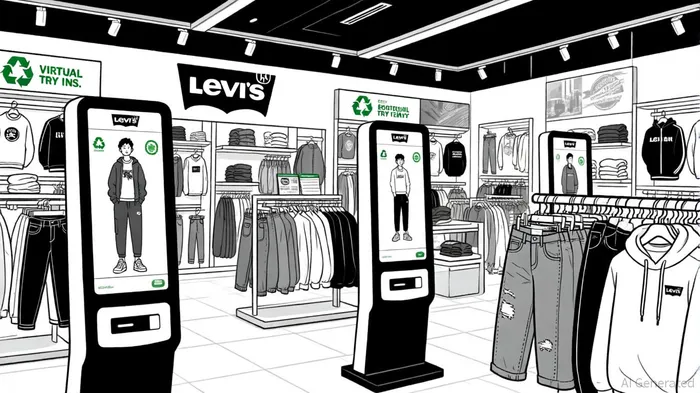





Comentarios
Aún no hay comentarios