
Levi's Q2 Surge Signals a New Era of Structural Growth and Profitability
Levi Strauss & Co. (NYSE: LEVI) delivered a standout Q2 2025 performance, with revenue and earnings handily beating expectations. Beneath the headline numbers lies a deeper story of strategic transformation: the DTC-first model, brand evolution, and margin discipline are coalescing into a durable growth engine. For investors, this marks a critical inflection point—one that justifies a closer look at LEVILEVI-- as a compelling long-term play.
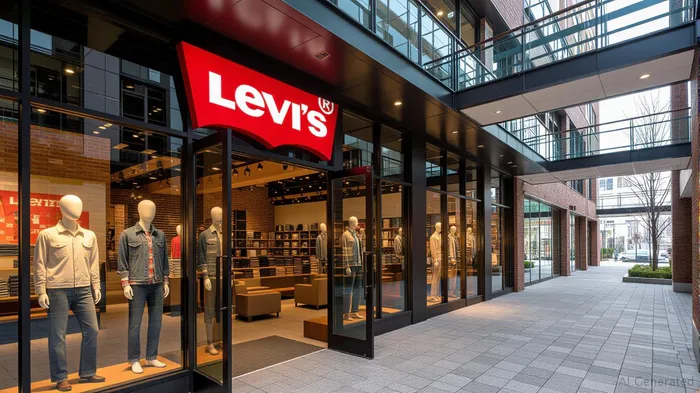
The DTC Revolution: More Than Just Channels
The company's Direct-to-Consumer (DTC) strategy is now its crown jewel. DTC revenue rose 11% to over 50% of total sales, with EBIT margins expanding 300 basis points year-over-year. This isn't just about selling more online or in stores—it's a profit machine. By reducing reliance on wholesalers, Levi's captures full retail margins while gaining direct consumer insights.
The DTC shift is also geographic:
- Europe's wholesale segment rebounded after supply chain hiccups, but DTC growth in markets like Japan and South Korea (where new flagships opened) is driving 13% organic e-commerce growth.
- In the U.S., comparable store sales grew high-single digits, fueled by premium denim and tops.
Brand Momentum: From Denim to Lifestyle
Levi's is no longer just a jeans brand—it's a lifestyle powerhouse. The Q2 results highlight two critical wins:
1. Women's Apparel Dominance: Women's sales surged 14%, outpacing men's by nearly double. Tops grew 16%, reflecting success in expanding into activewear and outerwear. This is a deliberate pivot—Levi's now competes with Lululemon and NikeNKE-- in high-margin categories.
2. Collaborations and Cultural Relevance: Partnerships with Beyoncé (the “Reimagine” campaign) and Nike (a limited-edition sneaker-jean combo) are boosting brand equity. These moves aren't just marketing—they're unlocking premium pricing.
The proof is in the numbers: Average Unit Retail (AUR) rose broadly, with no meaningful discounting. Levi's is pricing for value, not volume.
Margin Expansion: A Structural Advantage
Gross margin hit 62.6%, up 140 basis points year-over-year—a record for the company. This isn't luck; it's strategy:
- Supply Chain Diversification: Reduced reliance on China (30% tariffs) via Mexico and Vietnam factories.
- SKU Rationalization: Eliminating low-turnover items improved inventory turnover and full-price sell-through.
- DTC Leverage: Higher-margin DTC sales now dominate, offsetting tariff costs.
Even with tariffs, management sees only a 20 basis-point drag on full-year margins, thanks to price hikes and cost controls. Operating margins are on track to hit 15% long-term—a 500 basis-point improvement from 2020 levels.
Guidance Upgrades: Confidence in the Model
The company hiked full-year organic revenue growth to 4.5-5.5% (up from 3./4.5%) and raised EPS guidance by $0.05. This reflects operational confidence:
- The DTC-first model is scaling profitably.
- The sale of Dockers (now a discontinued operation) removes legacy baggage.
- Asia's flat growth (a drag) is offset by Europe's 15% surge and U.S. consistency.
Tariff Risks: Manageable, Not Existential
While tariffs on Chinese imports remain a headwind, Levi's has three countermeasures:
1. Diversified Sourcing: 70% of production now outside China.
2. Price Pass-Through: AUR hikes absorbed ~50% of tariff costs.
3. Inventory Smarts: A 15% inventory build preempted supply chain disruptions, ensuring holiday readiness.
The stock's 15.85% YTD return and 2.64% dividend yield reflect investor trust in this strategy.
Investment Thesis: Buy the Structural Shift
Levi's is no longer a cyclical apparel stock—it's a compound growth story. The DTC-first model, lifestyle expansion, and margin discipline create a flywheel:
- Higher margins fund innovation and store openings.
- Brand relevance drives top-line growth.
- Debt reduction (now at 1.5x EBITDA) adds financial flexibility.
At current levels (~$19.50), LEVI trades at 22x forward EPS—a reasonable premium to its growth trajectory. The key risks (Asia stagnation, macro weakness) are already priced in.
Final Verdict: A Compelling Buy
Levi's has transformed itself into a premium lifestyle brand with structural growth drivers. The Q2 results confirm that its strategy is working: higher margins, DTC dominance, and cultural relevance are all firing on all cylinders. Historically, LEVI has shown strong short-term performance following earnings beats, with a 72.7% win rate over three days and a final return of 2.33% since 2022, according to backtesting. This historical outperformance reinforces the significance of the current beat as a positive inflection point. While tariffs aren't gone, they're manageable in a model that's now 50% DTC and 15% operating margin-bound.
For investors seeking a durable, low-debt consumer stock with both growth and yield, LEVI is a buy. The path to mid-single-digit organic growth and 15% margins is clear—and the stock has room to run.





Comentarios
Aún no hay comentarios