
Leveraging Data-Driven Insights to Transform Property Insurance Resilience
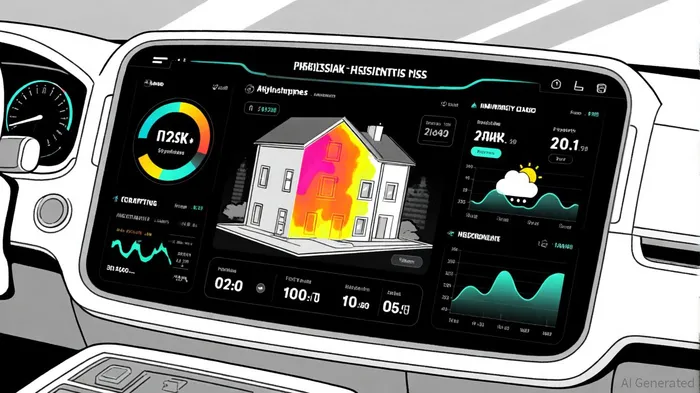
The property insurance industry is at a crossroads. Rising catastrophe-related losses, volatile weather patterns, and escalating claim severities are straining traditional underwriting and claims management models. In 2023 alone, U.S. insurers faced a 4.1% increase in all-peril loss costs and an 11% rise in claim frequency, with hail-related losses surging by 57.9% year-over-year [1]. Catastrophic events now account for 46% of all claims—a seven-year high—forcing insurers to rethink how they assess, price, and mitigate risk [2]. Amid this turbulence, advanced analytics platforms like LexisNexis Risk Solutions are emerging as critical tools for building resilience. By integrating AI, predictive modeling, and granular data, these platforms are not only reducing losses but also redefining the economics of property insurance.
The Power of Predictive Precision: LexisNexis's Commercial and Residential Tools
LexisNexis Risk Solutions has pioneered tools that address the dual challenges of risk assessment and claims efficiency. Its Location Intelligence for Commercial solution, launched in June 2025, leverages neural networks and multi-source data—including weather forensics, property characteristics, and historical claims—to identify properties at high risk of weather-related losses. This tool delivers over 20 times the predictive modeling lift compared to traditional loss propensity models, enabling insurers to pinpoint the top 10% of properties likely to generate 34% of losses in the coming year [3]. For commercial insurers, this means sharper underwriting decisions, targeted risk mitigation, and improved portfolio profitability.
For residential insurers, the Total Property Understanding™ platform, introduced in 2023, offers a similarly transformative approach. By combining interior, exterior, and aerial data with AI-driven insights, the tool identifies critical risks in approximately 30% of homes scanned, enabling proactive coverage adjustments and loss prevention [4]. One insurer reported a 246% increase in policy conversion after adopting predictive analytics from LexisNexis, while another saved over $2 million annually through data-driven customer retention strategies [5]. These outcomes underscore the platform's ability to align pricing with risk profiles and optimize profitability in a high-cost environment.
Claims Efficiency: From Reactive to Proactive
Beyond underwriting, LexisNexis's Home Claims Insights dashboard is reshaping claims management. In Q1 2025, catastrophe losses rose by 6% compared to the previous year, while non-catastrophic claims declined by 5.6% [6]. The dashboard's real-time analytics—delivered 60–80% faster than industry standards—allow insurers to benchmark severity, cycle times, and geographic trends against market benchmarks. For instance, during the January 2025 California wildfires, the tool helped insurers process 18,500 fire claims with an average severity of $540,000, while third-party data integration reduced severity payments by 25% and shortened claim cycles [7]. Such efficiency gains are critical as claim severity in metropolitan areas like New York (+36%) and Washington, D.C. (+23%) continues to outpace national averages [8].
Strategic Investment in Resilience: ROI and Industry Validation
The financial case for adopting advanced analytics is compelling. A regional insurer using LexisNexis's Total Property Understanding reported a 30% reduction in loss exposure by identifying actionable risks in high-risk properties [9]. Meanwhile, industry analysis highlights the broader ROI of data-driven resilience. According to a 2024 WTW report, North American P&C insurers have invested heavily in AI and analytics but face bottlenecks in operational integration. However, those with robust data foundations—like LexisNexis's platforms—achieve faster returns, with agile solutions delivering measurable improvements in capital management and emerging risk mitigation [10].
Conclusion: A New Era of Risk Management
The property insurance landscape is shifting from reactive to proactive resilience. LexisNexis Risk Solutions exemplifies this shift, offering tools that not only reduce losses but also enhance operational efficiency and profitability. As insurers grapple with escalating catastrophe costs and regulatory demands, strategic investments in advanced analytics are no longer optional—they are imperative. By leveraging platforms like LexisNexis, insurers can future-proof their portfolios, align coverage with evolving risks, and deliver value to both shareholders and policyholders.







Comentarios
Aún no hay comentarios