
Leveraging the US-China Tariff Truce: Strategic Opportunities in Global Markets Amidst Lingering Uncertainty
The 90-day US-China tariff truce, effective May 14, 2025, has injected a fleeting sense of relief into global markets, with equity indices surging and volatility metrics easing. Yet beneath the surface, the expiration of this fragile agreement on August 12 looms as a critical risk. For investors, this creates a narrow window to exploit short-term optimism while hedging against the prolonged uncertainty that awaits.
The Truce’s Immediate Impact: A Mixed Bag for Markets
The temporary rollback of tariffs—from 125% to 10% on both sides—has provided a respite for sectors like autos, textiles, and technology. 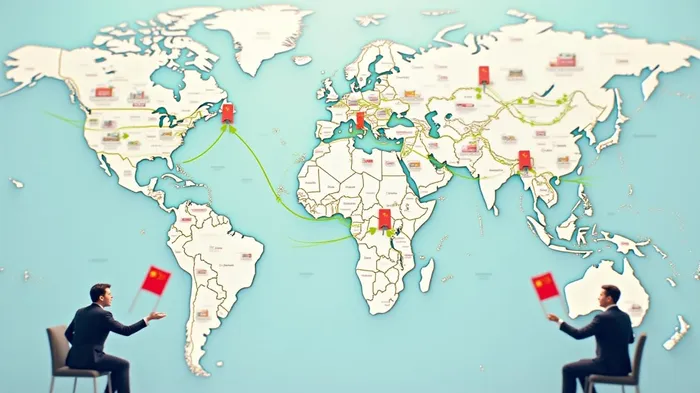 . Auto stocks, for instance, have rallied as fears of $3,000 price hikes per vehicle have been deferred. Meanwhile, tech supply chains, disrupted by zero cargo vessels departing Chinese ports earlier this year, now see a reprieve.
But the truce is not a panacea. Agricultural exports remain strained, with US farm output down 1.1% and Canadian GDP contracting 2.3%, while households face a $2,800 annual loss in purchasing power. reveals that investors have favored defensive sectors, underscoring underlying anxiety.
Strategic Play #1: Geographic Diversification to Hedge Sectoral Risks
The truce’s uneven sectoral impact demands a nuanced geographic approach.
Auto & Tech: Pivot to Asia-Pacific and Europe
Invest in automakers and tech firms with diversified supply chains outside China. Japanese automakers like Toyota (TM) and European semiconductor leaders like ASML (ASML) benefit from reduced reliance on Sino-US trade flows.Agriculture: Target Emerging Markets and Alternative Trade Routes
Shift exposure to Brazil’s soybean exports (BOV:BOVA11) and Black Sea grain producers, which have gained market share amid US-China disruptions.Consumer Staples: Focus on Domestic Demand
Allocate to US companies like Walmart (WMT) and Procter & Gamble (PG), which can offset tariff costs through pricing power in a still-resilient domestic market.
Strategic Play #2: Currency Hedging to Neutralize Volatility
The truce’s expiration date creates a “cliff risk” for currencies tied to trade dynamics.
Short-Term Play: USD/CNY Carry Trade
With the truce in place, the yuan (CNY) may stabilize against the dollar (USD). A carry trade—borrowing in low-yield USD to invest in higher-yield CNY-denominated bonds—could yield returns until August. Monitor the to time entries and exits.Long-Term Hedge: Diversify into Safe-Haven Currencies
Pair exposure to US-China-linked assets with holdings in Swiss francs (CHF) or Japanese yen (JPY), which typically appreciate during geopolitical stress.
The Key Risk: Truce Prolongation vs. Renewed Escalation
While markets have priced in the truce’s 90-day window, its fate hinges on negotiations over China’s rare earth export restrictions and the $1.2 trillion trade deficit. Should talks fail, tariffs could revert to 145%, triggering another leg down in equities. Conversely, an extension beyond August 12 could fuel a rally—especially in cyclicals like industrials (XLI) and materials (XLB).
Conclusion: Act Now, but Stay Nimble
The US-China tariff truce offers a fleeting tailwind for global markets. Investors must seize this window to:
1. Diversify geographically to avoid overexposure to tariff-sensitive sectors.
2. Hedge currency exposures using short-term trades and safe havens.
3. Stay liquid, ready to pivot if the truce expires without resolution.
The clock is ticking. With less than 90 days to go, the time to act is now—but the path forward demands discipline, diversification, and a clear-eyed view of the risks ahead.







Comentarios
Aún no hay comentarios