
Leveraged Trading Risks in Decentralized Derivatives Platforms: A Dual Threat of Behavioral and Structural Vulnerabilities
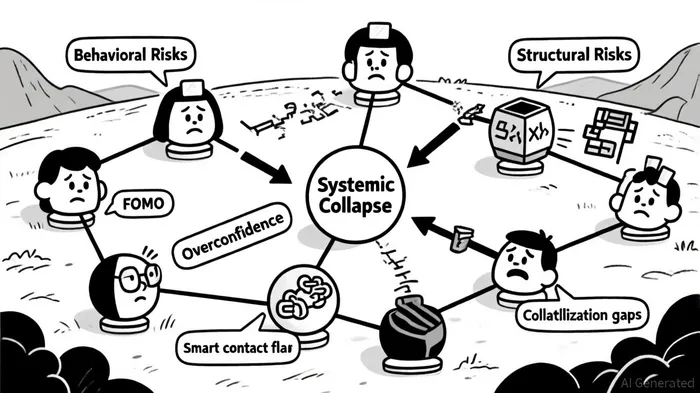
The rise of decentralized derivatives platforms has introduced a new frontier in financial innovation, but it has also exposed investors to unprecedented risks. Between 2023 and 2025, the collapse of algorithmic stablecoins like TerraUSD and high-leverage protocols such as Vega Finance underscored the fragility of these systems. These failures were not isolated incidents but rather symptoms of a deeper interplay between behavioral vulnerabilities—such as overconfidence and herd behavior—and structural flaws like inadequate collateralization and smart contract weaknesses.
Behavioral Vulnerabilities: The Human Element in DeFi Chaos
High-leverage trading in decentralized derivatives platforms amplifies the psychological biases inherent in speculative markets. Fear of missing out (FOMO) and overconfidence drive traders to take on excessive leverage, often without fully understanding the risks. For instance, during the 2023–2025 period, DeFi platforms like Solana-based Hyperliquid saw leveraged positions exceeding $83 million in notional value, only to face catastrophic liquidations during sudden price swings[3]. Behavioral finance research highlights how herding behavior—where investors follow the crowd rather than conducting independent analysis—can distort market dynamics, leading to inflated valuations and abrupt corrections[2].
The TerraUSD collapse in May 2023 exemplifies this dynamic. Traders and protocols overestimated the stability of the algorithmic stablecoin, assuming its peg to the U.S. dollar was invulnerable. When market conditions deteriorated, the lack of sufficient collateral triggered a death spiral, wiping out $40 billion in value[1]. This case illustrates how behavioral biases can compound structural weaknesses, creating a feedback loop of panic selling and cascading failures.
Structural Risks: The Technical Underpinnings of Collapse
While behavioral factors set the stage for disaster, structural vulnerabilities in DeFi protocols often serve as the catalyst. Smart contract flaws, for example, remain a critical risk. The 2023 Euler Finance exploit, which resulted in a $197 million loss, demonstrated how a single unguarded function could be weaponized via flash loans[4]. Similarly, Vega Finance's 2024 implosion revealed governance and collateralization issues: aggressive 50x leverage ratios left the platform exposed to sudden market downturns, while governance mechanisms failed to respond effectively to liquidity crises[1].
Collateralization gaps further exacerbate these risks. Unlike traditional finance, where centralized institutions can adjust risk parameters in real time, DeFi protocols rely on immutable smart contracts. When collateral values plummet—such as during the 2024 crypto bear market—automated liquidations can trigger a domino effect, as seen in the Vega Finance case[1]. The absence of robust risk management tools on decentralized exchanges (DEXs) compounds these issues, leaving traders with fewer safeguards than their centralized counterparts[3].
Case Studies: When Behavior and Structure Collide
The interplay between behavioral and structural risks is perhaps best exemplified by the TerraUSD and Vega Finance collapses. TerraUSD's algorithmic design relied on market participants' confidence in its dollar peg, a fragile assumption amplified by herding behavior. When doubts emerged, the lack of sufficient collateral and the absence of a central authority to stabilize the system led to a rapid, irreversible collapse[1].
Vega Finance's failure, meanwhile, highlights how structural flaws can be exploited by behavioral tendencies. The platform's 50x leverage attracted speculative traders during bullish cycles, but when Solana's price corrected, the lack of diversified collateral and governance flexibility led to a liquidity vacuum. Automated liquidations, intended to mitigate risk, instead accelerated the platform's demise[1].
Mitigating the Dual Threat: A Path Forward
Addressing these risks requires a dual approach. On the behavioral side, education and tools to counteract cognitive biases—such as real-time risk dashboards and behavioral nudges—could help traders avoid overleveraging. Academics have proposed utility-based frameworks for DeFi platforms, emphasizing transaction accuracy and real-time monitoring to enhance risk management[5].
Structurally, protocols must prioritize robust smart contract audits, diversified collateral models, and governance mechanisms that allow for rapid adjustments during crises. The rise of institutional-grade stablecoins, such as those backed by real-world assets (RWAs), offers a potential solution to collateralization gaps[4]. However, these innovations must be paired with regulatory clarity to prevent the recurrence of systemic failures.
Conclusion
The DeFi derivatives market's explosive growth has been accompanied by a parallel rise in systemic risks. Behavioral vulnerabilities—driven by overconfidence, FOMO, and herd behavior—interact with structural flaws like smart contract weaknesses and inadequate collateralization to create a volatile environment. While the ecosystem's resilience is evident in its continued expansion, the lessons from TerraUSD, Vega Finance, and others demand a reevaluation of risk management practices. For investors, the takeaway is clear: high leverage in decentralized derivatives is a double-edged sword, offering outsized gains but also exposing participants to cascading failures when behavioral and structural risks collide.







Comentarios
Aún no hay comentarios