
Leucovorin and the Autism Treatment Revolution: A New Frontier in Precision Medicine
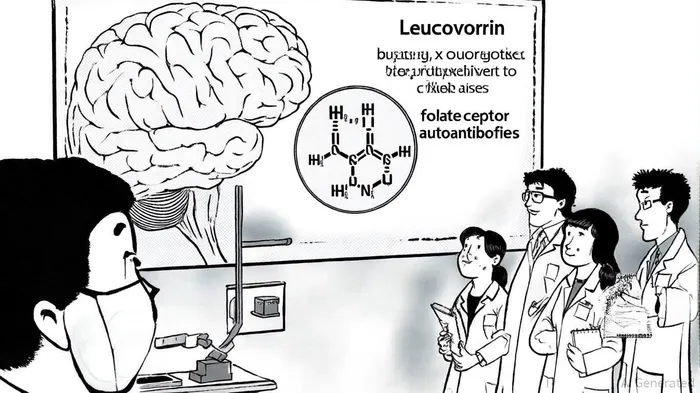
The U.S. Food and Drug Administration's (FDA) 2025 label update for leucovorin calcium marks a pivotal shift in the treatment of autism spectrum disorder (ASD). For the first time, the drug is formally recognized as a therapeutic option for children with cerebral folate deficiency (CFD), a condition linked to developmental delays and autistic features such as impaired social communication and repetitive behaviors [1]. This regulatory milestone, coupled with Medicaid coverage expansion and NIH-funded research, positions leucovorin as a disruptive force in a market projected to grow from $10 billion in 2025 to $17 billion by 2033 [2].
A Precision Medicine Breakthrough
Leucovorin, a reduced form of folate, addresses a specific biological pathway: the impaired folate transport caused by folate receptor alpha autoantibodies (FRAAs). Studies indicate that up to 75% of children with ASD have detectable FRAAs, which block folate from entering the brain despite normal blood levels [3]. By bypassing this blockage via the reduced folate carrier pathway, leucovorin restores cerebral folate availability, potentially improving speech, social interaction, and behavioral outcomes [4]. Clinical trials, including a 2024 Indian randomized controlled trial and a 2012 double-blind study, have demonstrated significant reductions in CARS scores and improvements in verbal communication [5].
The drug's mechanism aligns with the growing emphasis on precision medicine in neurodevelopmental disorders. Unlike traditional antipsychotics like risperidone and aripiprazole—approved for managing irritability in ASD—leucovorin targets a root cause rather than symptoms [6]. This distinction is critical: while existing pharmacological treatments address co-occurring conditions like anxiety or aggression, leucovorin offers a biological intervention for a subset of ASD patients with CFD or FRAAs [7].
Market Dynamics and Competitive Positioning
The autism treatment market is highly fragmented, dominated by non-pharmacological therapies such as behavioral interventions and speech therapy. However, the pharmaceutical segment remains underdeveloped, with limited options for addressing core ASD features. Leucovorin's entry introduces a novel therapeutic category: metabolic correction for neurodevelopmental disorders.
Key competitors include other folate derivatives and experimental therapies like oxytocin or cannabidiol, but none have achieved the regulatory clarity or clinical validation of leucovorin [8]. The drug's cost-effectiveness further strengthens its position: three months of treatment costs approximately $300, a fraction of the $7,400 equivalent in speech therapy hours [9]. Medicaid coverage, mandated by the FDA's label update, removes a major financial barrier, ensuring broader accessibility for families [10].
Yet challenges persist. Leucovorin is not a universal solution; it benefits only a subset of patients with CFD or FRAAs, requiring specialized diagnostic testing. Additionally, while the NIH's $50 million Autism Data Science Initiative aims to refine patient selection via biomarkers, long-term efficacy and optimal dosing remain under investigation [11].
Investment Potential and Future Outlook
The autism treatment market's projected 7% CAGR through 2033 underscores the urgency for innovative solutions [2]. Leucovorin's disruption potential hinges on three factors:
1. Diagnostic Infrastructure: Widespread adoption of CFD/FRAA testing will determine the drug's market penetration.
2. Regulatory Momentum: The FDA's label update and NIH trials could catalyze further approvals for expanded indications.
3. Combination Therapies: Leucovorin's role as an adjunct to behavioral interventions aligns with the industry's shift toward multimodal treatment plans.
For investors, the drug's generic status and low production costs mitigate risks associated with high R&D expenditures. However, the niche patient population and reliance on accurate diagnosis necessitate partnerships with diagnostic firms and healthcare providers. GlaxoSmithKline's (GSK) collaboration with the FDA to update its Wellcovorin label highlights the importance of pharmaceutical players in scaling this therapy [12].
Conclusion
Leucovorin represents a paradigm shift in autism treatment, leveraging precision medicine to address a previously overlooked biological pathway. While its impact is limited to a subset of patients, the drug's regulatory endorsement, cost-effectiveness, and alignment with personalized medicine trends position it as a compelling investment. As the NIH and FDA continue to validate its role through confirmatory trials, stakeholders must balance optimism with caution, recognizing that leucovorin is not a cure but a significant step toward tailored therapies for neurodevelopmental disorders.







Comentarios
Aún no hay comentarios