
Lessons for Trump's 'Golden Dome' from Israel's Air Defenses
Generado por agente de IATheodore Quinn
jueves, 3 de abril de 2025, 6:43 pm ET2 min de lectura
The proposed Golden Dome concept, an ambitious plan to scale Israel’s battle-tested air defense network more than 400 times over, aims to protect the United States from a wide array of aerial threats. This initiative, announced by the Trump administration, seeks to replicate and significantly enhance the multi-layered defense system that has proven effective in Israel. By examining the key components and strategies of Israel’s air defense network, we can identify valuable lessons and technologies that could be integrated into the Golden Dome concept to ensure its success.
The Multi-Layered Approach
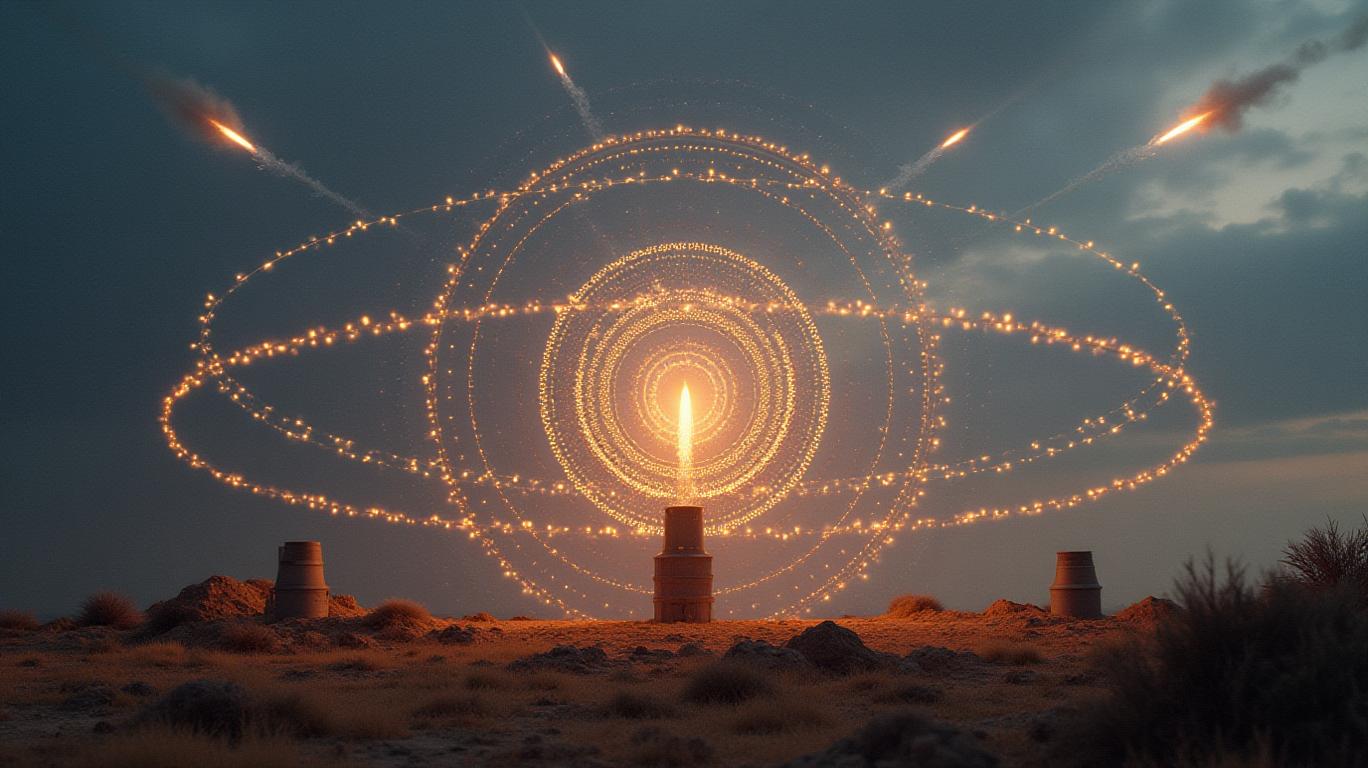
Israel’s air defense network is a sophisticated, multi-layered system designed to intercept threats ranging from short-range rockets to long-range ballistic missiles. The network comprises four main systems: Iron Dome, David’s Sling, Terminal High Altitude Area Defense (THAAD), and Arrow (both 2 and 3). These systems form concentric circles around the nation, providing a comprehensive defense strategy.
The Iron Dome system, developed by RafaelRFL-- Advanced Defense Systems with U.S. support, has proven highly effective against short-range rockets and missiles. With a success rate of over 90%, the Iron Dome’s ability to detect, assess, and intercept threats makes it a valuable component for the Golden Dome concept. The cost-effectiveness of the Iron Dome, with interceptors costing between $20,000 and $100,000 per missile, is another significant advantage. This cost efficiency is crucial for a large-scale defense system like the Golden Dome.
David’s Sling, designed to intercept medium-range missiles and cruise missiles, fills the gap between the Iron Dome and Arrow systems. Its ability to handle a broader range of threats makes it suitable for integration into the Golden Dome concept. The system's successful interception of various types of missiles during testing demonstrates its reliability and effectiveness.
The Arrow 3 system is designed to intercept long-range ballistic missiles outside the Earth's atmosphere, making it a crucial component for defending against advanced threats that could carry weapons of mass destruction. Its high-altitude interception capability is essential for the Golden Dome concept, which aims to protect against a wide range of aerial threats, including ballistic, hypersonic, and advanced cruise missiles.
Non-Kinetic Capabilities
One of the most innovative aspects of Israel’s air defense network is the Iron Beam system, which uses laser technology to intercept incoming threats. Interceptions with Iron Beam are estimated to cost a few dollars apiece, compared to the thousands or millions of dollars for other systems. This non-kinetic capability aligns with the Golden Dome concept's goal of augmenting interceptor missiles with non-kinetic systems like high-powered microwaves and high-energy lasers.
The integration of these non-kinetic systems adds another layer of complexity, as these technologies are still in development and their effectiveness in a large-scale defense network is yet to be proven. However, the potential cost savings and strategic advantages make them a worthwhile investment for the Golden Dome concept.
Integration and Scalability
The Israeli air defense network's multi-layered approach, with systems like Iron Dome, David’s Sling, and Arrow 3 forming concentric circles, provides a comprehensive defense strategy. This approach can be scaled and adapted for the Golden Dome concept, which requires integration from various military and intelligence commands. The successful deployment and operation of these systems in Israel demonstrate their feasibility for a larger-scale defense network.
Challenges and Considerations
While the Golden Dome concept aims to replicate and scale Israel’s air defense network, several challenges must be addressed. The integration of disparate systems and commands, each governed by separate legal and bureaucratic frameworks, is a daunting task. Coordination among the Air Force, Army, Navy, Space Force, Missile Defense Agency (MDA), and National Reconnaissance Office will be crucial for the success of the Golden Dome concept.
Additionally, the scale of the Golden Dome concept presents logistical and financial challenges. The Senate Armed Services Committee (SASC) introduced the Increasing Response Options and Deterrence of Missile Engagements (IRON DOME) Act in February, which allocates significant funds for various components of the missile defense system. However, these funds may not be enough to cover the full scope of the Golden Dome concept, given the scale and complexity of the undertaking.
Conclusion
The Golden Dome concept represents a significant scaling up of Israel’s air defense network, involving greater complexity, integration challenges, and logistical and financial hurdles. By integrating proven technologies and systems from Israel’s air defense network, such as the Iron Dome, David’s Sling, Arrow 3, and Iron Beam, the Golden Dome concept can enhance the U.S. missile defense system. The success of this concept will depend on the ability to overcome these challenges and effectively integrate the various components into a cohesive and effective defense system.



Divulgación editorial y transparencia de la IA: Ainvest News utiliza tecnología avanzada de Modelos de Lenguaje Largo (LLM) para sintetizar y analizar datos de mercado en tiempo real. Para garantizar los más altos estándares de integridad, cada artículo se somete a un riguroso proceso de verificación con participación humana.
Mientras la IA asiste en el procesamiento de datos y la redacción inicial, un miembro editorial profesional de Ainvest revisa, verifica y aprueba de forma independiente todo el contenido para garantizar su precisión y cumplimiento con los estándares editoriales de Ainvest Fintech Inc. Esta supervisión humana está diseñada para mitigar las alucinaciones de la IA y garantizar el contexto financiero.
Advertencia sobre inversiones: Este contenido se proporciona únicamente con fines informativos y no constituye asesoramiento profesional de inversión, legal o financiero. Los mercados conllevan riesgos inherentes. Se recomienda a los usuarios que realicen una investigación independiente o consulten a un asesor financiero certificado antes de tomar cualquier decisión. Ainvest Fintech Inc. se exime de toda responsabilidad por las acciones tomadas con base en esta información. ¿Encontró un error? Reportar un problema


SOBRE NOSOTROS
Nuestra historiaAutores de noticiasBase de conocimientosPolítica de privacidadTérmino de usoDescargo de responsabilidad de corretaje de tercerosTérminos de uso de AIMEDivulgaciones de riesgos de AInvest AICarrerasCONTÁCTENOS
Email: support@ainvest.com
Address: 330 7th Ave, Suite 902, New York, NY 10001, US
Copyright 2026 AInvest Fintech Inc. All rights reserved.


Comentarios
Aún no hay comentarios