
Lessons from the Failed Couche-Tard/Seven & i Deal: Navigating Cross-Border M&A Risks in Asia-Pacific Retail
The collapse of Alimentation Couche-Tard's bid to acquire Seven & i Holdings Co. in July 2025 underscores the perils of cross-border mergers and acquisitions (M&A) in the Asia-Pacific retail sector. What began as a high-stakes, $47 billion pursuit of Japan's leading convenience store chain ended in frustration over valuation disputes, regulatory uncertainty, and a lack of cultural alignment. This article dissects the strategic implications of the failed deal, highlighting critical lessons for investors in global retail plays.
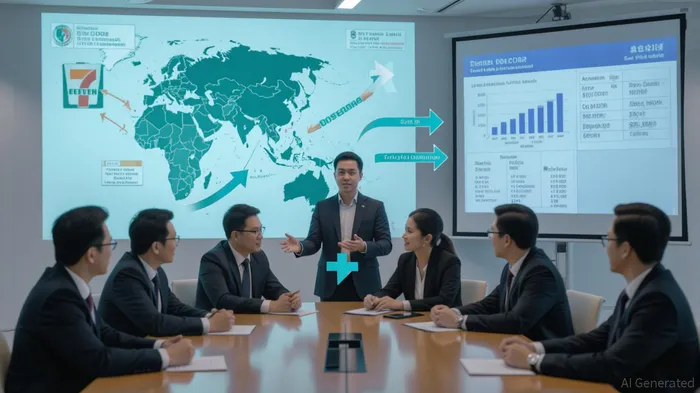
Valuation Overreach and the Perils of Growth-at-Any-Cost
The saga began in August 2024 when Couche-Tard, a Canadian convenience store giant, offered a 47.6% premium over Seven & i's stock price. Over the next 11 months, the bid's value escalated from $38.6 billion to $47 billion, reflecting Couche-Tard's desperation to secure control of 7-Eleven's vast network in Japan and the U.S. Yet Seven & i's resistance to the deal—initially dismissed as grossly undervalued—highlighted a core issue: the disconnect between bidder optimism and target valuation expectations.
Investors should note that aggressive premium pricing often masks underlying risks. The bid's collapse suggests that growth-through-acquisition strategies in mature markets like Japan require meticulous alignment of valuations with realistic synergies. A would reveal whether the market penalized the company for overextending itself.
Regulatory Hurdles: Navigating Antitrust and Cultural Barriers
Regulatory concerns, particularly in the U.S., were a persistent thorn. Couche-Tard proposed divesting stores and offering a reverse termination fee to address antitrust risks, but Seven & i's reluctance to engage constructively stalled the process. The U.S. market, though fragmented with 150,000 convenience stores, has seen heightened scrutiny of consolidation in recent years. A would quantify this risk.
Equally critical were cultural misalignments. Seven & i's leadership reportedly avoided substantive discussions, provided limited due diligence data, and treated negotiations as a “calculated campaign of obfuscation.” This reflects broader challenges in cross-border deals where corporate governance norms clash—Japanese firms often prioritize long-term stakeholder harmonyHRMY-- over short-term shareholder value, a gap that Western bidders may underestimate.
Due Diligence Failures: A Red Flag for Investors
The deal's unraveling also exposed gaps in due diligence. Over 10 weeks, Couche-Tard received only 14 files on Seven & i's U.S. operations, with executives deflecting questions on operational details. For investors, this underscores the importance of pre-deal access to management and operational data. A bid lacking such transparency is a high-risk gamble.
Investment Implications: Proceed with Caution
The failed deal offers three actionable lessons:
- Avoid Overpaying for Growth: Premiums must reflect tangible synergies, not just market share. Investors should scrutinize bids where valuations escalate without corresponding clarity on cost savings or revenue uplift.
- Prioritize Regulatory and Cultural Due Diligence: Cross-border M&A requires understanding both legal frameworks (e.g., antitrust thresholds) and cultural norms (e.g., governance styles). Firms without local partnerships or expertise should proceed cautiously.
- Focus on Operational Alignment: Deals like this thrive only when complementary strengths (e.g., Couche-Tard's EV charging networks paired with 7-Eleven's store density) are clearly defined. Absent this, synergies remain theoretical.
Looking Ahead: Opportunities in Strategic Partnerships
While Couche-Tard's bid failed, its expansion into EV charging and store openings in FY2025 signals a pivot toward organic growth. Investors might instead favor firms like this—those building resilience through innovation and regional partnerships—over aggressive M&A players.
In conclusion, the Seven & i case serves as a cautionary tale for investors chasing Asia-Pacific retail consolidation. Success in cross-border deals demands rigorous valuation discipline, cultural agility, and a laser focus on regulatory realities. Those who ignore these factors may find themselves paying a steep premium for disappointment.







Comentarios
Aún no hay comentarios