
The LEO Economy's Hungry Future: Why KBR's Food Innovation Facility is a Must-Hold Investment
The commercialization of Low Earth Orbit (LEO) is no longer science fiction—it’s an investment-ready reality. With SpaceX, Blue OriginBLUE--, and Axiom Space racing to build commercial space stations, the next frontier isn’t just about rockets and habitats. It’s about the infrastructure that sustains humans in space. And right now, KBR’s newly operational Space Food Innovation Facility at Houston’s Exploration Park is positioned to dominate this $1.67 billion market—and its explosive growth trajectory.
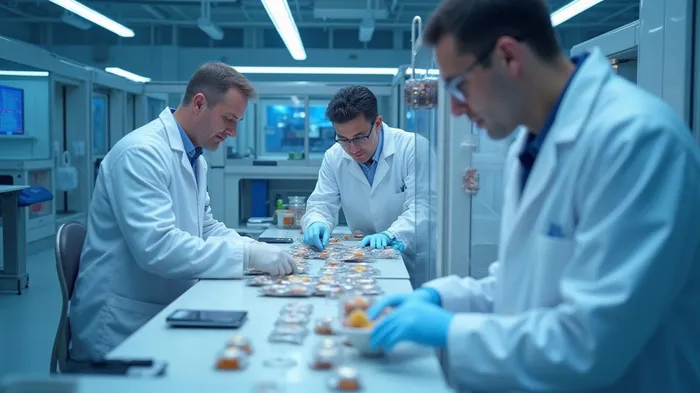
The LEO Economy is Hungry—and KBR is the Chef
The LEO economy isn’t just about launching satellites. It’s about sustaining humans in space for days, weeks, or years. Astronauts need food that stays safe, tastes decent, and provides optimal nutrition in zero gravity. That’s where KBR’s 45,000-square-foot facility comes in. Partnering with NASA and ACMI Properties, it’s the first dedicated space food R&D hub in the U.S., designed to meet the rising demand for:- Bioregenerative systems (growing fresh produce in orbit)- 3D-printed meals tailored to individual astronauts’ health metrics- Ultra-long-shelf-life packaging for Mars missions
The numbers are clear: a 12% annual growth rate means this niche will double in size every five years. KBR isn’t just playing in this market—it’s defining it.
Why Infrastructure Matters: KBR’s “Golden Ticket” to the LEO Boom
Infrastructure is the unsung hero of any economic revolution. In LEO, it’s not just about the space stations themselves—it’s about the supply chains that keep them alive. KBR’s facility isn’t just a lab; it’s a strategic choke point for commercial space ventures. Here’s why:1. NASA’s Stamp of Approval: The facility operates under NASA’s Commercial LEO Development Program, giving it access to ISS testing and data. Think of it as the “Food & Drug Administration of Space”—no commercial space station can afford to ignore its standards.2. Cross-Industry Synergy: Located at Exploration Park (a 207-acre tech hub with up to 1.5 million sq. ft. of labs and factories), KBR collaborates with aerospace engineers, robotics firms, and AI startups. This ecosystem drives breakthroughs like self-heating meals or microgravity-safe packaging.3. Dual-Use Profitability: While space food is its core, the tech here has terrestrial applications. Flood-stricken regions need KBR’s lightweight, shelf-stable rations. Military bases crave its nutrient-dense, easy-to-transport meals. This dual revenue stream reduces risk.
The Numbers Don’t Lie: KBR’s Stock is a Hidden Gem
While SpaceX and Blue Origin grab headlines, KBR’s stock remains undervalued—despite its critical role in the LEO economy.
Notice the gap? KBR’s stock has lagged behind peers like Lockheed Martin (LMT) and Boeing (BA), even as its space division revenue surged 27% YoY in 2024. With the facility now operational, this is a prime entry point.
The Bottom Line: Invest in the Infrastructure, Not Just the Rocket
The LEO economy won’t be won by the fastest rocket or the shiniest space station. It will be won by the companies that solve the logistical challenges: food, water, and waste. KBR’s facility isn’t just a lab—it’s the foundation of a multi-billion-dollar industry.
For investors, this is a two-sided bet:- Short-Term: The facility’s partnerships with NASA and commercial space firms will generate recurring revenue via tech licensing and contract work.- Long-Term: As LEO matures, KBR’s food systems will become standard equipment on every commercial space station—making it a cash-generating monopoly in its niche.
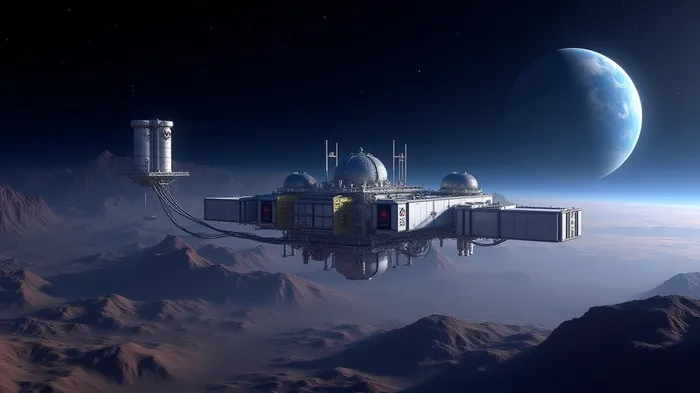
Act Now—or Pay Later
The LEO economy isn’t waiting. In 2025 alone, NASA’s Commercial LEO Program is awarding $1.2 billion in contracts to infrastructure providers. KBR is already in the running—and its food facility is a key differentiator.
This isn’t a moonshot. It’s a no-brainer investment in the backbone of humanity’s next great frontier. The question isn’t whether KBR will profit—it’s whether you’ll be on the right side of this boom.
The LEO economy’s hungry future is here. Don’t just watch it—invest in it.







Comentarios
Aún no hay comentarios