
Legal Vulnerabilities in U.S. Election Infrastructure: Implications for Market Stability and Investment Strategy
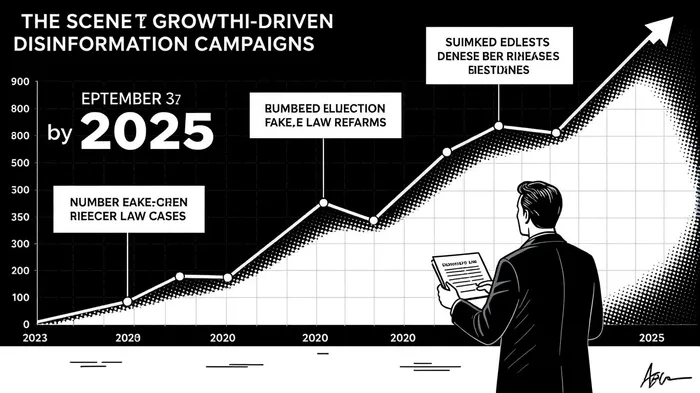
The recent judicial rulings on "fake elector" cases have exposed critical legal and political vulnerabilities in U.S. election infrastructure, creating a ripple effect across market stability and investor sentiment. These rulings, particularly the dismissal of charges against Trump-aligned electors in Michigan and Nevada, underscore a systemic challenge: the difficulty of prosecuting election subversion under current legal frameworks. As of September 2025, similar cases in Arizona, Georgia, and Wisconsin remain unresolved, with procedural delays and legal ambiguities persisting . This uncertainty is not merely a political spectacle—it is a catalyst for reevaluating how investors approach governance sector opportunities and hedge against systemic risks.
Legal Vulnerabilities and Political Risk
The Michigan case, where a judge ruled that prosecutors failed to prove criminal intent, highlights a recurring theme: the constitutional defense of "sincere belief in election irregularities" . This reasoning, if adopted in other states, could normalize the use of legal loopholes to challenge election outcomes, eroding public trust in democratic institutions. For investors, this signals a heightened political risk. According to a report by the Brookings Institution, such legal ambiguities contribute to policy uncertainty, which disproportionately affects sectors reliant on stable regulatory environments, including infrastructure, energy, and public finance .
The broader implications are clear. If states cannot consistently hold individuals accountable for election-related misconduct, the credibility of electoral processes—and by extension, the predictability of policy outcomes—will remain in question. This uncertainty could exacerbate market volatility, particularly in sectors sensitive to regulatory shifts, such as renewable energy incentives or infrastructure funding tied to federal elections .
Election Integrity Investments: A New Frontier
The rise of generative AI as a tool for disinformation has further complicated the landscape. While AI-driven deepfakes and synthetic media did not alter the 2024 election outcome, they amplified existing political divisions and tested the resilience of election infrastructure . Investors are now prioritizing technologies that counter these threats. For example, venture capital funding for AI detection tools and cybersecurity solutions surged to $80.1 billion in Q1 2025, with a record $40 billion deal underscoring the sector's growth .
State-level reforms, such as the Electoral Count Reform Act (ECRA), are also creating opportunities. By mandating uniform deadlines for submitting elector slates and clarifying state law's role in certification, the ECRA has spurred demand for compliance-focused governance services . States like Georgia and Michigan are updating their election codes to align with federal mandates, creating a niche market for legal and technical consultants specializing in election integrity .
Investor Strategy: Hedging and Long-Term Positioning
For investors, the key lies in balancing short-term hedging against long-term positioning. Short-term strategies might include:
1. Cybersecurity and AI Detection: Companies like PalantirPLTR-- and CrowdStrikeCRWD--, which offer tools to combat AI-generated disinformation, have seen increased demand.
2. ESG-Linked Governance Funds: ESG-focused portfolios emphasizing transparency and accountability are gaining traction as a hedge against political instability .
Long-term opportunities, however, lie in sectors that address the root causes of election vulnerability. For instance:
- Election Infrastructure Modernization: Investments in secure voting systems and AI-driven fraud detection platforms are likely to grow as states prioritize resilience.
- Media Literacy and Public Trust Initiatives: Startups and NGOs focused on voter education and digital literacy are emerging as critical players in combating disinformation .
Conclusion: A Call for Prudent Adaptation
The "fake elector" cases and their judicial outcomes are not isolated incidents but symptoms of a broader crisis in election governance. As legal precedents shift and AI-driven threats evolve, investors must adapt their strategies to account for both immediate risks and long-term structural changes. The governance sector, particularly in election integrity and cybersecurity, offers a compelling avenue for capitalizing on this uncertainty while contributing to the stabilization of democratic institutions.
Source:
[1] Michigan judge tosses out case against TrumpTRUMP-- fake electors, [Reuters], [https://www.marketscreener.com/news/michigan-judge-tosses-out-case-against-trump-fake-electors-ce7d59dcd88df324]
[2] Where the Fake Electors Cases Stand in State Court, [Lawfare Media], [https://www.lawfaremedia.org/article/where-the-fake-electors-cases-stand-in-state-court]
[3] Geopolitical Risk Dashboard | BlackRockBLK-- Investment Institute, [https://www.blackrock.com/corporate/insights/blackrock-institute/interactive-charts/geopolitical-risk-dashboard]
[4] Infrastructure Quarterly: Q1 2025, [CBRE Investment Management], [https://www.cbreim.com/insights/articles/infrastructure-quarterly-q1-2025]
[5] The Impact of Generative AI in a Global Election Year, [Brookings], [https://www.brookings.edu/articles/the-impact-of-generative-ai-in-a-global-election-year/]
[6] Major AI Deal Lifts Q1 2025 VC Investment, [EY], [https://www.ey.com/en_us/insights/growth/venture-capital-investment-trends]
[7] State Implementation of the Electoral Count Reform Act ..., [Yale Law Journal], [https://www.yalelawjournal.org/forum/state-implementation-of-the-electoral-count-reform-act-and-the-mitigation-of-election-subversion-risk-in-2024-and-beyond]
[8] How States Can Prevent Election Subversion in 2024 and ..., [Brennan Center], [https://www.brennancenter.org/our-work/policy-solutions/how-states-can-prevent-election-subversion-2024-and-beyond]
[9] ESG and Political Risk Mitigation, [BlackRock], [https://www.blackrock.com/corporate/insights/blackrock-institute/interactive-charts/geopolitical-risk-dashboard]
[10] Countering Disinformation Effectively: An Evidence-Based Policy Guide, [Carnegie Endowment], [https://carnegieendowment.org/research/2024/01/countering-disinformation-effectively-an-evidence-based-policy-guide?lang=en]






Comentarios
Aún no hay comentarios