
Legal Risks and Market Implications for Flywire Corporation: How Class-Action Lawsuits Undermine Investor Confidence and Fuel Stock Volatility
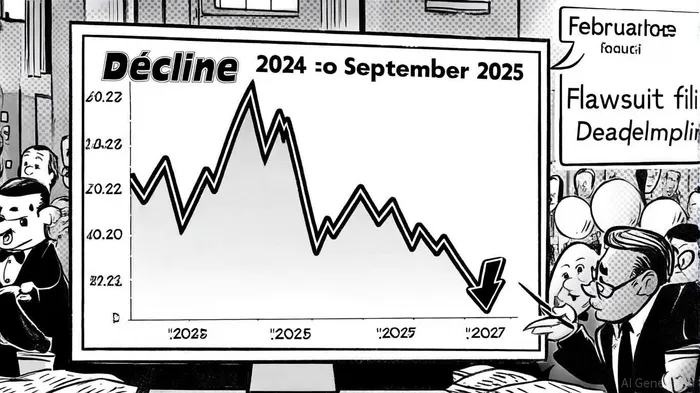
The recent class-action lawsuit against Flywire CorporationFLYW-- (NASDAQ: FLYW) underscores the profound legal and market risks facing companies in the SaaS fintech sector. Investors who purchased FlywireFLYW-- securities between February 28, 2024, and February 25, 2025, now face the prospect of recouping losses after a lawsuit alleged the company overstated revenue growth and understated the impact of permit- and visa-related restrictions[1]. This case, filed in the U.S. District Court for the Eastern District of New York (25-cv-04110), has already triggered a 37.4% stock price drop following Flywire's Q4 2024 earnings report, which revealed a $15.9 million net loss and revised 2025 guidance downward[2].
Legal Risks: A Pattern of Misrepresentation?
The lawsuit centers on claims that Flywire's disclosures during the class period were “materially false and misleading”[3]. Specifically, plaintiffs argue the company failed to adequately disclose how regulatory hurdles—such as visaV-- restrictions and international payment barriers—were eroding its business model. This aligns with broader trends in securities litigation: a 2023 Harvard Law study found that firms accused of misrepresenting operational risks see an average 14.6% cumulative abnormal return drop if their cases are settled, compared to -7.2% for dismissed cases[4]. For Flywire, the reputational damage could extend beyond legal penalties, potentially deterring institutional investors wary of governance lapses in a sector reliant on regulatory compliance[5].
Market Implications: Volatility and Investor Flight
Securities class actions often act as catalysts for stock volatility. Historical data from 2014 to 2024 shows companies facing such lawsuits typically experience 15–30% short-term price declines, with recovery taking 3–5 years[6]. Flywire's case is no exception. Its stock plummeted 37.4% in the wake of its February 2025 earnings report, a drop exceeding the historical average. This volatility reflects investor anxiety over Flywire's financial health and the broader implications of its business model. For context, a 2021 Springer study found that post-lawsuit bid-ask spreads widen by 20–30 basis points for at least 60 trading days, signaling reduced market liquidity[7].
The underperformance following the February 2025 earnings report starkly contrasts with historical patterns around FLYW's quarterly earnings releases. A backtest of FLYW's stock performance from 2022 to 2025 reveals that, on average, the market reaction to its earnings announcements was muted: short-term (1–5 days) abnormal returns were slightly positive but not statistically significant, while cumulative performance turned mildly negative after 10 days[13]. This suggests that the recent 37.4% drop was an outlier, likely driven by the lawsuit's material impact rather than typical earnings-driven volatility. The reputational toll is equally significant. A 2025 report by Onwish.ai notes that securities lawsuits erode trust in corporate leadership, particularly in sectors like fintech, where transparency is critical[8]. Flywire's struggles highlight this: its stock has underperformed peers in the SaaS space, with analysts citing “heightened uncertainty” around its ability to navigate regulatory challenges[9].
Broader Context: Lessons from Past Litigation
Academic research reinforces the systemic impact of class actions. A 2023 paper in Corporate Governance found that firms facing securities fraud allegations see long-term declines in profitability and operational efficiency, with legal costs averaging 5–7% of annual revenue[10]. For Flywire, which reported $15.9 million in net losses in Q4 2024, such costs could exacerbate financial strain. Meanwhile, a 2022 Claremont study revealed that households reduce stock market participation by 12–15% during litigation periods, reflecting broader investor caution[11].
Conclusion: A Cautionary Tale for Investors
Flywire's case exemplifies how securities litigation can destabilize even high-growth companies. While the lawsuit remains pending, the reputational and financial costs are already evident. Investors must weigh these risks against Flywire's long-term potential, recognizing that legal battles often prolong uncertainty and amplify volatility. For now, the September 23, 2025, deadline for lead plaintiff motions[12] marks a critical juncture—one that could reshape Flywire's trajectory and investor sentiment in the fintech sector.







Comentarios
Aún no hay comentarios