
Legal Risk and Brand Value in Celebrity-Driven Ventures: A Strategic Investor Due Diligence Playbook
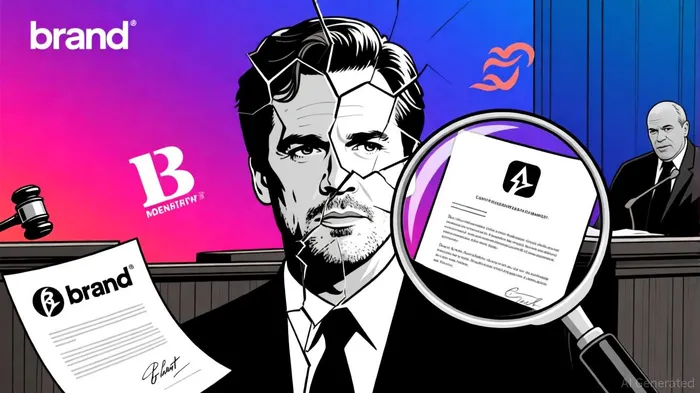
In the high-stakes arena of celebrity-driven ventures, strategic investors face a dual challenge: harnessing the explosive growth potential of influencer-backed assets while navigating the minefield of legal and reputational risks. From 2024 to 2025, the collapse of Sean "Diddy" Combs' ventures—triggered by a $340 million net worth drop post-conviction[1]—and the enduring fallout from misaligned brand partnerships (e.g., Pepsi's 2017 Kendall Jenner ad[4]) underscore a hard truth: celebrity capital is both a rocket fuel and a liability. For investors, the imperative is clear: due diligence must evolve beyond traditional financial audits to encompass a holistic assessment of legal exposure and brand equity.
The Legal Risk Matrix: From Right of Publicity to Reputational Black Swans
Celebrity ventures are inherently tied to intangible assets—names, likenesses, and cultural capital—which are legally and commercially fragile. The Right of Publicity, a cornerstone of celebrity IP, grants control over commercial use of one's persona[2]. Yet, as AI-generated deepfakes and unauthorized digital recreations proliferate, investors must ensure contracts include explicit clauses addressing emerging technologies. For instance, the 2025 delisting of Diddy's fashion brand highlights how legal liabilities (e.g., past misconduct resurfacing under new state statutes[1]) can decimate brand value overnight.
Reputational risks, meanwhile, are quantifiable yet elusive. A 2024 Harvard study notes that 72% of consumers penalize brands for misaligned celebrity endorsements[2]. Consider Paula Deen's downfall: her racial slur admissions led to an immediate 80% drop in Smithfield Foods' stock price[4]. Investors must integrate reputation scorecards and social listening tools into due diligence to preemptively identify cultural missteps.
Brand Value as a Financial Asset: The 90% Intangible Equation
Brand equity now accounts for up to 90% of S&P 500 company valuations[1], a metric that becomes even more volatile in celebrity-driven ventures. The 2023 Kroll Celebrity Brand Valuation Report reveals that Bollywood stars like Virat Kohli and Shahrukh Khan maintain brand value through strategic ventures (e.g., liquor brands, fashion lines) rather than one-off endorsements[1]. This shift demands investors evaluate not just a celebrity's current clout but their long-term brand alignment with market trends.
However, brand value is a double-edged sword. A 2024 McKinsey analysis found that 60% of celebrity-backed campaigns fail to meet ROI targets due to inauthenticity[5]. For example, Gen Z influencers with global followings (e.g., TikTok stars) may command high engagement rates but lack the cultural resonance of legacy icons. Investors must balance celebrity engagement metrics (e.g., campaign ROI, acquisition cost[5]) with ESG alignment to avoid backlash from increasingly values-driven consumers.
Investor Due Diligence Frameworks: 2024–2025 Trends and Metrics
Modern due diligence for celebrity ventures requires a 360-degree lens:
- Legal Due Diligence:
- IP Audit: Verify ownership of trademarks, copyrights, and likeness rights. For AI-driven ventures, assess governance protocols for synthetic content[2].
- Morality Clauses: Embed clauses allowing termination if the celebrity engages in misconduct. Diddy's case illustrates how outdated clauses (e.g., excluding past crimes) are insufficient under new legislation[1].
Litigation History: Scrutinize past lawsuits, particularly those involving false advertising or breach of contract[3].
Brand Due Diligence:
- Cultural Fit Analysis: Use sentiment analysis tools to gauge public perception of the celebrity's values relative to the brand. The Pepsi-Kendall Jenner ad fiasco[4] was a failure of this step.
Longevity Metrics: Evaluate the celebrity's ability to sustain relevance. For instance, Ryan Reynolds' success with Aviation Gin stems from his active role in brand storytelling[2].
Quantitative Risk Modeling:
- Reputation VaR: Apply Value at Risk models to estimate potential brand value loss from reputational crises[3].
- Engagement ROI: Track metrics like cost-per-engagement and campaign conversion rates to quantify brand impact[5].
The Investor Playbook: Balancing Risk and Reward
The 2024–2025 VC landscape is defined by two forces: AI's dominance (46.4% of U.S. VC deals[4]) and the rise of secondary markets. Investors must adapt by:
- AI-Driven Due Diligence: Leverage machine learning to predict legal risks (e.g., litigation trends) and brand resonance (e.g., social media sentiment).
- Geopolitical Compliance: For global ventures, assess risks from regulatory shifts (e.g., the U.S. Treasury's Outbound Investment Program[4]).
- Exit Strategy Alignment: Secondary markets now offer liquidity for celebrity-backed assets, but due diligence must account for tender offers and market volatility[2].
Conclusion: The New Golden Rule of Celebrity Investing
In an era where a single tweet can tank a brand and a deepfake can rewrite a celebrity's legacy, investors must treat brand value and legal risk as inseparable variables. The Diddy scandal, Paula Deen's collapse, and the rise of Reynolds and Clooney's ventures collectively affirm a principle: celebrity capital is only as durable as the legal and cultural frameworks protecting it. For strategic investors, the future lies in marrying quantitative rigor with cultural intuition—a playbook where due diligence isn't just a checkbox but a competitive advantage.







Comentarios
Aún no hay comentarios