
Legal and Reputational Risks for US Chipmakers in Ukraine-Russia Lawsuits: Assessing Long-Term Liability and Investor Exposure
The global semiconductor industry is facing a seismic shift as U.S. chipmakers like IntelINTC--, AMDAMD--, Texas InstrumentsTXN--, and Mouser Electronics grapple with lawsuits alleging their components were used in Russian weapons targeting Ukrainian civilians. These legal battles, coupled with regulatory scrutiny and reputational damage, are reshaping the risk landscape for investors. This analysis unpacks the financial and operational implications of these lawsuits, focusing on long-term liability, regulatory penalties, and investor exposure.
Legal Risks: Corporate Negligence and Supply Chain Oversight
The lawsuits, filed in Texas state courts, accuse these companies of failing to prevent their semiconductors from being diverted to Russian military applications. Plaintiffs argue that components from Intel, AMD, and Texas Instruments were found in precision-guided munitions, drones, and fighter jets used in attacks on Ukrainian civilian infrastructure between 2023 and 2025 according to a Bloomberg report. The cases hinge on allegations of "domestic corporate negligence," with plaintiffs claiming the companies ignored red flags in their supply chains, such as sales to shell companies and intermediaries linked to Russia as reported by Aldous Law.
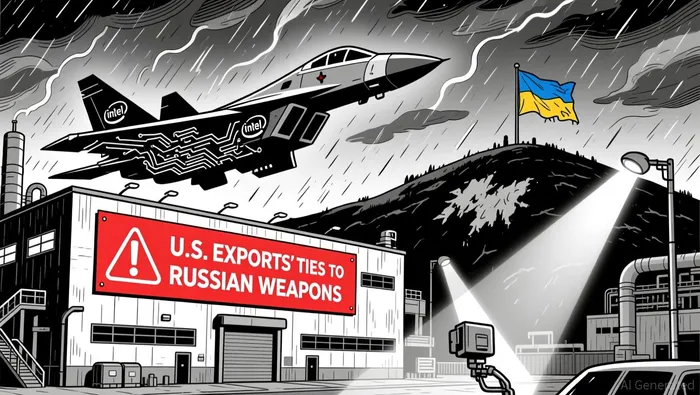
A U.S. Senate Permanent Subcommittee on Investigations (PSI) report underscored the gravity of these claims, revealing that U.S.-made chips from these firms constituted over 40% of components in Russian weapons systems according to a Business Human Rights report. For example, Texas Instruments' microelectronics were identified in Russian SU-34 and SU-35 fighter jets, while Intel's field-programmable gate arrays (FPGAs) appeared in cruise missiles as reported by Gilaherald. The PSI also criticized the companies for inadequate compliance measures, including delayed responses to trace requests and reliance on outdated risk databases as detailed in a Senate report.
Financial Liabilities: Compensation Costs and Regulatory Penalties
While no direct financial penalties have been levied yet, the potential for costly settlements or judgments looms. The lawsuits seek compensation for Ukrainian civilians who suffered injuries or lost family members in attacks, with damages likely running into the billions. For context, Intel reported a $1.0 billion litigation charge in its 2025 quarterly report, though this relates to unrelated antitrust cases according to a Yahoo Finance article. However, the U.S. government has signaled a tougher stance on export violations, with civil penalties for noncompliance increasing by up to 50% in early 2025 as reported by CM Trade Law.
Regulatory risks are further amplified by the Bureau of Industry and Security's (BIS) 50% rule, which restricts exports to entities 50% owned by sanctioned firms. This rule, designed to close loopholes, could penalize companies if their supply chains are found to indirectly support Russian operations as detailed in a Steptoe analysis. For instance, Mouser Electronics, a Berkshire Hathaway-owned distributor, is accused of facilitating chip transfers to Russian proxies through shell companies as reported by Bloomberg.
Investor Exposure: Stock Volatility and Credit Risk
The semiconductor sector has historically been sensitive to geopolitical shocks. UBS analysts note that export control measures-such as those imposed on China-have historically triggered sharp corrections in the Philadelphia Semiconductor Index, with volatility spiking during regulatory announcements according to a Nasdaq article. While AI-driven demand has buoyed chipmaker stocks in late 2025, the Ukraine-Russia lawsuits introduce a layer of uncertainty.
For example, ON Semiconductor's stock price dropped 18.6% year-to-date in 2025 amid supply chain challenges, illustrating how reputational and regulatory risks can erode investor confidence as reported by Yahoo Finance. Though Intel and AMD have seen gains recently due to AI optimism, their exposure to these lawsuits could reverse momentum if legal outcomes turn adverse. Credit rating agencies have also begun scrutinizing corporate governance practices, with weak compliance frameworks potentially leading to downgrades as detailed in a JDSupra analysis.
Conclusion: A Ticking Time Bomb for Investors
The lawsuits against U.S. chipmakers highlight a critical tension between technological innovation and ethical responsibility. While these firms have long operated in global markets, the Ukraine-Russia conflict has exposed vulnerabilities in their supply chain oversight. For investors, the risks are twofold: immediate legal liabilities and long-term reputational damage that could deter partnerships or strain relationships with governments.
As the Texas cases progress and regulatory scrutiny intensifies, companies must invest in robust compliance systems to mitigate exposure. However, the sheer scale of the alleged misuse-40% of Russian weapon components traced to U.S. firms-suggests that even the most stringent measures may not fully insulate these companies from fallout. Investors should monitor court rulings, Senate investigations, and shifts in export policy, as these factors will likely dictate the sector's trajectory in the coming years.







Comentarios
Aún no hay comentarios