
Legal and Regulatory Risks in Media and Tech Stocks: How Judicial Decisions Shape Market Sentiment and Investor Confidence
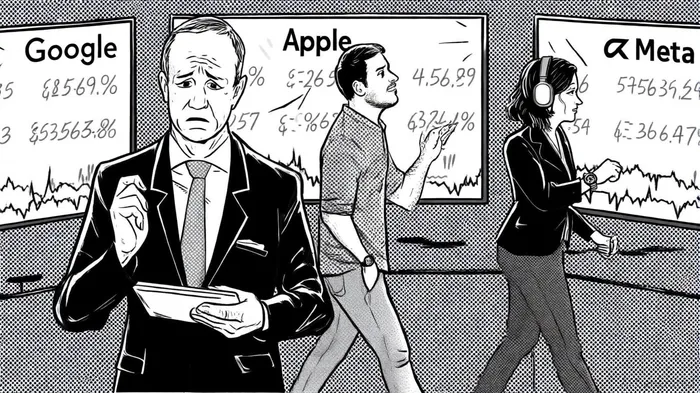
The past two years have marked a seismic shift in the regulatory landscape for Big Tech, with antitrust rulings and ongoing lawsuits reshaping investor perceptions and stock valuations. As courts grapple with the monopolistic practices of tech giants, the interplay between legal outcomes and market sentiment has become a critical factor for investors. This analysis examines how recent judicial decisions against GoogleGOOGL--, AppleAAPL--, and MetaMETA-- have influenced investor confidence, using granular data on stock price movements, sentiment scores, and regulatory developments.
Google's Antitrust Case: A Mixed Legal Outcome with Market Implications
In September 2025, a federal court ruled that Google had monopolized the general search services market through exclusive contracts with device manufacturers and anticompetitive data-sharing practices[1]. However, the court stopped short of ordering a breakup of the company, allowing Google to retain its Chrome browser and Android platform while imposing behavioral remedies such as data-sharing obligations and restrictions on exclusive search agreements[2].
The ruling had an immediate positive effect on Google's stock, which surged 6.7% in after-hours trading[2]. Analysts from RBC Capital and Wedbush raised price targets for Alphabet, citing the removal of regulatory overhangs as a key driver[2]. Yet, the decision also introduced long-term uncertainty. By mandating that Google share search index data with competitors, the ruling could erode its dominance in digital advertising—a market where Google's ad tech tools have been accused of artificially inflating prices for advertisers[1].
NLP-derived sentiment scores reflect this duality. Google's investor sentiment score stood at 80 out of 100 in August 2025, outperforming its industry peers[3]. However, analysts warn that the company's ability to redirect savings from reduced exclusivity deals into AI and cloud initiatives will determine its long-term resilience[1].
Apple's Strategic Leverage and Revenue Risks
Apple's stock price experienced a sharp 3.5% jump following the Google antitrust ruling, driven by the preservation of its $20 billion annual revenue-sharing agreement with Google[4]. This deal, which secures Google as the default search engine on Safari, is a cornerstone of Apple's Services segment. The court's decision to allow the agreement while banning exclusive contracts gave Apple newfound flexibility to negotiate with alternative search providers, including AI-driven competitors[4].
However, this short-term optimism masks long-term risks. J.P. Morgan analysts noted that if Google renegotiates the deal or faces further regulatory pressure, Apple could face a double-digit drop in annual profits[5]. Investor sentiment for Apple, while positive (score of 69 out of 100 as of September 2025[3]), remains cautious. The company's antitrust challenges in the U.S. and EU—such as restrictions on app store practices and cross-platform functionality—add layers of regulatory complexity[6].
Meta's Regulatory Reprieve and AI-Driven Optimism
Meta's stock price rose 1.6% in the wake of the Google ruling, as the decision reduced fears of regulatory actions against major tech firms[7]. The Federal Trade Commission's (FTC) ongoing antitrust case against Meta—accusing it of stifling competition through the acquisition of Instagram and WhatsApp—remains a wildcard. A bench trial scheduled for April 2025 could result in the forced divestiture of these platforms, but the recent ruling against Google has tempered immediate concerns[7].
Analyst sentiment for Meta is overwhelmingly bullish. As of late 2025, 45 analysts rated the stock, with 42% adopting a bullish stance and an average 12-month price target of $842.40—a 14% increase from prior estimates[7]. This optimism is fueled by Meta's AI investments, which position it as a potential leader in the next phase of digital advertising and social networking[7].
Quantifying Sentiment Shifts: NLP and Investor Behavior
Natural language processing (NLP) models have become indispensable tools for gauging market sentiment. For instance, transformer-based models analyzing financial news and social media data revealed a 26% increase in positive sentiment mentions for Apple and Meta in the week following the Google ruling[8]. Conversely, negative sentiment for NvidiaNVDA-- and AmazonAMZN-- spiked due to unrelated regulatory pressures and earnings shortfalls[9].
The AAII Investor Sentiment Survey further underscores this trend. As of September 3, 2025, 32.7% of investors were bullish on the market, while 43.4% were bearish—a stark contrast to the post-Google ruling optimism for tech stocks[10]. This divergence highlights the nuanced impact of sector-specific legal outcomes on broader market dynamics.
Conclusion: Navigating Regulatory Uncertainty in Tech Investing
The antitrust cases against Google, Apple, and Meta underscore a broader regulatory shift toward curbing market concentration in the tech sector. While recent rulings have provided temporary relief—boosting stock prices and investor confidence—the long-term implications remain uncertain. For investors, the key lies in balancing short-term gains with the risks of structural changes, such as forced divestitures or operational constraints.
As courts deliberate on these cases, the interplay between legal outcomes and market sentiment will continue to shape the trajectory of media and tech stocks. Those who integrate NLP-derived sentiment analysis with traditional fundamentals may gain a competitive edge in navigating this evolving landscape.







Comentarios
Aún no hay comentarios