
The Legal Quagmire Surrounding Pro-Palestinian Students: Implications for U.S. Immigration Policy and Beyond
The Trump administration’s aggressive crackdown on pro-Palestinian student activists has thrust immigration policy into a constitutional crossroads, with profound implications for civil liberties, judicial authority, and the integrity of federal data systems. Over 300 international students have faced visaV-- revocations and detention since 2023, while the Department of Homeland Security (DHS) has reviewed 1.3 million student records—actions now under intense legal scrutiny. The administration’s push to block judicial orders releasing detained students underscores a broader battle over the limits of executive power, with courts demanding accountability and activists warning of a chilling effect on free speech.
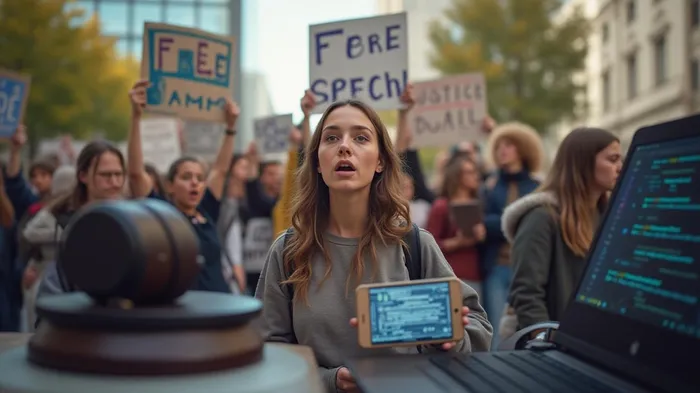
The Administration’s Playbook: Data Overreach and Due Process Concerns
The Trump administration has relied heavily on algorithmic decision-making to justify its actions. By cross-referencing student records with the National Crime Information Center (NCIC), it flagged individuals for minor, non-violent infractions—such as speeding or underage drinking—to terminate their SEVIS status, effectively stripping them of legal residency. This approach, however, has backfired.
Judges nationwide have issued over 50 preliminary injunctions blocking deportations, citing violations of the Administrative Procedure Act and due process. For instance, in a 2024 ruling, Judge Ana Reyes of the D.C. District Court condemned the administration’s “chaotic” reliance on unverified data, noting that students were denied basic rights to contest charges. The scale of this overreach is staggering: DHS’s Office of Biometric Identity Management (OBIM) holds 320 million identities, yet lacks robust safeguards against errors.
The Khalil Case: A Microcosm of Systemic Flaws
The detention of Mahmoud Khalil, a green card holder held under provisions of the Immigration and Nationality Act, epitomizes the administration’s tactics. Initially cited as a threat to foreign policy due to activism, the charges later shifted to minor immigration paperwork errors—a strategic move to avoid addressing free speech concerns. Khalil’s case also exposed punitive detention conditions, including restricted legal access, which judges have labeled “unconstitutional.”
Courts have resisted the administration’s attempts to consolidate cases in conservative-leaning jurisdictions, such as the 5th Circuit, which has a history of deferring to executive authority. A federal judge recently rejected a bid to transfer Khalil’s case to Louisiana, calling the administration’s rationale—a spurious “bedbug outbreak”—baseless.
Judicial Backlash and the Chilling Effect
The legal pushback has been relentless. Courts have emphasized that even noncitizens are entitled to free speech protections under the First Amendment, a principle affirmed in Bridges v. Wixon (1945). Yet the administration has invoked national security exceptions, citing vague ties to “terrorist” activity without evidence. This tension has led to a “win/win” strategy: students who self-deport reduce legal headaches, while court victories against the policy allow the administration to accuse judges of blocking “criminal deportations.”
The human toll is stark. Over 1.3 million student records were reviewed, with 3,000 SEVIS terminations issued—many reversed only after lawsuits. Universities report a chilling effect: pro-Palestinian protests have dwindled as students avoid activism to evade scrutiny.
Broader Market and Policy Implications
The fallout extends beyond legal battles. Universities, particularly those with high international enrollment, face reputational damage and financial strain. Declines in international enrollments could reduce tuition revenue, which accounted for $44 billion in 2023 alone.
Meanwhile, the use of flawed data systems raises risks for tech firms contracted by DHS. Errors in databases like NCIC and SEVIS could lead to regulatory scrutiny or liability claims, pressuring companies to invest in audit systems.
Conclusion: A Crossroads for Civil Liberties and Governance
As of early 2025, the administration’s policies remain a legal and constitutional stalemate. While courts have forced reversals of the most egregious overreach—such as the April 2025 reversal of SEVIS terminations—the core issues persist. The reliance on unverified data, the weaponization of immigration law to suppress dissent, and the lack of judicial oversight all point to systemic vulnerabilities.
Investors should monitor three key areas:
1. Education Sector: Universities with high international enrollments face enrollment declines and reputational risks, potentially impacting endowments and stock performance.
2. Tech Contracts: Companies involved in federal data systems may face regulatory pushback or increased costs to improve accuracy.
3. Legal Outcomes: Decisions in high-profile cases like Khalil’s could set precedents for free speech protections and due process, influencing broader immigration policy.
The administration’s “win/win” approach may temporarily stave off litigation, but the long-term costs to U.S. credibility as a defender of free speech—and the financial repercussions for sectors reliant on international engagement—are mounting. As Judge Reyes observed, the current system risks turning Minority Report—a film about preemptive punishment—into reality. The question remains: Can the courts restore balance, or will the executive’s reach continue to exceed its grasp?
Data Sources:
- DHS records on SEVIS terminations and NCIC cross-referencing.
- Judicial rulings and case filings (e.g., Khalil v. Biden).
- Enrollment statistics from the Institute of International Education (IIE).







Comentarios
Aún no hay comentarios