
Legal and Market Risks in DeFi Partnerships: Lessons from the Core vs. Maple lstBTC Dispute
The Core vs. Maple lstBTC Dispute: A Case Study in Governance Failure
Core Foundation and Maple Finance's partnership to launch lstBTC-a liquid staked BitcoinBTC-- product-initially appeared to be a model of collaboration. Core provided financial and engineering support, while Maple managed custodial operations, assuring lenders their Bitcoin was segregated in bankruptcy-remote portfolios. However, by mid-2025, Core alleged that Maple violated a 24-month exclusivity clause by secretly developing syrupBTC, a competing product according to reports. A Cayman Islands court granted Core an injunction to block Maple's launch, citing a "serious issue to be tried" regarding intellectual property misuse as the court ruled.
This dispute highlights two critical governance risks:
1. Ambiguous Partnership Agreements: The exclusivity clause, while central to Core's claims, lacked enforceable mechanisms to prevent Maple from pivoting to a competing product. Legal frameworks must evolve to address such ambiguities, particularly in fast-moving DeFi ecosystems.
2. Custody Mismanagement: Core criticized Maple's claim that it could no longer return lenders' Bitcoin, contradicting earlier assurances of asset segregation as the court found. This raises questions about the reliability of custodial models in DeFi, where trust is often decentralized but execution remains centralized.
Market Implications: Volatility and Erosion of Trust
The Core-Maple conflict has had immediate market repercussions. The injunction forced Maple to halt syrupBTC's launch, creating uncertainty for investors and lenders. Meanwhile, Core's legal victory has emboldened other DeFi projects to prioritize IP protection, potentially stifling innovation through litigation. According to a report by the EEA, such disputes risk fragmenting the DeFi market into siloed, litigious ecosystems.
Moreover, the case has amplified concerns about the safety of DeFi yield products. Investors now scrutinize custodial practices more rigorously, favoring platforms like Babylon and Rocket Pool that offer self-custodial staking solutions. This shift reflects a broader trend toward transparency and user control, which DeFi must embrace to retain credibility.
Governance Risks in DeFi Yield Products: A Systemic Challenge
The Core-Maple dispute is not an isolated incident. DeFi governance structures face systemic challenges:
- Smart Contract Vulnerabilities: Despite advancements in Layer 2 solutions, bugs and exploits remain a persistent threat. The EEA emphasizes the need for standardized smart contract audits and multi-party computation wallets to mitigate single points of failure according to their findings.
- Regulatory Uncertainty: Senate Democrats' proposed DeFi regulatory framework seeks to apply securities laws to DeFi platforms, requiring KYC/AML compliance as reported by Cointelegraph. While this could reduce illicit finance, it risks stifling innovation by imposing traditional financial burdens on decentralized protocols.
- Tokenized Asset Risks: The tokenization of real-world assets (RWAs) and stablecoins has expanded DeFi's reach but introduced new custody and liquidity risks. Platforms like Maple, which rely on institutional-grade USDC exposure, must balance yield generation with asset safety as experts note.
Lessons for Long-Term Viability: Governance Best Practices
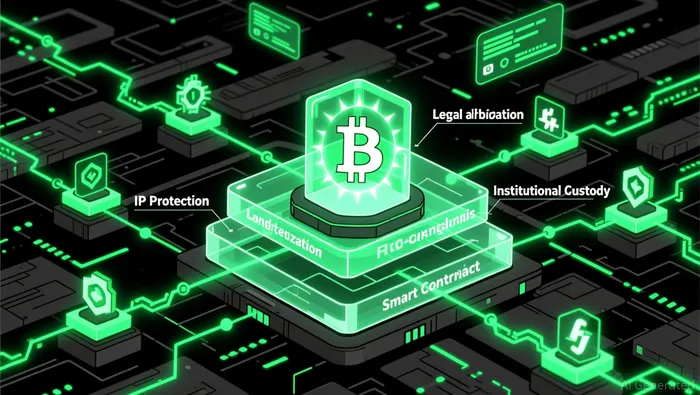
To address these risks, DeFi projects must adopt governance frameworks that prioritize transparency, security, and legal clarity. Key strategies include:
1. On-Chain Governance with Tokenized Voting: Platforms like IOIO-- DeFi demonstrate the value of real-time, on-chain data and token-based voting mechanisms, ensuring stakeholders have direct influence over protocol decisions.
2. Institutional-Grade Custody Solutions: Multi-signature wallets and bankruptcy-remote custodians (e.g., BitGo) can mitigate custody disputes by ensuring asset segregation and regulatory compliance as the court found.
3. Legal Arbitration Clauses: Partnership agreements should include clear dispute resolution mechanisms, such as arbitration clauses, to avoid costly litigation and preserve operational continuity according to research.
 4. Renewable Energy and Green Infrastructure: IO DeFi's use of hydropower and solar energy to power computing centers exemplifies how environmental sustainability can enhance trust and reduce operational risks as detailed in their report.
Conclusion: Balancing Innovation and Risk
The Core vs. Maple lstBTC dispute serves as a cautionary tale for DeFi's future. While the sector's growth is undeniable, its long-term viability hinges on addressing governance and legal risks through proactive design. Investors must prioritize projects with transparent governance, robust custody solutions, and regulatory foresight. For developers, the path forward lies in harmonizing decentralization with accountability-a balance that will define the next era of DeFi.
As the market evolves, the lessons from this dispute will resonate beyond lstBTC. The question is no longer whether DeFi can scale but whether it can scale responsibly.






Comentarios
Aún no hay comentarios