
Legal Bitcoin Mining Opportunities in the U.S. for Beginners in 2025: A Cost-Efficient and Regulatory-Friendly Guide
The Rise of BitcoinBTC-- Mining in the U.S.: Energy and Regulation as Key Drivers
Bitcoin mining has evolved from a niche hobby to a capital-intensive industry, with profitability hinging on two critical factors: energy costs and regulatory clarity. In 2025, the U.S. has emerged as a global leader in both domains, offering a mix of low-cost electricity, renewable energy access, and increasingly favorable legal frameworks. For beginners, this creates a unique window of opportunity to enter the market with reduced operational risks and higher margins.
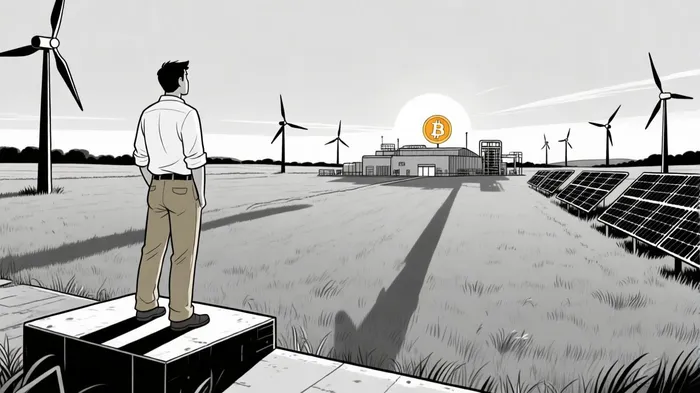
Energy Advantages: The Power of Geography
Electricity costs account for over 60% of a mining operation's expenses, making energy-advantaged regions indispensable for profitability. According to MoneyCheck, Texas leads the U.S. in Bitcoin mining viability, with electricity rates as low as 5.5¢/kWh in 2025, driven by its deregulated energy market and abundant wind power. The state's ERCOT grid allows miners to negotiate flexible contracts, including the ability to sell unused power back to the grid-a feature that enhances cash flow during periods of low demand, according to Ecoinimist.
Wyoming and North Dakota follow closely, with Wyoming's industrial electricity rates at 8.77¢/kWh and North Dakota's hydroelectric power undercutting the national average, per QuoteColo. Wyoming's energy strategy is particularly innovative: it leverages stranded natural gas from oilfields to power mobile mining units, supported by a 2021 tax exemption for flare gas consumption, as reported by CitizenPortal. Meanwhile, Washington state and Louisiana offer hydropower and residential electricity rates as low as 6.8¢/kWh, respectively, making them attractive for small-scale miners, according to QuoteColo and Payless Power.
Regulatory Clarity: Navigating the Legal Landscape
Regulatory uncertainty has historically deterred new entrants, but 2025 marks a turning point. The U.S. has seen a wave of state-level legislation clarifying the legal status of Bitcoin mining, with Kentucky and Wyoming setting benchmarks.
Kentucky's Bitcoin Rights Act (HB 701), signed into law in March 2025, removes financial licensing barriers for small-scale miners and prohibits discriminatory zoning laws, according to CryptoTimes. The bill also ensures that Bitcoin mining is not classified as a securities activity, shielding operators from money transmitter regulations. For beginners, this creates a low-barrier entry point, with tax incentives for mining equipment purchases further reducing upfront costs, as MoneyCheck notes.
Wyoming, meanwhile, has established itself as a crypto-friendly jurisdiction. The state offers sales tax exemptions for electricity used in mining and property tax exemptions for mining hardware, both enacted in 2018 and 2019, as CitizenPortal describes. Its regulatory sandbox framework allows blockchain startups to operate without traditional licensing for two years, fostering innovation while maintaining consumer protections. Additionally, Wyoming's Special Purpose Depository Institutions (SPDIs) provide a legal framework for digital asset custody, ensuring that miners can securely store their Bitcoin without relying on traditional banks, as CryptoTimes has reported.
Texas, despite its energy advantages, has introduced registration requirements for miners connected to the ERCOT grid. As of November 2024, operators must disclose operational details, including electricity demand and ownership structure, with annual renewals required by March 1, per Ecoinimist. While this adds administrative overhead, it also signals a commitment to grid stability-a critical consideration as Bitcoin mining's energy demand is projected to double by 2030.
State-by-State Breakdown: Where to Start in 2025
- Texas: The gold standard for energy efficiency and scalability. Ideal for mid-to-large scale operations due to its deregulated market and renewable energy access.
- Kentucky: Best for beginners, with low electricity costs, tax incentives, and the Bitcoin Rights Act removing regulatory hurdles.
- Wyoming: A haven for innovation, offering tax exemptions, a crypto-friendly legal framework, and access to stranded natural gas.
- North Dakota: Combines cheap hydroelectric power with naturally cold weather, reducing cooling costs-a hidden advantage for energy efficiency.
- Washington: Hydropower-driven operations align with green mining trends, appealing to environmentally conscious investors.
The Future of U.S. Bitcoin Mining: Challenges and Opportunities
While the U.S. offers a compelling case for Bitcoin mining, challenges remain. The SEC's 2025 clarification of proof-of-work mining as a legitimate activity has provided federal-level certainty, according to Ecoinimist, but state-level policies vary widely. For example, New York's proposed 0.2% digital asset transaction tax highlights the need for geographic diversification.
Beginners should also consider cloud mining platforms, which allow users to rent hashpower from energy-efficient states like Texas without owning hardware. Platforms like ETNCrypto and SoloPool.org emphasize compliance with KYC/AML regulations, reducing legal risks for newcomers, consistent with the compliance trends noted by Ecoinimist.
Conclusion
The U.S. in 2025 presents a rare convergence of low-cost energy, renewable infrastructure, and regulatory clarity, making it an optimal environment for Bitcoin mining. For beginners, states like Kentucky and Wyoming offer the most accessible entry points, while Texas and Washington cater to larger operations. As the industry matures, strategic location choices and adherence to evolving regulations will remain the cornerstones of profitability.







Comentarios
Aún no hay comentarios