
Legacy and Reinvention: The Media Industry's Rebranding Gambit in a Digital Age
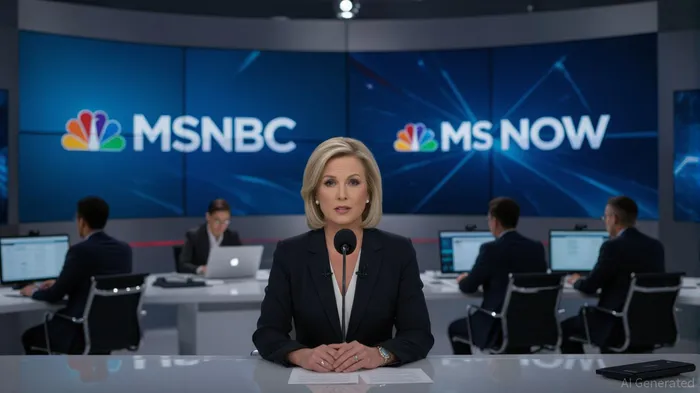
The media industry is at a crossroads. As audiences fragment across platforms and attention spans shrink, legacy brands face a dual challenge: preserving the equity of their historical identities while adapting to a digital-first world. The recent rebranding of MSNBC to MS NOW offers a compelling case study in this balancing act. For investors, the transition raises critical questions about the value of brand heritage, the risks of rebranding, and the opportunities for undervalued assets to reinvent themselves.
The MS NOW Rebrand: A Case of Strategic Disentanglement
MSNBC's transformation into MS NOW is not merely a name change but a strategic repositioning. As part of Comcast's spinoff of its cable networks into Versant, the network is shedding its ties to NBCUniversal—including the iconic peacock logo—to establish an independent identity. This move aims to resolve long-standing confusion between the progressive editorial tone of MSNBC and the more centrist brand of NBC News. Yet the retention of “MS” in the new name, a vestige of the network's 1996 Microsoft-NBC partnership, has sparked controversy. Critics argue that the acronym now feels anachronistic, evoking outdated software rather than a modern news outlet.
The rebranding underscores a broader trend: legacy media brands are increasingly prioritizing operational independence over historical continuity. By distancing itself from NBCUniversal, MS NOW seeks to carve out a distinct identity in a crowded market. However, the success of this strategy hinges on its ability to retain its core audience while attracting new viewers. The network's hiring spree—adding 30+ journalists and 100 roles—signals a commitment to building a self-sufficient news operation. Yet, as the digital landscape evolves, the challenge lies in translating this infrastructure into a compelling narrative that resonates with a generation skeptical of traditional media.
Microsoft's Enduring Influence: A Double-Edged Sword
Microsoft's role in the original MSNBC partnership (1996–2012) was foundational but now symbolic. The retention of “MS” in the new name is a nod to the network's origins, yet it risks alienating audiences who associate the acronym with obsolete technology. This tension highlights a key lesson for investors: brand equity is not static. What once signified innovation (Microsoft's 1990s partnership) can become a liability if not recontextualized.
The rebranding also reflects a broader shift in corporate strategy. As Versant CEO Mark Lazarus noted, the move allows MS NOW to “chart its own path forward.” This independence is crucial in an era where media brands must compete not only with rivals but also with the algorithmic dominance of platforms like TikTok and YouTube. For MS NOW, the challenge is to leverage its legacy of credibility while embracing the agility of digital-native competitors.
Lessons from the Rebranding Playbook
The MS NOW case is not unique. Across the media landscape, rebranding efforts are increasingly driven by audience alignment, technological integration, and cultural relevance. Consider the following insights:
- Sustainability as a Brand Pillar: H&M's 2030 sustainability pledge and PepsiCo's eco-friendly Aquafina packaging demonstrate how environmental values can reinvigorate brand equity. Media companies that integrate sustainability into their narratives—such as reducing carbon footprints in production or promoting green content—can attract eco-conscious investors and consumers.
- AI-Driven Personalization: Adobe's AI-enhanced Photoshop and Google's AI search results show how technology can redefine user experiences. Media firms that invest in AI for content curation, audience analytics, or interactive storytelling (e.g., personalized news feeds) are better positioned to thrive in a fragmented market.
- Cultural Inclusivity: Mars Foods' rebranding of Uncle Ben's and Anheuser-Busch's revision of Stella Artois packaging highlight the importance of aligning with societal values. Media brands that address racial, gender, or cultural sensitivities in their branding can avoid reputational risks and broaden their appeal.
Undervalued Media Assets: Opportunities in Reinvention
For investors, the rebranding of legacy media brands presents both risks and opportunities. Consider Warner Bros. Discovery (WBD), which has streamlined its Max streaming service and cut costs to drive profitability. Despite its challenges, WBD's aggressive rebranding of its streaming portfolio and focus on DTC (direct-to-consumer) strategies position it as a potential undervalued asset. Similarly, Netflix continues to dominate through original content and ad-supported tiers, proving that even established players must adapt to stay relevant.
Another promising area is gaming and esports media. G Fuel's rebranding from a niche supplement to a $350M gaming beverage brand illustrates how media companies can tap into emerging markets. Investors might also look to Duolingo or TikTok, which have rebranded as cultural and educational hubs, leveraging AI and user-generated content to sustain growth.
The Investor's Dilemma: Legacy vs. Innovation
The MS NOW rebranding encapsulates the broader tension between legacy value and digital reinvention. While historical brand equity provides a foundation of trust, it can also become a constraint in a rapidly evolving industry. For investors, the key is to identify companies that balance these forces effectively:
- Strategic clarity: Brands that clearly communicate their new identity without alienating their core audience (e.g., MS NOW's emphasis on “breaking news and opinion journalism”).
- Operational agility: Companies that invest in infrastructure (e.g., MS NOW's hiring spree) and technology (e.g., AI-driven content) to stay competitive.
- Cultural resonance: Media firms that align with societal trends, such as sustainability or inclusivity, to build long-term relevance.
Conclusion: The Future of Media is a Hybrid of Past and Present
The rebranding of MS NOW is a microcosm of the media industry's broader transformation. As legacy brands navigate the digital age, their success will depend on their ability to honor their heritage while embracing innovation. For investors, the lesson is clear: undervalued media assets are not those with outdated names but those that fail to adapt their narratives to the present. The companies that thrive will be those that treat rebranding not as a cosmetic exercise but as a strategic reinvention—a process that demands both respect for history and a bold vision for the future.
In the end, the media industry's next chapter will be written by those who understand that legacy is not a relic but a resource—one that, when reimagined with purpose, can fuel a new era of relevance and resilience.







Comentarios
Aún no hay comentarios