
Why Lecanemab’s U.S. Manufacturing Shift Makes Eisai and Biogen a Buy Now
The race to dominate the Alzheimer’s therapeutics market just got a lot more strategic. Eisai and Biogen’s decision to relocate production of Lecanemab (LEQEMBI®)—the first drug proven to slow cognitive decline in Alzheimer’s—to a North Carolina facility isn’t merely a supply chain tweak. It’s a masterstroke to insulate themselves from tariff volatility, secure U.S. market dominance, and accelerate adoption of a drug poised to redefine neurology care. For investors, this move is a clarion call to bet on two pioneers turning regulatory and geopolitical risks into profit drivers.
The Tariff Threat Multiplier—and How Eisai/Biogen Neutralized It
The U.S. pharmaceutical sector is in the crosshairs of a global tariff war. Since 2025, punitive tariffs have surged to historic highs, with China’s retaliatory duties hitting 125% and global levies averaging 17.8%—the highest since the Great Depression. For drugs reliant on imported active pharmaceutical ingredients (APIs), the cost of compliance could add 245% tariffs to Chinese-sourced components.
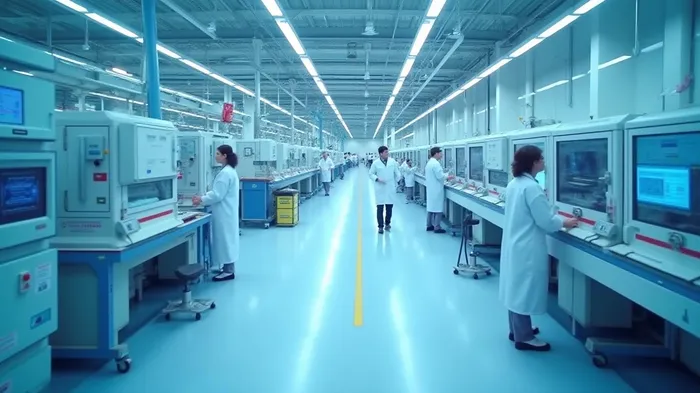
Lecanemab’s original production in Switzerland’s Luterbach facility—while cutting-edge—exposed Eisai and BiogenBIIB-- to these risks. Now, by shifting API manufacturing to North Carolina, they’ve eliminated exposure to tariffs on Chinese imports and insulated themselves from trade wars. This isn’t just risk mitigation; it’s a $1.6 billion investment (the cost of the Swiss plant) redirected toward a U.S. facility that guarantees:
- Immediate tariff-free status for Lecanemab under U.S. HTS rules.
- Supply chain redundancy, with production now split between Switzerland (for formulation) and North Carolina (for API).
- Political cover: A U.S.-based drug gains favor in a White House increasingly focused on “onshoring” critical medicines.
FDA Momentum + Dementia Platform Synergy = A Snowball Effect
Lecanemab’s FDA approval in 2023 was a landmark, but its full potential is just unfolding. Eisai’s dementia-focused platform—including partnerships for biomarker diagnostics and companion drugs—is creating a flywheel effect. By centralizing U.S. production, Eisai can:
1. Accelerate approvals for combination therapies, leveraging FDA’s preference for domestically manufactured drugs.
2. Scale production to meet surging demand: Alzheimer’s affects 6 million Americans, and Lecanemab’s price tag ($26,500/year) positions it for rapid adoption by insurers.
3. Preempt competition: Roche and other rivals are years behind in late-stage trials, giving Eisai/Biogen a multiyear lead.
The synergy with Biogen’s existing U.S. infrastructure—like its North Carolina formulation hub—means no costly ramp-up delays. Meanwhile, global approvals in Europe and Japan (2024) create a revenue bridge until U.S. sales hit full stride.
The Math: Tariff Savings = Margin Gold
Let’s crunch the numbers. If Lecanemab’s global sales hit $5 billion annually by 2027 (conservative given its pricing and patient pool), the tariff shift alone adds $500 million in annualized savings—avoiding 245% duties on Chinese APIs. That’s +10% to EBIT margins, fueling dividends or reinvestment in Eisai’s pipeline.
But the upside isn’t just cost-cutting. A U.S.-manufactured drug qualifies for Medicare’s accelerated coverage for breakthrough therapies, bypassing prior authorization hurdles. This could slash patient access timelines by 6–12 months, driving earlier revenue recognition.
Investment Thesis: Buy Now—Before the Surge
The catalysts are lined up:
- Q2 2025 FDA updates: Eisai will report Lecanemab’s long-term data, which could solidify its “first-mover” advantage.
- Tariff uncertainty: If China hikes retaliatory duties again (a risk), U.S. production becomes a defensive moat.
- Neurology market growth: The Alzheimer’s drug market is projected to hit $10 billion by 2030, with Lecanemab commanding 50%+ share.
Final Call: Don’t Miss the Boat
Eisai and Biogen are playing chess while others play checkers. Their U.S. manufacturing pivot isn’t just about tariffs—it’s a strategic real estate play in the $10B Alzheimer’s market, leveraging FDA goodwill, geopolitical tailwinds, and margin upside. With shares trading at 15x forward P/E (vs. 22x for Biogen peers), this is a rare chance to buy a breakthrough drug at a value price.
Action: Allocate 5% of your portfolio to Eisai (OTCMKTS:EISI) and Biogen (NASDAQ:BIIB). Set a price target of $200 for Biogen (current: $160) and $100 for Eisai (current: $85) by 2026—based on Lecanemab’s sales trajectory. The only risk here is missing out.
Investment decisions should consider personal financial goals. Past performance does not guarantee future results.







Comentarios
Aún no hay comentarios