
Lear Corporation: Fortifying Margin Resilience and Technological Leadership in the EV Supply Chain
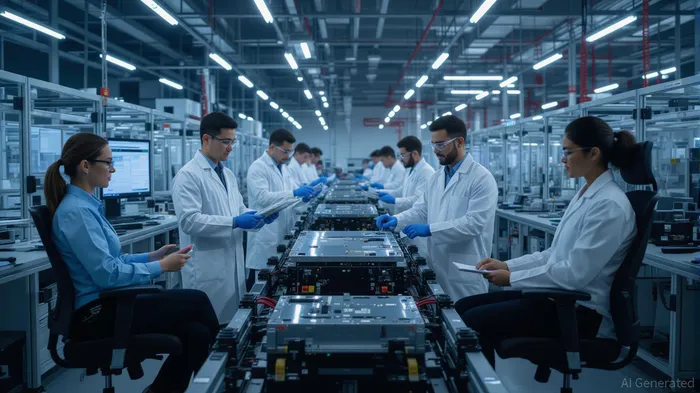
Lear Corporation (LEA) is emerging as a pivotal player in the electric vehicle (EV) supply chain, leveraging strategic infrastructure investments, automation, and R&D-driven innovation to solidify its margin resilience and technological differentiation. As the automotive industry accelerates its transition to electrification, Lear's dual focus on operational efficiency and cutting-edge solutions positions it to outperform peers in a rapidly evolving market.
Margin Resilience Through Operational Excellence
Lear's margin resilience is anchored in its aggressive automation and digital transformation initiatives. The company's “IDEA by Lear” program, coupled with a long-term partnership with PalantirPLTR--, has streamlined manufacturing and administrative processes, generating $30 million in savings during the first half of 2025 alone, with compounding benefits expected in the second half of the year [2]. These efficiency gains are further amplified by fully automated facilities, such as the Michigan plant dedicated to ComfortMax seat assembly, which reduces labor costs while enhancing modularity and thermal comfort systems [4].
Infrastructure investments also play a critical role. Lear's expansion of Michigan facilities—including Traverse City for EV battery pack components and Sterling Heights for engineered plastics—ensures scalable production for high-margin electrification systems [1]. These upgrades align with the company's strategy to localize production, reducing supply chain risks and capitalizing on U.S. content incentives.
Technological Differentiation in the EV Ecosystem
Lear's technological edge lies in its R&D focus on proprietary systems and strategic partnerships. The E-Systems segment, a cornerstone of its EV strategy, has secured awards for next-generation battery disconnect units and conquest wire harness programs with global automakers. For instance, a $50 million award for a second-generation battery disconnect unit underscores Lear's ability to innovate in critical electrical components [4]. Additionally, its zone control module, recognized with an Automotive News PACE Award, offers highly configurable software that enhances scalability in wire harness designs [1].
The company's foray into 4G/5G telecommunications units for EVs further highlights its differentiation. By integrating high-accuracy vehicle positioning technology, LearLEA-- addresses the growing demand for connected and autonomous vehicle systems [2]. Meanwhile, its ComfortFlex and FlexAir seat technologies, featuring heat, ventilation, and pneumatic massage systems, cater to luxury EV markets, generating over $150 million in annual revenue [2].
Strategic Positioning for Long-Term Growth
Lear's alignment with the EV/AV wiring harness market's projected 18% CAGR from 2025 to 2033 positions it to capture incremental revenue as vehicle architectures grow more complex [3]. The company's $1 billion in year-to-date E-Systems awards, including wiring harness programs with major EV manufacturers, reflects its ability to secure high-value contracts [2]. Furthermore, Palantir's AI and large language model integration into tariff data management and operational workflows is expected to drive further cost optimization [4].
Conclusion
Lear Corporation's strategic investments in automation, infrastructure, and R&D have created a durable moat in the EV supply chain. By combining margin-preserving operational efficiencies with proprietary technologies in electrification and seating, the company is well-positioned to capitalize on the EV transition. For investors, Lear's disciplined approach to cost management and innovation offers a compelling case for long-term value creation.





Comentarios
Aún no hay comentarios